


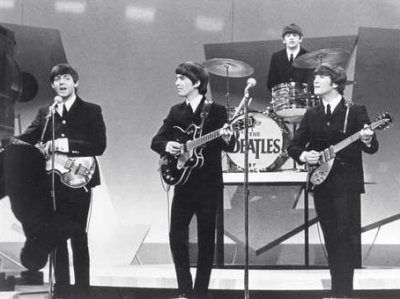


SINGAPORE, Dec 9 — Barely a month after collectors were clamouring to get their hands on the re-issued Beatles 1 video/music compilation set, fans once again celebrated yet another Beatles release.
No, it’s not something new, but it was 50 years ago today — well, maybe not today, but this month — that the four musicians from Liverpool released their sixth album.
Called Rubber Soul, the album contained such gems as Drive My Car, Norwegian Wood (This Bird Has Flown), In My Life and Michelle. It has been hailed as a masterpiece and a mess, a musical opus and an overrated collection.
Whether or not the album deserves to be deemed the best Beatles album of all is debatable — although I admittedly have a soft spot for it as it was the first Beatles album I bought with my own pocket money.
But one thing that every fan can agree on is that this was the album in which the band finally grew up.
Musically, while The Beatles’ 1967 effort, Sgt Pepper’s Lonely Hearts Club Band, certainly looms large in their legend, thanks to the varied musical experiments and expressions that were all over that album, the band’s experimental roots can be said to have started on Rubber Soul.
The use of compressed sounds, exotic instruments and manipulated tape speeds — all that began in the studio at the tail end of 1965.
“We were getting better, technically and musically. We finally took over the studio. Rubber Soul was a matter of having all experienced the recording studio,” said John Lennon in Anthology, the Beatles documentary.
“They were finding new frontiers all the time,” George Martin, the Beatles’ producer, said in Anthology.
The most obvious one is George Harrison playing the main riff of in Norwegian Wood on the sitar. The guitarist was hooked on Indian music after having heard sitar maestro Ravi Shankar, and he went out to buy himself a sitar. “It was a really crummy-quality one,” he noted in an interview.
But when the band was recording Norwegian Wood, they felt that something was needed to give the song an extra lift. “I picked the sitar up ... I hadn’t really figured out what to do with it. It was quite spontaneous: I found the notes that played the lick. It fitted and it worked,” said Harrison.
For the song In My Life, Martin wrote a baroque-style piano solo. But what he wanted to do was too complicated to be recorded live, so he recorded it with the tape running at half-speed and then sped it up on the playback. (This playing around with tape speeds would find its way into future recordings.)
In some ways, Rubber Soul did indeed mark the end of an era for the band. The age of the happy-go-lucky pop song that the Lennon-McCartney songwriting partnership delivered with seeming ease was over.
Influenced in part by Bob Dylan’s music at the time, such as his album Highway 61 Revisited, all the songs on Rubber Soul explored slightly darker themes, even if they still had the Fab Four’s trademark humour.
The album’s title, for example, wasn’t just a reference to what their sneaker soles were made of, but also a play on the phrase “plastic soul” which was what some of the American musicians called the music that Mick Jagger and The Rolling Stones were putting out then.
On the album’s opener, Drive My Car, the song sounds as if it’s a musical job application for a chauffeur but it’s really about how a girl preys on the song’s protagonist’s gullibility (“I got no car and it’s breaking my heart, but I’ve found a driver and that’s a start”). And if you listen to the backing vocals for Girl, you’ll realise that the band is singing a naughty word.
“We’ve always done dirty little things on records. In Girl, The Beatles were singing tit-tit-tit-tit in the background and nobody noticed,” said Lennon. Clearly, they’d still not weaned themselves off schoolboy humour.
Lennon’s songs on the album were noticeably more introspective and sometimes bordered on being down-right mean. He has said that Norwegian Wood was about an extra-marital affair, but the protagonist proceeds to burn down the girl’s house when he doesn’t get what he wants from her.
Run For Your Life seems like a rework of the 1964 pop hit You Can’t Do That (released only the previous year). Here, Lennon tells of consequences if the girl in question decides to cheat on him with lines such as, “Let this be a sermon, I mean everything I’ve said / Baby I’m determined and I’d rather see you dead”.
Despite Nowhere Man’s jaunty music, the lyrics speak of someone who is lost even though the world is at his command; while In My Life is a nostalgic look at “people and things that went before”.
Paul McCartney had earned a reputation as the band’s balladeer, thanks in part to his lovely performance on Yesterday. But even his love songs had darker underlying tones, most of which were reflected in the titles You Won’t See Me and I’m Looking Through You — you could even say that on the almost saccharine Michelle, the singer seems like a stalker. (To think that just months earlier, he was offering happier songs such as I’ve Just Seen A Face.)
But McCartney’s abilities as a musician came to the fore. Apart from his bass duties, which he once again excelled in, as well as piano contributions scattered throughout, he delivered a scorching guitar solo on Drive My Car and a grinding fuzz bass on Harrison’s song, Think For Yourself, which showed the guitarist’s acerbic side.
Harrison’s other contribution, If I Needed Someone, may seem like a song of pining at first. But with lyrics such as “Carve your number on my wall and maybe you will get a call from me” or “If I had some more time to spend”; it seems that the singer will only be with the girl if he has spare time and not because he really wants to.
That is not the sound of the all-smiling, lovable Mop Tops. That’s the sound of four young men in their early twenties finally finding their feet. Lennon and Ringo Starr, the oldest in the band, were only 25, yet they were talking about burnt-out passions, even death, in their music. (Compare that with Bruno Mars who gave us The Lazy Song when he was 25.)
Unlike previous albums, which were sometimes recorded in bits in between touring and filming schedules, The Beatles spent a whole month, from mid-October to mid-November, holed up in Abbey Road Studios crafting out song after song. Even then, it wasn’t enough.
They had to resurrect a track, Wait, that was left off the Help! album released earlier that year and update it for Rubber Soul. The looming deadline seemed to fuel the band — well, that and probably the amount of substances they smoked, much to the annoyance of producer Martin. The Beatles’ final recording session was a marathon session from 6pm to 7am on Nov 11, 1965. They recorded two songs: You Won’t See Me and Girl. If their voices sound weary, it’s because they were.
Within a month, Rubber Soul was released and sitting on top of the charts. Again. But for The Beatles, Rubber Soul was a turning point in their music career. And they wouldn’t look back.
McCartney recalled in Anthology: “When we made Sgt Pepper, I remember taking it round to Dylan. I remember playing him some of Sgt Pepper and he said: ‘Oh, I get it — you don’t want to be cute any more’.
“(But) that was the feeling about Rubber Soul, too. We’d had our cute period and now it was time to expand.” — TODAY


