


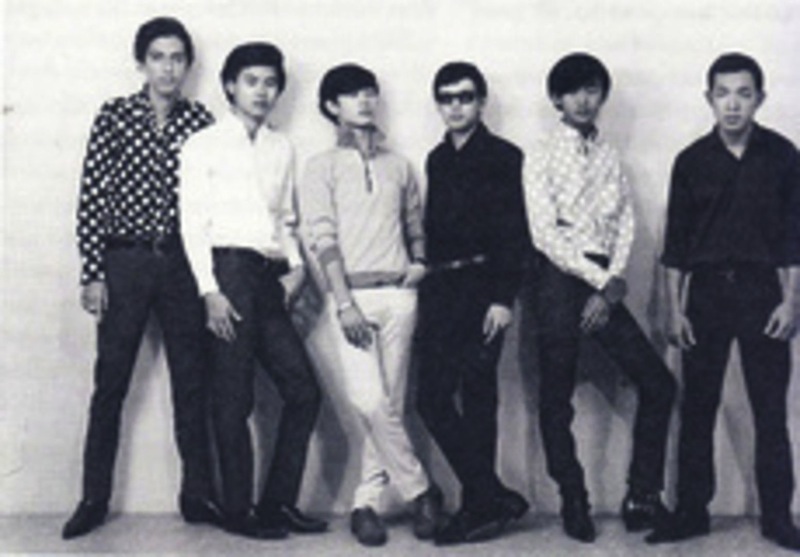


SINGAPORE, Nov 2 — Many people have compared the current vibrancy in the music scene of recent years to the 1960s.
That era was dubbed the golden age of Singapore pop, when the country was awash with sounds of local musicians who would perform at tea dances in various venues such as the Golden Venus, Celestial Room, the South-east Asia Hotel, Prince’s Hotel Garni or the Palace.
Tea dances happened when band managers broached the idea to bosses of nightspots. They were held in the afternoons over the weekends, usually from 2pm to 6pm, and offered the bands a platform to strut their stuff.
Tickets cost up to S$2.50 or S$3 (RM7.60 or RM 9.10 ), inclusive of a soft drink.
It was an opportunity for the youth of Singapore to meet up and check out the hottest bands at the time.
This Friday, The Esplanade hopes to recapture that vibe with Stars Of The Golden Venus, a music showcase that is part of its annual A Date With Friends series.
Hosted by Brian Richmond, the showcase will feature pop band The Checkmates, singers Veronica Young and Vernon Cornelius and blues-rockers the Straydogs.
While Young and Cornelius are familiar names who regularly perform shows here, the real draw for music fans of the era would be the reunion of the Straydogs and The Checkmates.
For the Straydogs, this is the first time that four of the band’s original members will perform in almost three decades; while The Checkmates’ members will be performing for the first time in more than 40 years.
Checking out the checkmates
For Benny Chan, the guitarist of The Checkmates, the prospect of performing with his old bandmate, bassist Lawrence Lee and singer Vernon Cornelius, is something he relishes.
“We haven’t performed together for over 40 years, so this will be quite an experience for all of us,” said Chan over the phone from Melbourne, where he has lived for almost three decades.
“Unfortunately, we lost a member of the original band, the rhythm guitarist Hann Hussein, so we have to use someone else to take over his place. But the rest of us will be there. We’ll only have a few days to run through the stuff. It’ll be fun though.”
Formed in the early 1960s, The Checkmates’ had a rotating line-up that reads like a who’s who of the music scene back then. It originally featured Reggie Verghese on lead guitar, with Chan on bass, Hann on rhythm guitar and Amir Samsudin on drums.
“Reggie and I were pretty close friends and we started The Checkmates together,” explained Chan. “He was an exceptional player. Then he was offered a place in The Quests—they offered him a better deal and a recording contract—so he left.”
He continued: “We got Lawrence (Lee) in to play guitar, but we felt he wasn’t suitable, so I took over the guitar duties because I knew how Reggie played and Lawrence started playing bass.”
Like The Quests, the Checkmates were primarily an instrumental band modelled after The Shadows. When they decided to add a vocalist, Shirley Nair was brought in; but she later left to join The Silver Strings. Her replacement was Robert Song (of The Flamingos). The five-piece group would soon be augmented by a duo, The Cyclones. Consisting of brothers Siva and James Choy, they were instrumental in getting the band to veer more towards an R&B style instead of the pop music they had been known for.
“We felt really special because we were doing something that was unique, you know? Even in Singapore, people would come to see us play and the fans were really nice and friendly. It was a good vibe,” recalled Chan.
Song’s tenure would end after the band secured regular gigs at the Golden Venus, and he was replaced by Vernon Cornelius. The seven-piece unit would be known collectively as Unit 4 Plus 2 Plus 1.
“The ‘1’ was Vernon, the ‘2’ represented The Cyclones and the ‘4’ was us,” said Chan.
Unit 4 Plus 2 Plus 1 turned out to be a formidable force in the tea dance circuit. “Golden Venus was the club in Orchard Road, where all the young people would congregate every weekend for the tea dance,” said Chan.
“We were packing the joint like you wouldn’t believe. You couldn’t move in there. We always looked forward to doing the Golden Venus shows. That was the best ongoing gig we had. In those days, we were slightly mobbed by the fans — but nothing like Elvis or The Beatles. That was certainly a high for us! It happened more when we were touring in Malaysia than in Singapore. I don’t know why they did it. It was just a spontaneous thing, I guess. Not as wild as the Western fans, but they were still screaming and running to you, asking for your autograph. Those were the days.”
Still, this unit wouldn’t last. In 1966, Cornelius left to join The Quests (“They got Vernon too!”) and was replaced by a British serviceman, Bryan Neale (of The Easybeats). When Neale left to return to Britain in 1967, The Checkmates continued to play as the resident band at Golden Venus until 1968.
The band were also making a name for themselves as recording artistes. Although The Checkmates only had one EP to their name (they were signed to be the answer to The Quests), they would pop up on recordings by other artistes such as The Cyclones and Neale, often with Chan and Lee composing the songs—not just for themselves but for others too.
“The recording facilities in those days were pretty bad. We were not fussy about whether the guitars were completely in tune and we had to do the record in one take,” said Chan. “Today, you can separate the tracks and record one musician at a time, but back then, all four had to just go for it. If someone made a mistake we had to start all over again … we’d be glaring at him, like “what the…” you know?
“In those days, with the limited amount of musical knowledge, we would just go with the flow, like “that sounds pretty good” and we’d just go for it.”
Chan said that while there was some rivalry, between bands, it was all friendly. “No one tried to sabotage your equipment or anything. We just wanted to be the best. Everybody had their own identities, but we were all trying to do the same thing. We were all all friends. It really wasn’t about the money, it was about having fun with music.”
However, despite the fame, The Checkmates had to face a harsh reality. “None of us got rich from it. We were well-known but we couldn’t survive. There was no way we could make a lot of money just playing in Singapore. Music doesn’t make you a millionaire—unless you’re The Beatles.”
And in the end, The Checkmates, like so many other bands before them, threw in the towel. “I don’t really know why we broke up,” said Chan, adding that they gave away and sold their guitars. “We didn’t have an official meeting like, ‘let’s break up’, but we just kind of drifted apart.”
Chan started performing with other bands and performing at various clubs in Singapore, while the others went on with their day jobs. “It’s like one moment we were performing and the next we were not.”
Chan said that The Checkmates may have missed on some solid opportunites in the 1960s. “We were really big at the time, and we should have capitlised on that. We had a financial manager who managed our money and all that, but what we really needed was a manager to also promote our image and everything. Maybe we could have carried on better.”
Straydogs on the prowl again
The Checkmates might not have known it then, but they were instrumental in helping the Straydogs get a leg up when they helped to bring the latter band in as regular performers at Golden Venus.
Formed in 1966 by brothers Lawrence (vocals) and Dennis Lim (bass), William Lim (lead guitar), Jeffrey Low (rhythm guitar), Ronnie Kriekenbeek (pronounced “kree-ken-beck”, harmonica/keyboards) and James Tan (drums), the Straydogs — like The Checkmates — also leaned more towards and R&B sound, although they would soon develop a more blues-rock approach.
Most of the members had been friends since they were children — they got their name after a friend Arthur Woo, suggested that they were like stray dogs because they kept loitering around at the beach or in the Katong area — and they shared a love for the music by The Rolling Stones.
“As a band, we didn’t really want to conform to the so-called pop scene,” said Dennis Lim (aka Lim Wee Kiang or just Kiang, as he is better known these days), who added that they thought pop music was “sissified”.
“We just stuck to the brand of music we wanted to play, songs that were not really in the mainstream by groups such as The Pretty Things and some other obscure groups.”
The Straydogs would end up with a large following of fans who were tired of Top 40 music and wanted something edgier. The band’s rock and roll show was augmented by their recordings, the first of which was the single, Mum’s Too Pampering.
“That came about because EMI offered us a recording contract in 1967,” said Kiang. “They just gave us a couple of months to come up with something and we could only write one song, which was Mum’s Too Pampering. On the flip side, we did a cover of Van Morrison’s I Can Only Give You Everything. That’s how we started.”
Although the band had an easy rapport on the live stage; Lim said that offstage, things were a little different. “I don’t think we ever once felt we made it. To really make it in music, it’s a far-fetched dream, lah. You may think you have made it, but actually, you haven’t. We had a lot of reality checks within the band,” he said.
“We always found it difficult to produce good material on our own, that’s why we had so few recordings. It’s not like we could just sit down and write a song and make hit after hit. We never really thought we’d made it — all of us were doing day jobs: I helped my father run his business (Lim’s father ran the Railway Station Hotel and other establishments) and did part-time work here and there.”
Like The Checkmates, the Straydogs also encountered several line-up changes. When Low left to pursue a career in journalism, the band brought lead guitarist Jimmy Appudurai-Chua, with William Lim moving to rhythm guitar. In 1969, Kriekenbeek announced that he too, would be leaving. William too would fly the coop. Inevitably, the band broke up.
But the split was short lived because Kiang was contacted by Lim Thian Soon, former guitarist of blues band Pest Infested. Thian Soon suggested to Dennis that they form a new band, which they promptly did, although they kept the Straydogs name. Apart from Kiang and Thian Soon, Straydogs version 2.0 featured Appudurai back on guitar, Terry Tan on vocals, and a revolving door of drummers before Amil Samsoeddin retained the seat permanently in 1972.
By that time, the band had a hit with their second single, Freedom, backed with Cold Morning, two original compositions. This single reflected the band’s harder edge and they once again found themselves doing the live circuit rounds.
“Then, one day I was talking to Reggie Verghese of The Quests, who was a producer for EMI, and he said, ‘You guys better don’t go into oblivion, you better record something’,” recalled Kiang. “So I wrote Repent and Rockin’ Our Blues.”
While the songs were less raucous than Freedom/Cold Morning (the ballad, Repent, features a lovely string arrangement by Verghese), the third single was still widely acclaimed.
Then things started going south. Tea dances were already stopped by that time, but other social measures and restrictions (the long hair rule and the closing of music clubs) “stymied the growth of the band,” said Dennis, who kept the band going until the late 1970s before the Straydogs finally ceased to be.
“There were some gigs where Straydogs were asked to play, but I think the interest was barely kept alive.”
Keeping the music alive
As going concerns, both The Checkmates and the Straydogs, are — barring the odd reunion here and there — a thing of the past. But both Chan and Dennis say that the memories and the music are very much alive.
The Checkmates’ recordings were recently featured this year as part of Universal Music’s re-releasing of the Singapore 60s: The Definitive Collection and its follow-up More Singapore 60s; while the Straydogs’ material can be found on the double disc set, Golden Reunion.
And then, there’s this Stars Of The Golden Venus show, of course. “You can expect us to play the songs we recorded and maybe a couple that we didn’t record but may do so in the future—we don’t know yet, because anyone of us can go at any time,” quipped Kiang. “We’re all old, lah.”
“We’ve been told to maintain the same style of music we used to play,” said Chan, “because it’s all about the nostalgia. We’ll play as much as we can in the 45-minute set. But we’ll do our best.”
“This is one gig where we hope that our friends and fans will come to the show because we don’t know when we can have this line-up again,” said Kiang. “So the title, A Date With Friends, really rings true for us. We really want our friends to come and see the show. We’re trying to play the songs as per the original as possible. It think it will be quite nostalgic for people who know us. I hope people will sing along to the choruses!”
“The concept (for the concert) is very good. I think more shows like this should be done,” said Chan. “We all parted as friends, so that’s good. I’m so glad we’re going to do it again, even if we have arthritic fingers and legs.”
“I hope the music lives on, maybe 40, 50 years down. We hope to be remembered because the music lives on,” said Kiang. — TODAY
* Stars Of The Golden Venus is on Nov 6, 7.30pm at the Esplanade Concert Hall. Tickets from The Esplanade (https://www.esplanade.com/festivals-and-series/a-date-with-friends).


