




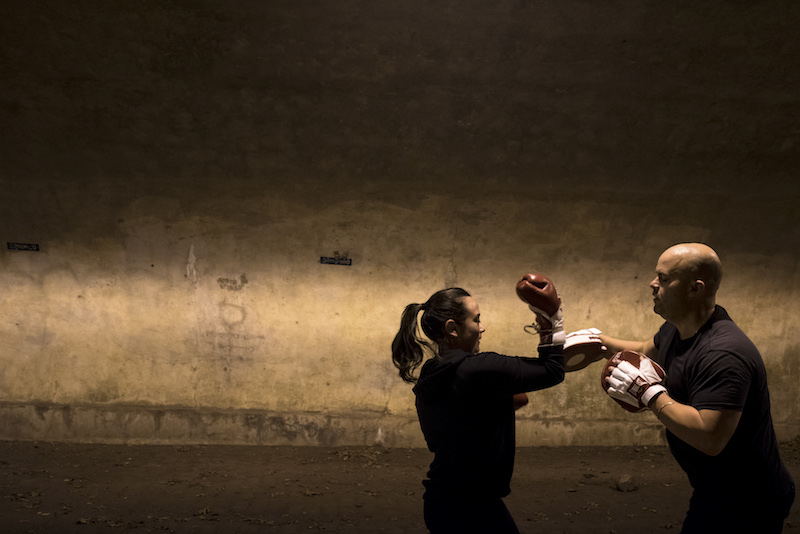
NEW YORK, Dec 18 — In a glowing underpass in Central Park one night last month, a man and woman danced through a boxing routine. They skipped rope and sparred. He swung and she ducked. Echoing through the space, playing on a cellphone, was a piano composition by Cuban composer Ernesto Lecuona. It had the feel of a dirge, possibly because Fidel Castro had died three nights earlier.
“I still don’t want to accept it,” the trainer, Brin-Jonathan Butler, said. “A year after from now, no one will believe it all ever existed.”
Butler, 37, is among his generation’s foremost boxing writers — the candidate pool for his anachronistic profession is admittedly small — and his book, The Domino Diaries, an immersion into Cuba’s boxing culture, positions him in a line of literary acolytes of Ernest Hemingway. But being a boxing writer now is a less viable career path than it was in Hemingway’s day, and the exotic Havana he visited is becoming a popular Instagram destination for JetBlue passengers.
So Butler makes ends meet by teaching boxing to a dozen or so clients at US$90 (RM400) a session in Central Park, no matter the weather. “When I came to New York, someone told me ‘You’re either rich or you have a second job,'” he said.
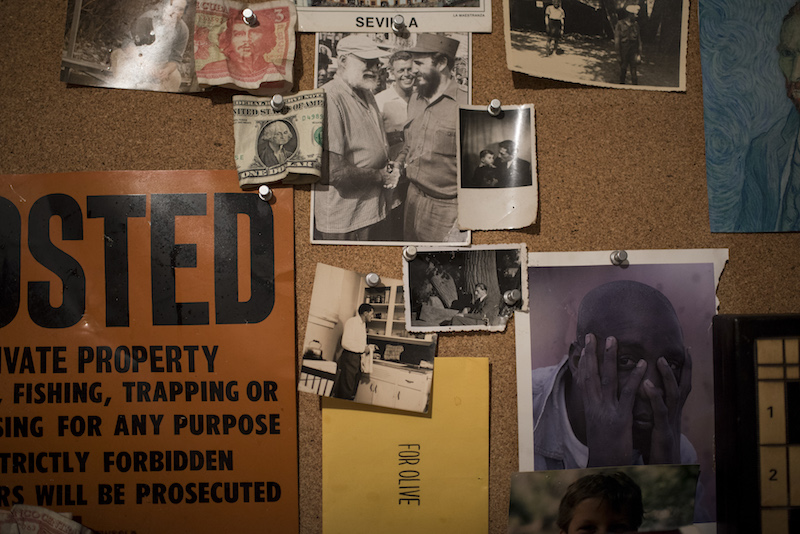
His book, which Picador published last year and recently came out in paperback, recounts his trip to Cuba in 2000 with little more than boxing gloves, a wad of cash and a vague plan to research Cuban boxing. He ended up living there on and off for a decade. His small apartment in an East Harlem walk-up is filled with tattered pictures of Che Guevara and Castro. “Some people have a feeling home is not where you were born,” he said. “I felt I’d come home when I went to Havana.”
For boxing fans, Cuba holds an outsize mystique. Since Castro took power in 1959, the island has won more Olympic gold medals in boxing than any other country, but its fighters have for the most part resisted the temptation to defect to the United States, turning down multimillion-dollar offers in apparent loyalty to the revolution. Butler found the paradox worth exploring, and his book argues that the sport is as entwined with Cuba’s narrative of defiance toward America as much as anything else.
His adventures over the years were plentiful. He interviewed Cuba’s most decorated boxers, finding them living in poverty: Several had sold their gold medals because they needed the money; another agreed to train him for US$6 a day, and another decreed he chug a glass of vodka as a test of character. The book chronicles Butler’s fling with one of Castro’s granddaughters and the time he bet his life savings on a fight (he won). He also retraced Hemingway’s footsteps, talking his way into his literary idol’s home and traveling to a small fishing town to find the old man who inspired The Old Man and the Sea, who was then 102.
These days, you can find him in Central Park. Another tune started to play as his student agonised through push-ups. “You’d see these boxers dominate at the Olympics, and then they’d just disappear,” he said. “They were fighting for something more important than money. I had to go find out why.”
Butler was born in Vancouver, British Columbia, in 1979 and began boxing, he said, for the same reason everyone starts boxing. “When you get into the ring, you think everyone’s there for a different reason than you, but that’s not true,” he said. “It’s all the same reason: to reclaim respect.” In his case, classmates violently ambushed him on an empty field when he was 11. He retreated into reading Dostoyevsky and punching heavy bags.
He arrived in Havana when he was 20, around the time of the Elián González conflict. His book started writing itself on the plane. An antique bookseller seated beside him claimed to know the location of Gregorio Fuentes, the fisherman who inspired Hemingway; flight attendants had cut off the bookseller from more alcohol, however, and he agreed to help only if Butler ordered him more whiskey.
Soon after settling into Havana, Butler found himself knocking on a door in the quiet fishing village of Cojímar, east of the capital. He spent only 20 minutes with the wrinkled man who emerged. “He said that after Hemingway committed suicide, he never fished again,” Butler recalled. “He told me, ‘He was my friend, and I never wanted to fish again after that.'” Fuentes died two years later.
John Hemingway, one of Ernest Hemingway’s grandsons, became a fan of Butler’s writing and started a correspondence with him. “I really liked a piece he wrote about bullfighting in Spain, so I wrote him a letter,” John Hemingway said in a phone call. “Brin looks at the corrida as the art form we consider it to be. We almost went to see José Tomás in Mexico City together. He’s the best bullfighter in the world right now. Anyone who gets the chance to see him before he retires or gets killed is in for a treat.”
But Butler spent most of his time in Cuba, living in a crumbling apartment on Neptune Street, exploring the thesis of his book. “Heroes weren’t for sale,” he wrote. “But how long could that last? How long could anyone resist not cashing in? And if no price was acceptable to sell out, what was the cost of that stance?”
He enlisted at Rafael Trejo, a historic boxing gym in the city’s old red-light district, where wrenches were banged against fire extinguishers as bells. “These old women guarded the door,” he said. “They reminded me of the sisters from Macbeth. You had to pay them US$2 to enter, but then you trained outside under the stars and punched tyres instead of punching bags.”
He found his first Olympian, Héctor Vinent, shortly after arriving. Vinent, who won Olympic gold medals in the 1990s, started training Butler at the gym for US$6 a session. Butler then found Teófilo Stevenson, whom the BBC once described as Cuba’s “most famous figure after Fidel Castro.” Stevenson became a Cuban legend after winning three consecutive Olympic gold medals (‘72, ’76, ’80) and turning down US$5 million to fight Muhammad Ali in the United States. Tall and strapping, his refusal to defect made him a potent symbol of the revolution. When Butler found him, he was living in penury at 59, charging US$130 to be interviewed on camera at his Havana home. He died a year later.
“He turned down millions to leave, and here was begging for US$130 to talk about turning down millions,” Butler said. “He was the perfect canary in the coal mine because his situation reflected the health of the revolution.”
Butler concluded his travels the same day Osama bin Laden was killed in 2011. Even as he headed to the airport, he said, the nation’s idiosyncrasies followed him. “No one in Cuba knew that he had been killed yet,” he said. “I only found out because I ran into a New Yorker who was yelling to everybody, ‘We got him!’ His hotel had a TV with an American news channel.”
In New York, a short-lived marriage ended in divorce. A documentary he made about his adventures left him US$50,000 in debt (he has struggled to get the film released), and though The Domino Diaries received good reviews, it sold poorly. But Butler didn’t linger on the financial outcome of his travels. “JD Salinger said, ‘Write the book you want to read,’ and I got to do that,” he said. “Writing about Cuba was an honour.” — The New York Times


