




NEW YORK, Nov 28 — Because superheroes have become the default assumption when it comes to comics, it’s easy to forget that the graphic novel is a medium and not a genre. The books here explore and extend the range of what comics can do, from tender autobiography to fairy tales, from nuanced short stories to Arthurian legend. So set aside your preconceptions. There’s nary a steroidal cape in sight.
The Story of My Tits, By Jennifer Hayden, Top Shelf Productions, US$29.99 (RM420)
Like Alison Bechdel’s “Fun Home: A Family Tragicomic,” Jennifer Hayden’s “The Story of My Tits” is the perfect gateway graphic novel to give to someone who’s unsure whether he “gets” the medium. Hayden calls her bittersweet cancer memoir “a dramatic comedy,” and her writing is as deft as her drawing line. The four panels per page make the book feel as warm and familiar as “Peanuts” — even as Hayden teases us about our culture’s fixation with breasts. When a teenage Hayden bemoans her flat chest, a friend says of boys, “I think they like personality.” I know that I do, certainly the one that shines through here.
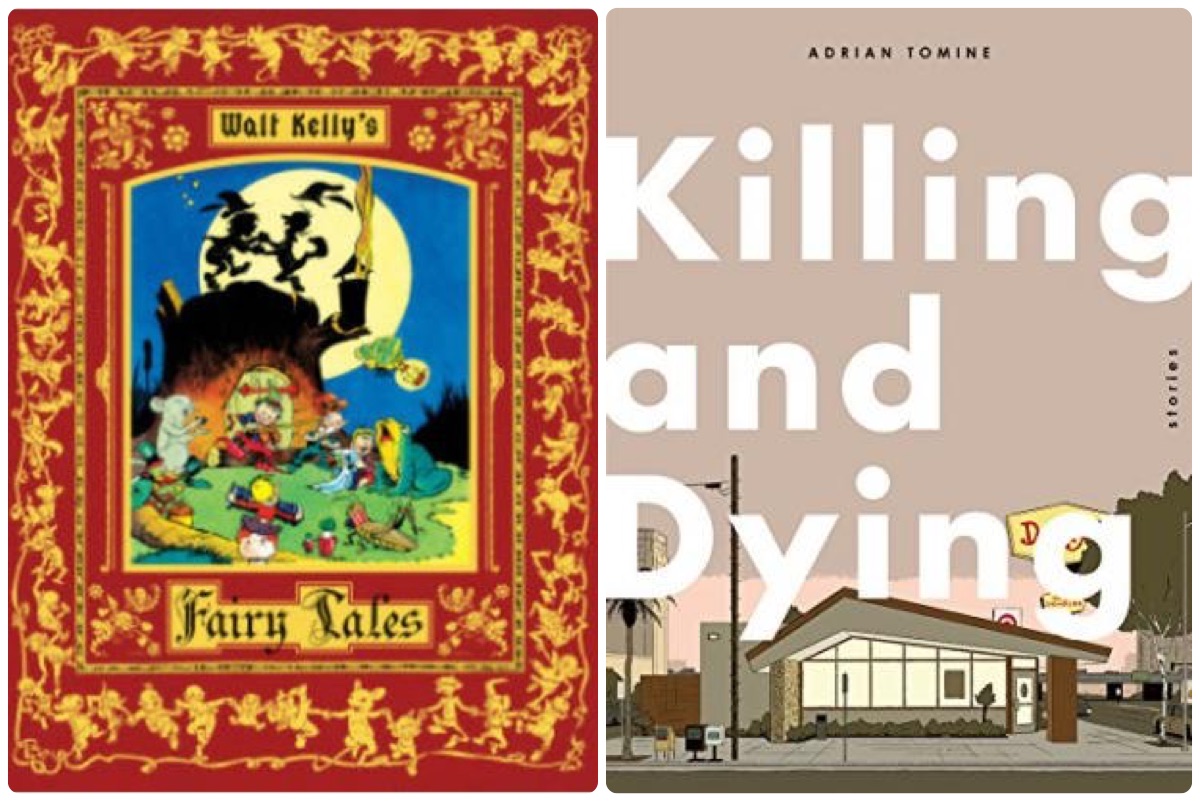
Killing and Dying, By Adrian Tomine, Drawn & Quarterly, US$22.95
This quiet but stinging anthology is full of gawky dreamers cornered in dreary suburbs pockmarked by Denny’s, Target and Panda Express. There’s the clueless landscaper trying to transform his skills into the art of “hortisculpture,” a stuttering teenage girl who aches to be a stand-up comic, a doormat of a woman who falls for a playground dope dealer who beats her. Adrian Tomine complements these Raymond Carver-like tales with a range of drawing styles, from the antique “Gasoline Alley” feel of “Hortisculpture” to the bold design reminiscent of Chris Ware’s art in “Translated, From the Japanese.”
Walt Kelly’s Fairy Tales, IDW Publishing, US$39.99
Before “Pogo,” with its thorny art and even thornier commentary, made him a cartooning star, Walt Kelly was also a Disney animator and creator of comic books for children. Drawing in the lush, curvy style of early animation, Kelly breathed new life into old fairy tales in these 1940s comics. So, pull up a chair, snug a child onto your lap and luxuriate in this winning collection.
King of the Comics: 100 Years of King Features, Edited by Dean Mullaney, Library of American Comics/IDW, US$49.99
The newspaper comic strip has pretty much become just another lost byway of Americana, as quaint as rural weeklies, hot type and newsboys. But this entertaining history of King Features Syndicate harks back to when ink-reeking newspapers were an essential part of our daily diet — and comic strips built circulation. “King of the Comics” serves up a heavily illustrated buffet of what thrilled America and made it laugh during the 20th century: not only enduring strips like Chic Young’s “Blondie” and Hal Foster’s “Prince Valiant,” but also overlooked gems like Percy Crosby’s “Skippy” and Frank Godwin’s “Rusty Riley.”
Then there’s “Krazy Kat,” George Herriman’s unrivalled riot of art, poetry and passion, all focused on Krazy, Ignatz Mouse and Offissa Pupp. It was never a best seller for King Features, the syndication arm of William Randolph Hearst’s empire. But, more important, “Krazy” was Hearst’s favourite comic, and he made sure that Herriman had a job creating it until the cartoonist died in 1944. “Krazy Kat,” a comic-strip Rosebud for Hearst’s boyish heart.
White Boy in Skull Valley, By Garrett Price, Sunday Press, US$75
The fantasy of most any serious fan of newspaper comics is to make the big rediscovery, to burrow into an old ramshackle barn and stumble across some stunning strip that has passed from memory. For now, “White Boy in Skull Valley” by the illustrator Garrett Price of The New Yorker, will have to do. This exquisite collection, from the indispensable publisher of vintage comic strips, Sunday Press, gathers the complete “White Boy in Skull Valley” Sundays (1933-36). About a boy adopted by Indians, the strip hasn’t seen print in nearly 80 years, and Price’s lively drawings still catch that adventure-strip sweet spot between stiff illustration and pure cartooning. — New York Times


