


SEPTEMBER 20 — This weekend brings the end of the 2015 edition of Singapore’s Formula 1 Grand Prix. A stunning skyline, 23 turns and cars hitting speeds of up to 320km/h and my favourite image is that of the city’s religious leaders — heads bowed in prayer coming together to bless the track.
Now I don’t know much about F1 but watching the light trails through the night and hearing the roar of the engines on the streets of downtown Singapore — it’s electric.
It’s also rather important. This is Singapore’s iconic event.
Eight years after its inception, it’s still the piece de resistance of Singapore’s events calendar. It’s when we show off our city, its prosperity and economic might to the world.
The only Formula 1 night street race, it put us on the map and on par with Monaco as a centre of glitz, glamour and speed.
Really the first modern era grand prix in Singapore in 2008 marked the moment when Singapore went from being a place where people came to make money to a place where they go to spend it.
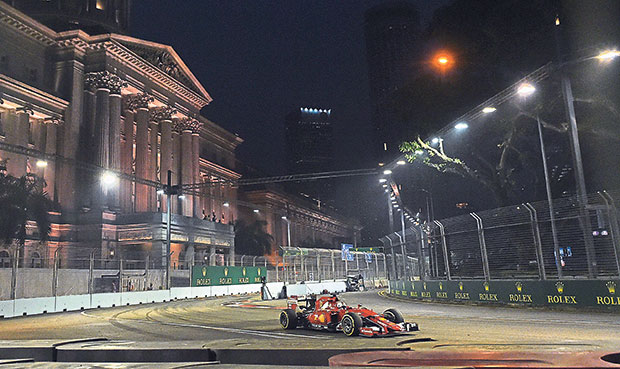
This fest of noise, horsepower and human skill serves as a sort of national coming out party — and every year with each new installment we affirm and relive that initial extravaganza.
Snagging the grand prix was one of the best moves made by our government in recent times — it raised our island’s profile without the huge infrastructure cost of say an Olympic Games or FIFA World Cup.
Looking at how other nations spent billions on prestige projects (Greece, for example) our low investment, high visibility and reasonably profitable grand prix looks like a master stroke.
It showcases our strengths; great infrastructure, our skyline, our nightlife while being economically viable and generating serious revenue — over 150 million dollars according to Tourism Board figures.
While there are detractors who do raise some legitimate questions — why are we shutting off major roads and disrupting traffic for a sport that only a percentage of Singaporeans follow? Why are tickets and affiliated events so expensive that they are basically off limits to ordinary Singaporeans?
Still I remain a committed fan — I may not personally attend or follow but F1 is fun — and in a city that works hard celebrating fun, shutting down roads for pure entertainment for a few days a year is not a bad idea.
I think the branding, the tourism and the general atmosphere that surrounds the race is worth the disruption. Ideally the government and organisers should move to ensure a wider cross-section of the public are involved and engaged by the spectacle.
More tickets for school children and students, a demonstration of the awesome machines out in the heartland would be nice but this year at least I’ll be content just to hear the roar from downtown.
*This is the personal opinion of the columnist.


