


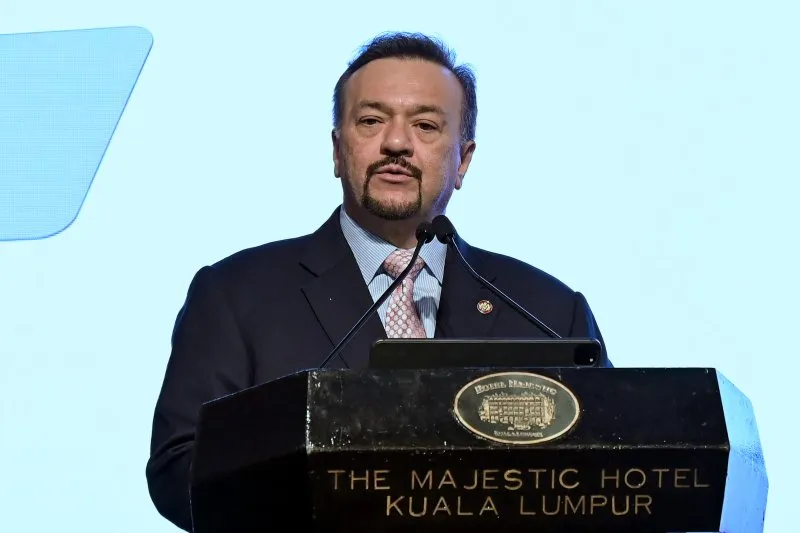












KUALA LUMPUR, Nov 27 — The World Bank’s downward revisionof its 2026 global growth forecast does not signal an impending recession,according to World Bank economist Deisigan Shammugam.
He said the global economy was still expanding, but moreslowly and with higher inflation.
About two-thirds of economies now face weaker growthprospects than the World Bank projected in January, largely due to the economicfallout from the Middle East crisis, he said.
“The revised outlook should not be interpreted as arecession warning.
“And just to be clear, it is not a recession call. Theworld keeps growing, but more slowly and with higher inflation,” Deisigan saidyesterday at the National Economic Outlook Conference organised by theMalaysian Institute of Economic Research (MIER) here.
Why the slowdown in 2026?
Deisigan said one of the biggest shocks was the MiddleEast crisis, which was working its way through the economy via severalchannels.
“We’ve had many energy crises in the past and the fourchannels are very familiar: energy prices, inflation, interest rates andtighter financial conditions.
“We are pretty well aware of these channels, but what isreally different this time is the shipping and the supply chain,” he said.
He said the World Bank report pointed to broaderdisruptions to global supply chains and higher input costs.
“It shows in retail fuel prices like diesel.
“Since March, wholesale prices of diesel and jet fuel haveclimbed considerably more than crude oil, while refining spreads are hoveringwell beyond their historical norms.
“So it is no surprise that AirAsia is finding it difficultthis time around,” he said.
Deisigan cautioned policymakers against relying on Brentcrude prices alone to estimate retail pump prices, as shipping disruptions,supply constraints and sharply higher insurance costs for tanker fleets werealso pushing up costs.
“So if you proxy Brent to retail using just the APMformula like how we do in Malaysia, you are going to miss the market price, thetrue market price of the retail price,” he said, referring to the AutomaticPricing Mechanism.
He added that global oil supply is projected to fall byaround 5 per cent this year due to production cuts linked to the Strait ofHormuz crisis, with gains elsewhere offsetting only a small share of the MiddleEast losses.
“Consumption is also expected to fall 2.5 per cent, thethird-largest decline in energy consumption on record,” Deisigan said.
He said global growth was expected to pick up to 2.8 percent in both 2027 and 2028 as energy supplies recover, monetary easing resumesand trade strengthens.
Among emerging market and developing economies, growth isprojected to slow from 4.4 per cent to 3.6 per cent, while China’s growth isexpected to ease to 4.2 per cent amid weakness in its property sector, labourmarket and consumer confidence.
However, the World Bank expects that if the recentincrease in crude shipments from the Gulf proves durable, global oil productionwill recover towards 2025 levels in 2027, consumption will rebound slightly,and the market will return to surplus by the second quarter of next year.
Turning to financial markets, Deisigan said emergingeconomies could face greater uncertainty as fiscal vulnerabilities and highdebt levels in major economies push up global borrowing costs.
He said rising fiscal risks could increase the termpremium demanded by investors, potentially raising borrowing costs acrossmarkets.
Deisigan also warned that increasingly concerned investorscould move their money out of emerging markets into safer assets, particularlyfrom economies seen as having weak governance.
He said this made structural reforms and strongergovernance important for emerging economies seeking to maintain investorconfidence.
“The solution, sorry to say, boring old answer from aneconomist: structural policies are the answer,” he said.