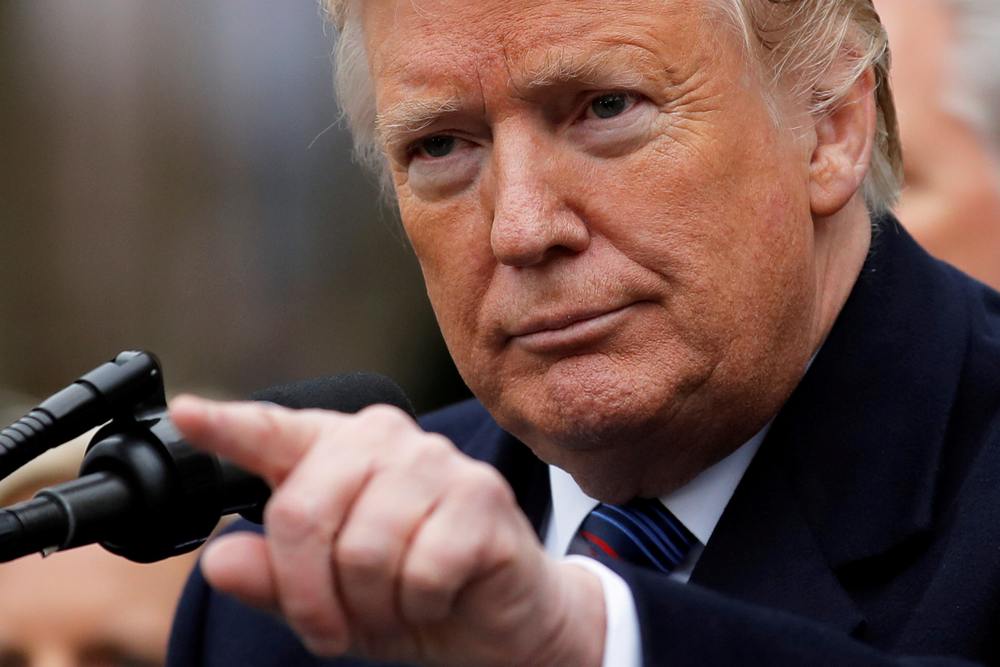


CHICAGO, May 7 ― US President Donald Trump says China pays the tariffs he has imposed on US$250 billion (RM1.03 trillion) of Chinese exports to the United States but that is not exactly the way tariffs work.
“For 10 months, China has been paying Tariffs to the USA,” Trump tweeted on Sunday, saying he would raise tariffs again amid stalled negotiations on a trade deal with China.
But Trump's tariffs are not paid by the Chinese government or companies located in China. They are paid by importers of Chinese goods ― usually US companies or the US-registered units of foreign companies.
Importers often pass the costs of tariffs on to customers, for the most part manufacturers and consumers in the United States.
What the ‘tariff’ man says
Trump has often repeated that China pays for US tariffs on its goods.
“We have billions of dollars coming into our Treasury — billions — from China. We never had 10 cents coming into our Treasury; now we have billions coming in,” he said on January 24.
Trump, who has called himself the “Tariff Man,” said on Sunday he will raise tariffs on Friday to 25 per cent from 10 per cent on US$200 billion of Chinese goods.
He has already imposed tariffs of 25 per cent on US$50 billion of Chinese imports. Global steel and aluminum imports and shipments of washing machines and solar panels are also subject to tariffs Trump has levied since January 2018.
How tariffs really work
US Customs and Border Protection (CBP) collects the tax on imports. The agency typically requires importers to pay duties within 10 days of their shipments clearing customs.
Through mid-March, Washington has netted US$15.6 billion through tariffs imposed since early 2018, according to data from the CBP.
Total tariff revenue - including levies that pre-dated Trump ― shot up by 89 per cent in the first half of the current fiscal year starting October 1, to a total of US$34.7 billion, according to US Treasury data.
Every item imported into the United States legally has a customs code. Importers are expected to check the tariffs and other taxes and duties due on the goods they bring in, calculate what they owe, and pay it.
US Customs reviews payments and sends importers a fresh bill if it detects underpayment.
Importers also have to post payment guarantees, or import bonds, with customs. The costs of these bonds have risen with tariffs, an additional burden on US-based firms importing goods from China.
Do Chinesse suppliers bear the costs of US tariffs?
Chinese suppliers do shoulder some of the cost of US tariffs in indirect ways. Exporters sometimes, for instance, are forced to offer US importers a discount to help defray the costs of higher US duties. Chinese companies might also lose business if US importers find another tariff-free source of the same goods outside China.
But US-based importers are managing the higher tax burden in a number of ways that hurt US companies and customers more than China.
Such strategies include accepting a lower profit margin; cutting costs ― including wages and jobs for US workers; and passing on tariff costs through higher prices for US consumers or companies.
Most importers use a mix of such tactics to spread the higher costs among suppliers, consumers or buyers.
Higher prices for tractors, washing machines
Higher duties on imports of metals and Chinese products, for example, increased Caterpillar's production costs by more than US$100 million last year. In response, the heavy-duty equipment maker increased prices for its products.
Tractor manufacturer Deere & Co estimates a US$100 million increase in its raw materials costs this year because of Trump's tariffs on Chinese imports. Deere has cut costs and increased prices to protect its profits.
A Congressional Research Service report in February found that the tariffs led to increases in washing machine prices of as much as 12 per cent, compared to January 2018, before tariffs took effect.
Steel and aluminum tariffs increased the price of steel products by nearly 9 per cent last year, pushing up costs for steel users by US$5.6 billion, according to a study by the Peterson Institute for International Economics.
US companies and consumers paid US$3 billion a month in additional taxes because of tariffs on Chinese goods and on aluminum and steel from around the globe, according to a study by the Federal Reserve Bank of New York, Princeton University, and Columbia University. Companies shouldered an additional US$1.4 billion in costs related to lost efficiency in 2018, the study found.
What do companies in China pay?
China has retaliated against US tariffs by imposing its own tariffs on imports from the United States.
Most importers in China are Chinese. So in the same way the US government collects import taxes on Chinese goods from US importers, the Chinese government takes in taxes on US goods from Chinese importers.
As with tariffs in the United States, Chinese firms can seek to pass on the costs to US exporters. Some US interests have lost business, such as US soy farmers. Chinese buyers have cut billions of dollars of soybeans purchases from the United States because Chin's tariffs have made US supplies more expensive than beans from competitors such as Brazil. ― Reuters