


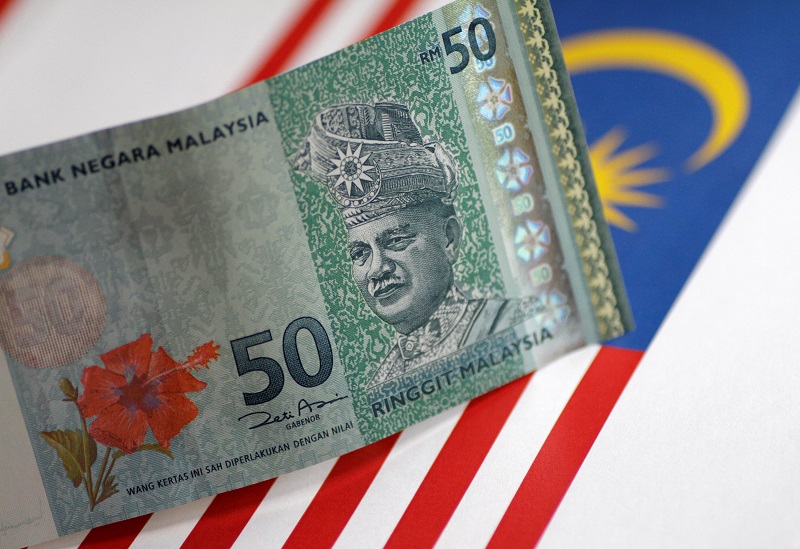


SINGAPORE, Nov 21 — Malaysia’s ringgit and South Korea’s won edged up today, buoyed by expectations of tighter monetary policy after recently strong economic growth while most Asian currencies traded sideways.
Investor risk appetite was largely subdued, with the euro pressured by political deadlock in Germany. The euro rose slightly after dropping in the previous session as German coalition government talks collapsed on the pro-business Free Democrats withdrawing from negotiations.
The dollar index was lower but still near a one-week high against its peers.
Meanwhile, US Republicans are not expected to push major tax cuts through Congress this year, according to a majority of economists in a Reuters poll, who were also sceptical that tax reform would provide a significant boost to the economy.
“People are trying to take back their bets. The US dollar has been coming under pressure because of the tax view, and now along with this week being short one on holiday there might be some profit taking,” said Lee Jin Yang, macro research analyst for Aberdeen Asset Management in Singapore.
US markets will be closed on Thursday due to the Thanksgiving holiday.
“But Asian currencies have been relatively unaffected by what has been going on in the US and that has lent support to the currencies.”
Gains in the region were led by the won, ringgit and Taiwan dollar.
The ringgit and the Indian rupee were each more than 0.12 per cent higher. Positive economic growth data from Malaysia and a Moody’s upgrade on India, have kept the sentiment on these currencies buoyant. The ringgit hit fresh more than one-year highs today.
The Thai baht was the biggest loser in the region, down 0.2 per cent after having led gains in the previous session on positive economic growth data.
Nath Wongasaroj, corporate treasury trader at Mizuho Bank, attributed the baht’s move lower to “short covering on corporate demand approaching month-end.”
Won and Taiwan dollar
The won was up 0.3 per cent, its fifth gaining session in six.
“The South Korean won’s recent strength could be attributed to rising odds of a central bank rate hike in November, easing geopolitical tensions on the Korean Peninsula and flattened US Treasury yield curves,” Qi Gao, FX Strategist (EM Asia) at Scotiabank said in a note.
The market consensus is that the BOK will raise interest rates for the first time in more than six years at its Nov 30 meeting after the economy achieved its fastest growth for seven
years in the third quarter.
On the equity front, the South Korean benchmark equity index was up 0.2 per cent, while Taiwan’s stock index rose 1.1 per cent. The Semiconductor indices for both nations
and, respectively, were up as much as over 1 per cent each. Overnight, Wall Street was boosted by chipmakers.
The Taiwan dollar was up as much as 0.2 per cent, its highest in two months.
Data yesterday showed that Taiwan’s export order growth was higher than expected in October, aided by global demand for tech gadgets. Strong exports have raised confidence the government can easily meet its upwardly revised 2017 economic growth
forecast of 2.15 per cent, giving the central bank room to keep interest rates steady. — Reuters


