



















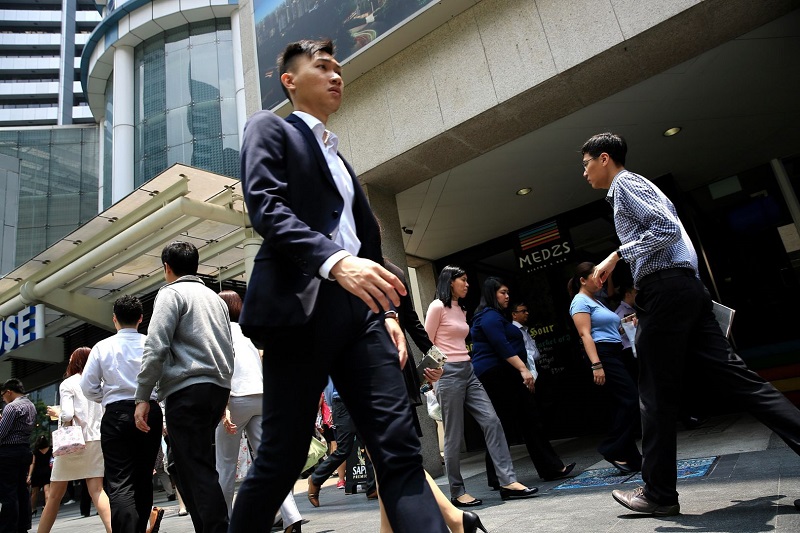


SINGAPORE, Oct 10 — Reiterating a dire warning that the local labour force growth could stagnate in a decade or so, Manpower Minister Lim Swee Say painted a stark picture in parliament today of what the Republic could be in for — including rising unemployment — if it does not strive for quality economic growth and minimise the job-skills mismatch.
Already, the country is feeling the impact of the demographic shifts: Last year, 37,000 more Singaporeans and permanent residents left the workforce compared to the average in the past three years, even as the number who entered it fell by about 36,000.
“This is a swing of 73,000, and this has resulted in the flat growth in our local employment,” said Lim as he responded to a slew of questions tabled by Members of Parliament on the job situation.
The swing is partly cyclical but also structural, Lim said. “More importantly, the number of people retiring is also on the rise, doubling over the last two years. This will continue as more baby boomers enter retirement,” he said. He added: “With our local workforce growing slower, it does not mean we can afford to go slower too in our efforts to create jobs. I will use 2015 as an illustration. Even though local employment went up by only 700, the number of locals looking for jobs was many times higher. We must not forget that there were 190,000 new entries of young locals and re-entries of mature locals in that year.”
Lim said he shared Singaporeans’ concerns about the low number of jobs that were added to the economy last year. In the first half of this year, the figure went down by 200, resulting in a net increase of “just 500 over 18 months”, he said. “Fortunately, while unemployment rate increased, it did not rise sharply,” Lim said. “I was puzzled. Why didn’t the sharp drop in local employment growth lead to a sharp rise in unemployment?” The main reason was the slowdown in local workforce growth, he explained. And this trend “towards negligible levels, or even stagnation” by the mid-2020s would have major implications, he cautioned.
Singapore would have to ensure that the current “low (economic) growth” of 1 to 2 per cent was transitional, and strive towards “quality growth” of 2 to 3 per cent. “Even though flat local employment growth in the past 18 months did not lead to a sharp rise in unemployment rate or a sharp drop in labour force participation rate, we are concerned that this could still happen if the global economic situation does not improve, or worsens further,” said Lim. He added that the government was adopting a “balanced approach” in managing the inflow of foreigners, even as industries are undergoing transformation to achieve higher productivity gains.
He noted that many jobseekers have higher expectations and aspirations, and do not want jobs that have been newly vacated by others. The mismatch in jobs and skills has to be minimised, he stressed. “We share the concern that we could see a higher number of layoffs than before, especially in sectors facing weak demand. We must stand by our people and do more together to support them in this period of economic transition — training support, wage support, job search and career conversion.”
To that end, Lim announced that the National Jobs Bank will be converted into a “one-stop and non-stop” online marketplace — a virtual career fair – with information on career paths and skills requirements in every major sector. He added that in the first eight months of this year, the Singapore Workforce Development Agency and the Employment and Employability Institute has helped more than 13,000 jobseekers find employment. — TODAY


