




SINGAPORE, Nov 25 — Emerging Asian currencies rose today, ignoring geopolitical tensions, on the dollar's broad weakness as investors unwound crowded bullish dollar bets before the Thanksgiving holidays in the US this week.
The Singapore dollar raced to a near three-week high after data showing the economy grew much faster in the third quarter than initially estimated, avoiding a technical recession. The central bank also said the monetary policy remains appropriate.
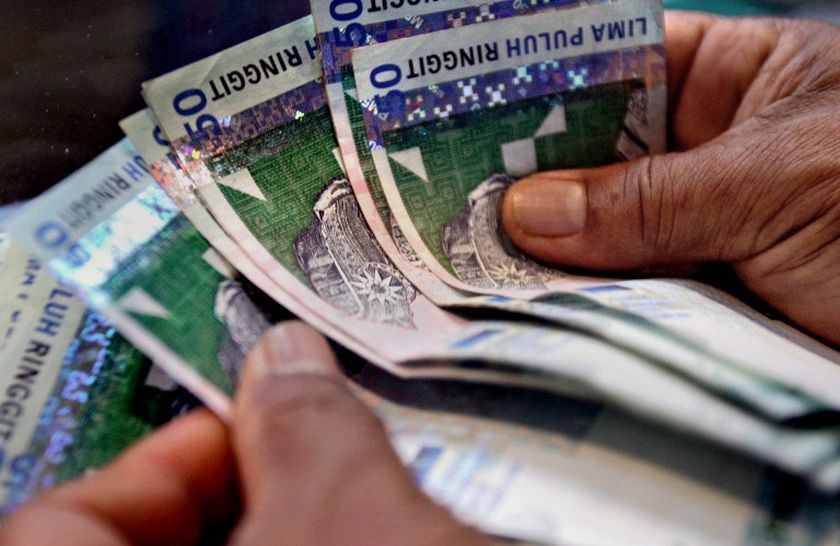
Malaysia's ringgit touched its strongest in more than six weeks as overnight rallies in crude oil prices eased concerns over Malaysia's falling oil and gas revenue.
The South Korean won rallied to its strongest in almost three weeks as offshore funds bought the currency and on month-end corporate demand.
Asia-Pacific stocks outside Japan edged up even though Turkey shot down a Russian aircraft near the Syrian border on Tuesday, in the wake of the attacks in Paris earlier this month.
“Given the events unfolding in Europe, Asian currencies are believed to be safer assets,” said Andy Ji, Asian currency strategist for Commonwealth Bank of Australia in Singapore.
Emerging Asian currencies are likely to remain supported through next week as prospected easing by the European Central Bank on Dec 3 may spur investors to seek higher yields in Asia, Ji said.
After that, regional units are expected to come under pressure as the US Federal Reserve is widely expected to raise interest rates at its policy meeting on Dec 15-16, he added.
Singapore dollar
The Singapore dollar rose as much as 0.4 per cent to 1.4040 per the US dollar, its strongest since Nov 5.
The city-state's economy expanded an annualised 1.9 per cent in the third quarter from the second quarter on a seasonally adjusted basis, the Ministry of Trade and Industry data showed.
That was far better than the government's advance estimate issued in October of 0.1 per cent growth. The median forecast in a Reuters survey was for a flat quarter.
“It will really take a structural event to change policy such as what happened this time last year when we saw a huge drop in the oil price or if the Russian-Turkey-Syria situation escalates further,” said Selena Ling, head of treasury research and strategy at OCBC Bank, referring to monetary policy.
Still, the Singapore dollar pared some of earlier gains as the economic outlook remained challenging, given sluggish global growth.
Ringgit
The ringgit rose as much as 1.4 per cent to 4.1900 per US dollar, its strongest since Oct 19.
Malaysia's government bond prices also advanced with the five-year yield at 3.707 per cent, the lowest since Oct 28.
“We expect to see some stability returning to ringgit as domestic risk gradually subside; oil prices stabilise at lower levels and fiscal consolidation/reforms gains traction,” Maybank said in a client note.
The ringgit was the worst-performing Asian currency in 2015 with a near 17 per cent loss against the dollar so far this year because of a corruption scandal linked to indebted state fund 1MDB and falling oil prices.
Malaysia is a major exporter of palm oil and natural liquefied gas.
Won
The won advanced 0.9 per cent to 1,143.0 per dollar, its strongest since Nov 6, in the local trade.
Most foreign banks chased the South Korean currency, while exporters bought it for month-end settlements.
Importers purchased the dollar on dips for payments, limiting the won's upside.
The currency has a chart resistance at 1,141.4, the 61.8 percent Fibonacci retracement of its depreciation from October to November, analysts said. — Reuters


