


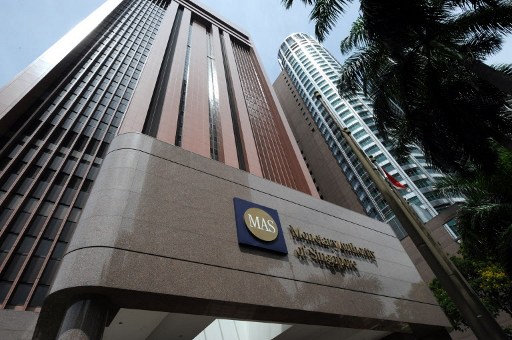


SINGAPORE, April 6 — Singapore will implement curbs on credit card and other unsecured loans that banks can extend to individuals in stages, to give borrowers more time to reduce their debts, its central bank said today.
At issue is a rule originally announced by the Monetary Authority of Singapore (MAS) in September 2013, and due to take effect this June.
The MAS had previously planned to prohibit financial institutions from providing more unsecured credit to borrowers whose total interest-bearing unsecured debt across all banks in Singapore exceeded 12 times their monthly income for three straight months, starting in June.
To give borrowers more time to adjust, the MAS said it had now decided to phase in the rule over the next four years.
The curb will take effect from June for borrowers whose total unsecured debt exceeds 24 times their monthly income. A stricter threshold of 18 times monthly income will start in June 2017, followed by 12 times in June 2019.
“The vast majority of unsecured borrowers in Singapore borrow within prudent limits. However, a small proportion of borrowers has accumulated significant unsecured debts,” the MAS said in a statement.
“Their borrowings pose no risk to the banking industry,” it said, adding that 32,000 borrowers had total unsecured borrowing exceeding 24 times their monthly income as of February.
Such borrowers had total debt of roughly S$4 billion (RM10.72b), which represents 0.2 per cent of total banking assets in Singapore, according to the MAS.
The MAS said loans for medical, education or business purposes do not count towards the borrowing limit. The curb will not apply to borrowers with annual income of S$120,000 or more and borrowers with net personal assets exceeding S$2 million.
To help borrowers reduce their unsecured debt, the Association of Banks in Singapore unveiled today the creation of a repayment assistance scheme (RAS).
Borrowers who have unsecured debt exceeding 12 times their monthly income before June 1, 2015 will be offered a lower, five per cent interest rate for a period of eight years for the portion of their debt that exceeds the 12 times threshold.
That would be below the prevailing interest rates of 15 per cent to 24 per cent that financial institutions typically charge for unsecured lending to individuals. — Reuters


