


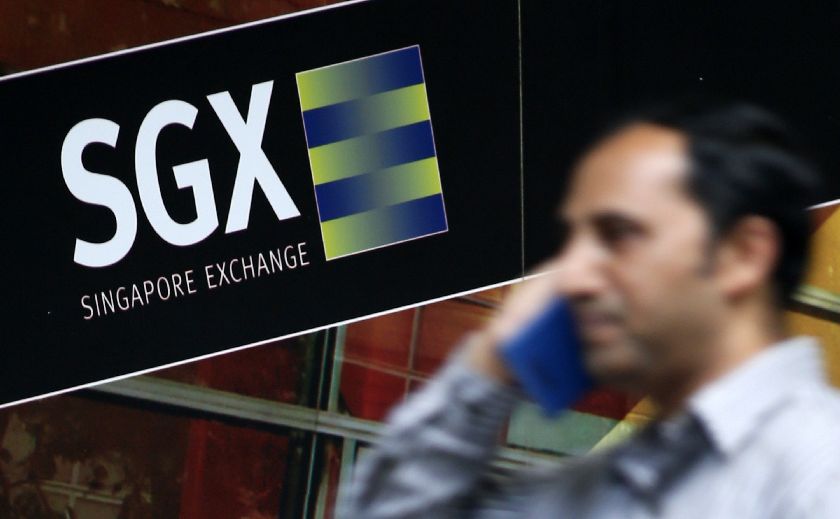


SINGAPORE, Dec. 3 — Singapore Exchange Ltd. suffered its second trading disruption in less than a month, drawing ire from the city-state’s financial regulator and brokers for delaying today’s market open by 3 ½ hours.
Southeast Asia’s biggest stock market will start regular trading at 12:30pm, according to a regulatory filing from SGX, which cited a software error as causing the delay. The bourse operator halted trading for more than two hours on Nov 5 because of a power-supply failure.
The Monetary Authority of Singapore (MAS) has registered “disappointment and concerns” with SGX, the regulator said in an e-mailed statement.
“The lapse is unacceptable,” MAS said in the statement.
“MAS will not hesitate to take supervisory actions against SGX if necessary.”
The Singapore bourse operator, which markets itself as the gateway to Asia and the region’s most international exchange, is already grappling with a slump in stock trading volume that spurred a 16 per cent decline in profit last quarter.
SGX shares have eked out a 0.1 per cent gain this year, trailing the Bloomberg World Exchanges Index’s 3.5 per cent advance.
“It’s quite annoying,” Steven Leung, Hong Kong-based director of institutional sales at UOB-Kay Hian Holdings Ltd., said about today’s delayed open. “There will certainly be complaints.”
Today’s trading disruption was announced in a stock exchange statement shortly after 4 a.m. local time. Pre-open procedures will start at noon, and the market will remain open until 5 p.m. Singapore time and close as normal. Bourse spokesman Benjamin Tan said the bourse operator didn’t have any further updates beyond the statement.
Software Problem
“The problem was caused by a software defect which has since been rectified,” according to the SGX statement.
“This delayed opening is to enable member firms to complete client position reconciliations, and rectify any errors in the end-of- day processing,” for Dec 1 on the securities client-accounting system hosted by SGX on behalf of brokers.
MAS said Nov. 6 that it would take action against the exchange operator if lapses were found to be behind last month’s power outage.
SGX has started a probe into the breakdown. In April 2013, the opening of derivatives trading was delayed for three hours because of a computer breakdown, forcing investors to use a rival exchange operator in Osaka to buy and sell Japanese index contracts.
“It’s still too early to say if it will hurt their reputation,” UOB-Kay Hian’s Leung said about today’s disruption.
“It really depends on how they handle this, how they explain to the market what the problem was, how quickly they can fix it and avoid it happening again.”
Global Faults
Faults happen periodically in some of the world’s biggest stock markets. The CAC 40 Index of France’s largest companies failed to calculate for more than three hours on Nov. 27 after Euronext NV suffered a technical incident. This also stopped the national benchmark indexes for the Netherlands, Belgium and Portugal—and their respective derivatives gauges—from opening at the normal time.
On Oct. 31, a computer malfunction forced Deutsche Boerse AG to suspend trading on its Xetra equities platform for 72 minutes. A day before that, the New York Stock Exchange had to switch to a backup system after a network hardware failure caused its price feed to malfunction.
Companies worth a combined US$572 billion (RM1.969 trillion) are listed in Singapore, data compiled by Bloomberg show. The benchmark Straits Times Index rose 4.9 per cent this year through yesterday, compared with the MSCI World Index’s 4.5 per cent advance.
Trading Value
The daily value of stocks traded in Singapore averaged S$1 billion (RM2.624 billion) this year, a 25 per cent slump from 2013, data compiled by Bloomberg show. Analysts expect SGX shares to rise 3 per cent to S$7.49 over the next 12 months, according to target-price estimates compiled by Bloomberg.
“As long as no one has lost money due to the error, and there is no legal action, this shouldn’t really impact the stock price,” said Andrew Clarke, director of trading at Mirabaud Securities Asia Ltd. in Hong Kong.
“As always with these types of incident, the relevant exchange always hopes no one notices or just forgets.” — Bloomberg


