


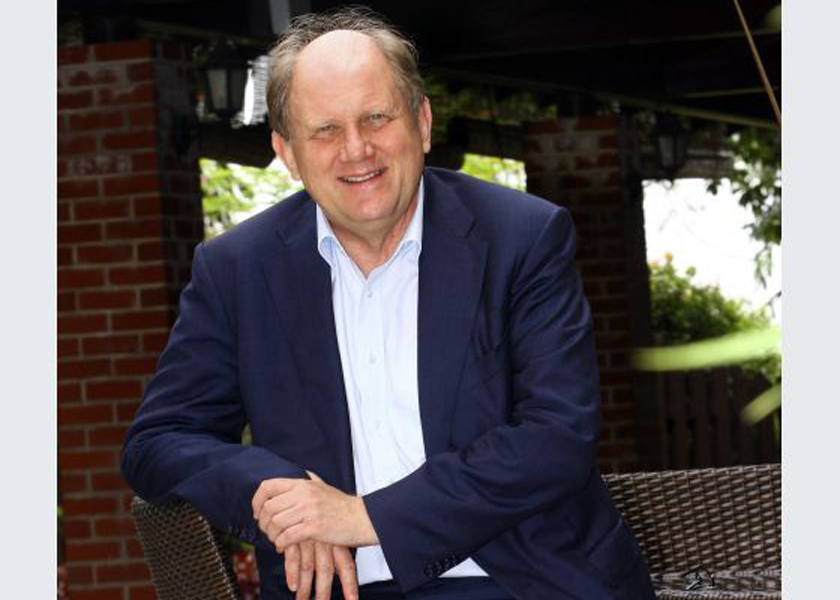


SINGAPORE, Aug 30 — Amid the spirited public discussion about the value of a degree and the need for a greater emphasis on applied and technical education, Nanyang Technological University president Bertil Andersson put up a robust case for Singapore needing more graduates — among other things, so as to not end up as a “second-rate country” — and pointed out that there is a false dichotomy between specialised training and pursuing a degree.
The real problem is how people here tend to follow a fixed path in getting an education, he said yesterday in an interview with TODAY.
Starting Singapore’s 2nd medical school a career highlight, says Andersson
“Most Singaporeans, young people, want to take (a degree course) as fast as possible and then they want a job,” Prof Andersson said, offering his take on the Singapore-style paper chase. It is important that the door remains open for individuals to enter university long after they have started work, he added.
He noted that in Sweden and the United Kingdom, for example, about 40 per cent of each cohort are degree holders. In comparison, about 30 per cent of each cohort here go on to study at local universities. “That is low (by) international standards.”
The Government has set a target of providing places at publicly funded universities for 40 per cent of each school cohort by 2020.
Prof Andersson added: “Singapore is a country that is connected to all other countries in the world — we trade with them, we interact with them … So, Singaporeans cannot be lower-educated than people in America and England. If not, you will become a second-rate country instead of a First World country.”
During the National Day Rally, prime minister Lee Hsien Loong made clear that a cultural shift in the way Singapore values its people is needed for the future. He said the paper chase is not the only route to a bright future — another pathway lies in getting a good job, mastering deep skills, performing well and gaining relevant qualifications to advance a career.
On Thursday, finance minister and deputy prime minister Tharman Shanmugaratnam noted that the failure to focus on applied and technical education is the reason countries, even those with successful economies, are grappling with the problem of underemployment. “The most modern and advanced societies — you can look at Switzerland ... Germany — require large numbers of people with technical skills in services, manufacturing and logistics,” he added.
Weighing in on the issue, Prof Andersson said to achieve lifelong learning, it is insufficient to focus only on specialised training.
“My view is that specialised education, at least a higher level of specialised training, must become more academic — it’s not either or; it’s both,” he said.
Citing the example of an engineer’s future, Prof Andersson said his role was not to work in front of machines. Rather, he should be the one programming robots or machines to do the work — something that requires academic training from studying for a degree.
“The problem is what prime minister Lee called the ‘paper chase’ — it’s so streamlined,” he added.
In contrast, students in Sweden sometimes take a break or work before entering university.
Even without top grades, universities in Sweden will also consider applicants’ work experience for their admission, noted Prof Andersson, who is a Swede. He acknowledged that Swedish students are able to spend a longer time deciding what they want to do since university education is free.
However, Singapore can work around that and offer more flexibility in the system. For instance, he said universities could change the way they evaluate the admission criteria for undergraduates and make it easier for applicants to enter university at any age.
When asked whether NTU would lead the way in changing admission criteria, he noted that he would be happy to do it, while acknowledging the rules and regulations governing university admissions and discussions that would be needed with the Education Ministry.
The streamlined education pathways are also why Prof Andersson noted that there are “much too few” Singaporeans taking their master’s degrees and PhDs. “That is a reason we have so many foreign professors, because there are few Singaporeans, young people going into an academic career,” he said.
He added that support systems need to be created to make it attractive for young Singaporeans to pursue postgraduate studies.
His advice to students? Take time to deliberate study choices. “Be ambitious, but don’t rush,” he said. — Today


