


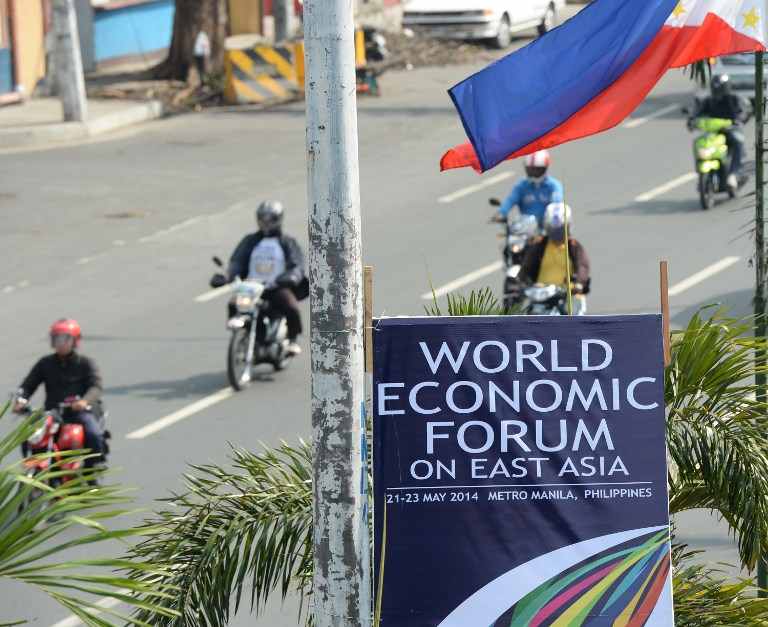
MANILA, May 21 — Rising territorial conflicts in the waters in Southeast Asia and political tensions in Thailand could dampen strong growth in the region and hurt investments if left unresolved, a senior official of the International Monetary Fund said today.
“If the tension gets higher, it could have large impacts on the economies, especially in the case of this region where the countries are interconnected through supply chains,” Naoyuki Shinohara, IMF deputy managing director, told Reuters on the sidelines of the World Economic Forum on East Asia in Manila.
“So if the tension gets larger, the negative impact could be significant, depending on how it develops,” he said.
The IMF is closely watching the situation, but there is no evidence yet Southeast Asia economies were being affected and it was too early to revisit the Fund’s 2014 regional growth forecasts, Shinohara said.
In April, the IMF said it expected growth in developing Asia of 6.7 per cent this year, compared with 6.5 per cent in 2013. It saw Southeast Asia’s five biggest countries posting growth of 4.9 per cent this year, slower than 5.2 per cent in 2013.
“Except for Thailand, I do not think we need to change the projection at the moment. There are some geopolitical tensions, but so far it hasn’t had much impact on the economic activities,” Shinohara said, adding it may consider adjusting its forecast for Thailand although the impact so far of the months-long protests was “minor”. — Reuters


