


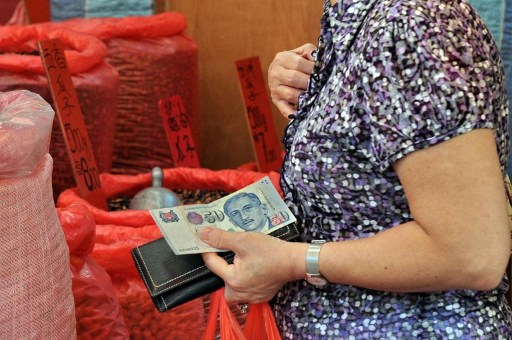


SINGAPORE, Feb 4 — The Singapore dollar hit a near three-week high today as global risk aversion fuelled safe-haven demand, leading gains among emerging Asian currencies as the region is seen better positioned than other emerging markets.
The Malaysian ringgit advanced on bids linked to daily fixing and with the central bank spotted intervening to support the currency, traders said.
Indonesia’s rupiah gained as foreign banks and state-run lenders bought it ahead of a bond auction tomorrow. The Thai baht rose as investors continued to cover short positions.
That compared to losses in other emerging market currencies such as the Brazilian real and the Turkish lira.
“Asia shouldn’t suffer as much fallout as other emerging market regions. And of course a fair degree of bad news is already in the price,” said Jonathan Cavenagh, senior FX strategist with Westpac in Singapore.
Still, it is premature to add bullish bets on emerging Asian currencies, given growing risk aversion, analysts and traders said.
US manufacturing activity slowed sharply in January and China’s factory growth eased to an expected six-month low.
“The market bias remains to buy dips in USD/Asia and that seems unlikely to change in the near term,” Cavenagh said.
“We have to wait for a turnaround in data momentum within the Asia region and a softer US picture to emerge, which may calm fears about an aggressive tapering schedule.”
Singapore dollar
The Singapore dollar rose 0.4 per cent to 1.2703 to the US dollar, its strongest since January 15, as investors sought safer assets in Asia with the city-state’s triple A ratings.
The currency found more support from demand against the ringgit and the baht. The ringgit fell to its lowest since July 1998 to the Singapore dollar.
Baht
The baht gained as offshore funds and local interbank speculators covered short positions.
The number of anti-government protesters appears to have dwindled, even though the opposition party will challenge the weekend’s disrupted elections in court.
A Thai bank trader said the baht may be well supported as investors appeared to hold bearish bets despite sustained concerns over political tensions.
“Ignore poor performance in equities,” said the trader.
Rupiah
The rupiah rose, tracking its gains in non-deliverable forwards and on expectations of bond inflows.
The government aims to raise 10 trillion rupiah (RM2.73 billion) in a bond auction tomorrow.
“I expect inflows for the tomorrow’s auction after the trade balance data,” said a Jakarta-based trader, referring to the December surplus, which was the largest in two years.
The rupiah may head to 12,150 per dollar, but the rebound may be a good chance for importers to buy the greenback, the trader added.
Won
The won earlier lost as much as 0.5 per cent to 1,089.9 per dollar, its weakest since September 9, as continuous foreign selling pushed Seoul shares to their lowest in more than five months.
The South Korean currency recovered most of the earlier losses as exporters’ bids for settlements prompted stop-loss dollar selling with chart support lines around 1,092 and 1,094.
It has the 38.2 per cent Fibonacci retracement at 1,092.3 of its appreciation between June and January. The 200-day moving average also stands at 1,093.8.
Offshore funds were not really interested in selling the won either, traders said.
“The won’s recent losses were excessive compared to other Asian currencies,” said a foreign bank trader in Singapore, adding that the won is seen moving between 1,075 and 1,085.
The won was the worst performing Asian currency so far this year with a 2.7 per cent loss against the dollar, according to Thomson Reuters data. — Reuters


