



ISKANDAR PUTERI, Nov 27 — The Johor state government has made a fresh call for the return of at least 25 per cent of the tax revenue contributed to the federal administration in order to strengthen the development of local facilities.
Johor Menteri Besar Datuk Onn Hafiz Ghazi said that the latest call is in line with the Regent of Johor, Tunku Mahkota Ismail’s royal decree and builds upon an initial request for 20 per cent that was submitted in December 2024.
He said the state government is currently assisting in the provision and upgrading of various facilities belonging to federal agencies, even though such matters do not fall under the state’s primary responsibilities.
“The assistance includes the repair of dilapidated police quarters in Muar, the upgrading of schools, support for emergency ward requirements and the temporary relocation of services for health clinics.
“If we had the means, the state government would certainly wish to allocate even more to support those that need assistance in Johor.
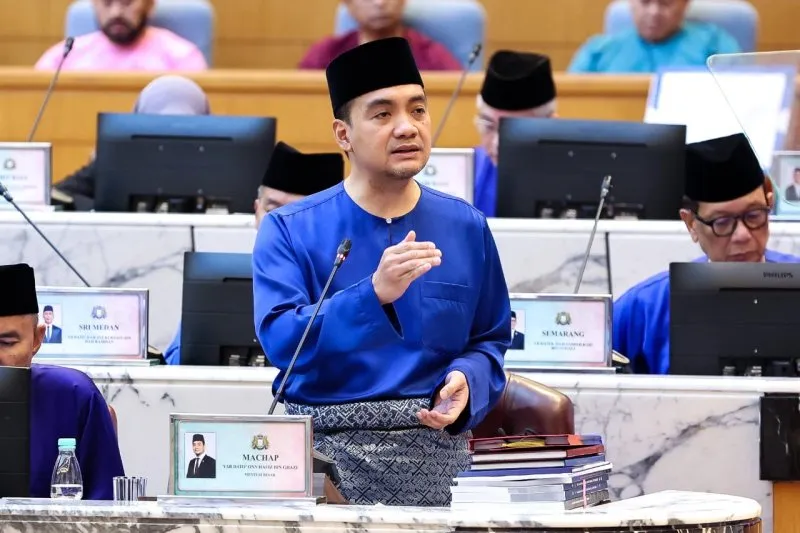
“However, this does not fall within the state government’s primary jurisdiction or core responsibilities,” he said while delivering his winding-up speech for the Johor Budget 2027 at the state legislative assembly in Kota Iskandar here today.
Onn Hafiz, who is also the Machap assemblyman, added that the state government has also provided assistance by covering payments for locum doctors, establishing the volunteer SV Healthcare Team, upgrading Sekolah Rintis Bangsa Johor (SRBJ) schools and carrying out repairs to police buildings, military camps and Customs, Immigration, and Quarantine (CIQ) complexes.
He further noted that this request is not new as Tunku Ismail had previously proposed that between 20 and 30 per cent of the tax revenue contributed by Johor be returned to the state.
In December 2024, the Johor government formally requested that 20 per cent of the said tax revenue be channelled back to the state, providing the state with greater fiscal space to pursue development initiatives.
The request was subsequently adjusted to at least 25 per cent, enabling the state government to plan and implement a larger number of development projects and public amenities.