









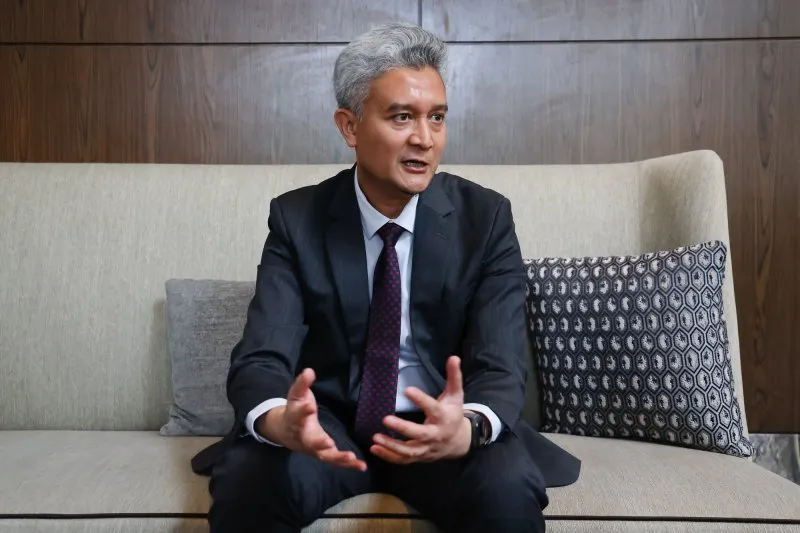


KUALA LUMPUR, Nov 25 — Before venturing into renewable energy, Syed Malek Faisal Syed Mohamad was part of Proton’s powertrain team, working on the electronic systems that controlled the national carmaker’s engines.
His later work in electric mobility eventually led him to help build the renewable energy business at Gentari.
“Before I got the Khazanah-Cambridge Scholarship in 2011, I spent a lot of time in Proton.
“I graduated from King’s College London in 1997 with First Class Honours in mechatronics engineering, and right after graduation I joined Proton,” he told Malay Mail in an interview.
Where it began: Proton
Syed Malek said he had always been interested in both mechanics and electronics.
He recalled that there were few options when he was choosing his undergraduate course, with students generally opting for mechanical, electronic or electrical engineering.
“It so happened that a new course was being introduced, so I took mechatronics because I liked mechanics and I liked electronics. I was in the second batch at King’s College,” he said.
At the time, he said, Proton was moving from assembling cars to becoming a full-fledged developer that designed, developed and manufactured cars from scratch.
“So I was part of that transition with Proton. It was then the vision of Tun Dr Mahathir Mohamad to make it part of Malaysia’s industrial master plan, and to build local capabilities, in this case in building cars and engines,” he said.
At Proton, he developed the electronic systems that controlled the engines, which he described as the engine’s “brain”. His work involved tuning engines to meet emissions requirements while maintaining performance.
“One of the projects I worked on was the CamPro engine, which is a proud achievement for the Malaysian engineering team.
“The engine was developed from scratch and subsequently used in various Proton models. That is a testament to an excellent vision becoming reality and developing local capabilities,” he said.
Cambridge and the digital shift
After several years in the automotive industry, Syed Malek began looking towards the next stage of technological development, particularly the growing importance of electronics, computing and digitalisation.
That interest led him to pursue a master’s degree in technology policy at the University of Cambridge’s Judge Business School in 2011, supported by the Khazanah-Cambridge Trust.
He recalled that the world was then moving from industrialisation towards digitalisation, before artificial intelligence (AI) and data centres became major talking points.
“At that time there was no AI, there were no data centres,” he said.
He said the experience gave him a good foundation before he returned to Malaysia and moved into electric mobility.
Pioneering EVs with Comos
In 2014, Syed Malek joined Comos, which he described as Malaysia’s first electric vehicle (EV) start-up.
The company provided EV car-sharing services and developed a charging network at a time when electric mobility in Malaysia was still in its infancy.
He said the challenge was to establish the business while helping lay the foundations for wider EV adoption.
“Being the pioneer, there were a lot of challenges at that time. Our objective was to ensure that we could be the first mover.
“We wanted to provide a base for EV penetration here in Malaysia,” he said.
His work went beyond the business itself, extending to advocacy to secure support for the growth of the EV industry.
Building Gentari
In 2018, Syed Malek was offered the chance to join Petronas to help set up its new energy business.
The business was initially housed under the group’s corporate strategy division before becoming a standalone arm and, eventually, Gentari, which now focuses on renewable energy, clean hydrogen and green mobility.
Drawing on his EV experience, Syed Malek contributed to the early development of Gentari’s green mobility business before moving into renewable energy.
He is now head of renewable energy for Malaysia, overseeing the development, delivery and growth of the company’s renewable energy portfolio in the country.
His responsibilities include managing the business, developing strategic partnerships, overseeing project execution and expanding its presence across the utility-scale as well as commercial and industrial segments.
The road to 2050
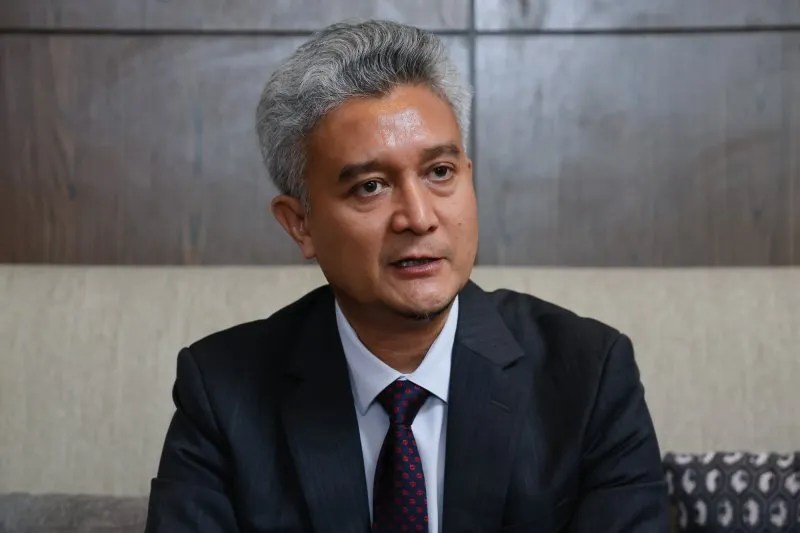
Asked whether Malaysia was heading in the right direction with its energy transition, Syed Malek said the country had established a clear policy direction and was beginning to see demand for cleaner energy.
He pointed to the National Energy Transition Roadmap, which aims to raise renewable energy’s share of the country’s installed capacity to 70 per cent by 2050.
“Even though 2050 feels like it’s still far away, a lot of work has to start now,” he said.
He cited large-scale solar development and the Corporate Renewable Energy Supply Scheme as examples of mechanisms meant to accelerate the sector.
Demand from new industries is also becoming an important driver, particularly the growth of data centres, which consume substantial amounts of electricity. This makes access to clean energy increasingly important as Malaysia attracts more investment in the sector.
“We are doing the right thing because we need to ensure that all these data centres are not taking the full energy from the market. It has to be sustainable.
“For the renewable energy business in Malaysia, we have developed the capability, but we need to ensure that we can scale and grow bigger to support Malaysia’s bigger ambitions,” he said.
Proton’s EV ambitions realised
Looking back, Syed Malek said he was pleased to see Proton now producing EVs, a continuation of work on EV and hybrid prototypes that began more than a decade ago.
“I’m very, very happy, because the early work that we started more than 10 years ago included developing prototypes for EVs and also for hybrids,” he said.
Syed Malek’s background has also shaped his views on education and opportunity.
Originally from Pekan, Pahang, he is the eldest of 13 siblings. All 12 of his younger siblings went on to tertiary education. Nine of them earned university degrees, some of them master’s degrees, three completed diplomas, and six studied overseas.
He has since been involved in efforts to support other students pursuing similar paths.
He was among the pioneer members who set up the Khazanah Scholarship Alumni Association (KSAA), which connects former scholars with Yayasan Khazanah and gives alumni a platform to share feedback, take part in discussions and support one another.
Most recently, he was selected by Majlis Amanah Rakyat (Mara) to mentor its scholars through a programme that helps students gain admission to universities including Cambridge, Oxford, Harvard, MIT and Yale.
For Yayasan Khazanah, its 20th anniversary marks two decades of investing in Malaysian talent. The foundation said it had developed more than 1,730 Malaysian scholars through its scholarship programmes between 2006 and 2026.