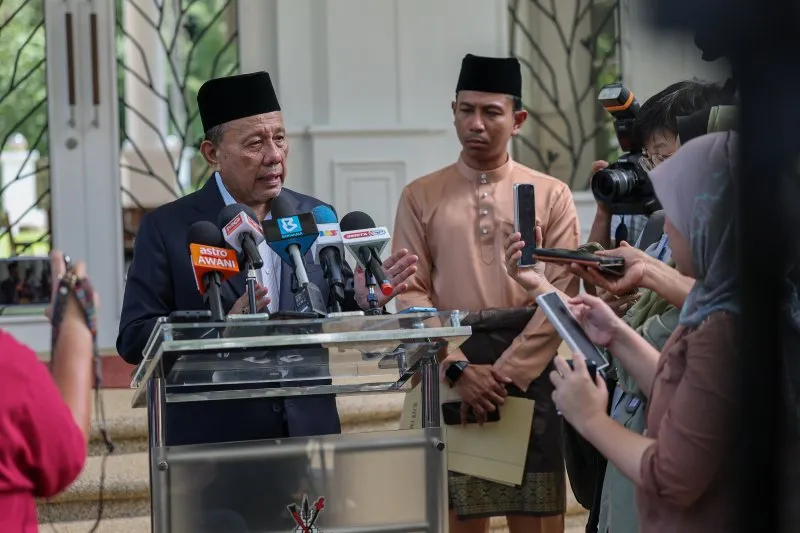


















KOTA KINABALU, Nov 21 — Sabah’s Food Poverty Line Income (PGK) calculation method needs to be reviewed to ensure a more accurate measure of poverty that reflects local living conditions, culture and dietary habits, particularly in rural areas, said Sabah Maju Jaya (SMJ) Secretariat chief coordinating officer Datuk Datu Rosmadi Datu Sulai.
He said the measurement method should take into account the unique characteristics of Sabah’s communities, whose dietary needs and practices differ from those in Peninsular Malaysia.
He said Sabah’s PGK was currently almost on par with that of Kuala Lumpur and Selangor, but the food items used in the calculation did not necessarily reflect the consumption patterns of the state’s population.
“On the ground in Sabah, when I look at the list of food items that Sabahans are required to buy or choose from, it is the same as that used in Peninsular Malaysia, particularly Kuala Lumpur and Selangor,” he told Bernama.
Rosmadi said examples of this mismatch included meat consumption among non-Muslim communities in Sabah, as well as seafood such as crabs, prawns and shellfish, which formed part of the staple diet of coastal communities.
Local vegetables such as tuhau (wild ginger) and lembiding (a type of fern), which were not included in the food components used as references, were other examples.
He said these differences could affect the calculation of food costs and, consequently, the determination of the number of people living in poverty.
He cited an example in which more than 55,000 people classified as living in absolute poverty in Sabah could instead fall into the B40 income group if Perlis’ food poverty line income were used as the benchmark.
Rosmadi said the state government, through the Sabah Maju Jaya (SMJ) 2.0 Development Plan, aimed to reduce Sabah’s poverty rate from 17.7 per cent in 2024 to between three and five per cent by 2030, focusing on five priorities: housing, education, employment, welfare, as well as entrepreneurship and training.
Meanwhile, Sabah Department of Statistics Malaysia director Khairolnizam Hassan said the department took note of Rosmadi’s views, particularly the types of staple foods consumed by local communities, and would examine the proposal to improve the calculation method.
He explained that the PGK was calculated based on calorie requirements set in accordance with Health Ministry guidelines and the spending patterns of the lowest-income households, while differences in food prices and household sizes between states also influenced their respective poverty line income figures.
He said Sabah’s food PGK was influenced by higher food prices compared with several other states, as well as Sabah’s average household size of between 4.5 and five people, which increased a family’s food expenditure requirements.
He said that based on the 2024 absolute poverty statistics, nine of the 10 districts with the highest poverty rates in Malaysia were in Sabah, namely Pitas, Tongod, Kota Marudu, Kudat, Beluran, Membakut, Kinabatangan, Kalabakan and Kota Belud, while the remaining district was Daro in Sarawak.
He said the poverty classification was based on the PGK set for each state, with Sabah’s overall PGK standing at RM2,873 per month.
Households earning below this threshold were classified as poor.
Meanwhile, Kinabatangan Member of Parliament Datuk Mohd Kurniawan Naim Moktar also supported the proposal to review Sabah’s poverty measurement method by taking into account geographical factors, logistics costs and difficulties in accessing necessities and services, particularly in rural areas.
He said the Market Basket Measure approach used in Canada could serve as a reference, as it accounted for differences in logistics costs and the prices of goods in remote areas when setting the poverty line.
“The Scottish Index of Multiple Deprivation approach in Scotland should also be studied as it takes into account various socioeconomic factors and geographical considerations, including the time taken by residents to travel to access facilities and services,” he said.
Naim said this was particularly important given the vast size of the Kinabatangan constituency and the considerable distances between villages, which posed unique challenges for residents.
He said it was regrettable that Kinabatangan and Tongod, two districts within his constituency, were among the poorest districts in Malaysia and the situation required immediate action.
He said efforts to increase residents’ incomes should be prioritised through the development of the agriculture sector and downstream industries, including timber processing, while making use of the Kinabatangan strategic development plan drawn up in collaboration with the Institute for Development Studies (Sabah) and Universiti Malaysia Sabah. — Bernama