


KUALA LUMPUR, Oct 5 — The Human Rights Commission of Malaysia (Suhakam) does not need prosecutorial powers to be effective, but authorities should be required to respond to its findings and recommendations, its chairman Datuk Seri Mohd Hishamudin Md Yunus said.
While the 77-year-old former judge acknowledged criticism of Suhakam’s limitations, he stressed that the national human rights body was far from being a “toothless” organisation.
Instead, he urged critics to recognise that Suhakam has a distinct role from the courts, enforcement agencies and other statutory bodies.
“Suhakam’s present mandate is primarily investigative, advisory, educational and recommendatory.
“We are not a court, and we do not have prosecutorial powers,” Mohd Hishamudin told Malay Mail in an exclusive interview recently.
“Suhakam already has important investigative powers under Act 597 (the Suhakam Act). We can initiate inquiries, summon witnesses, obtain evidence and make recommendations.
“The 2024 amendments also strengthened our mandate to visit places of detention, institutions and other relevant places,” he added, referring to the latest amendments to the Suhakam Act, which took effect in July 2024.
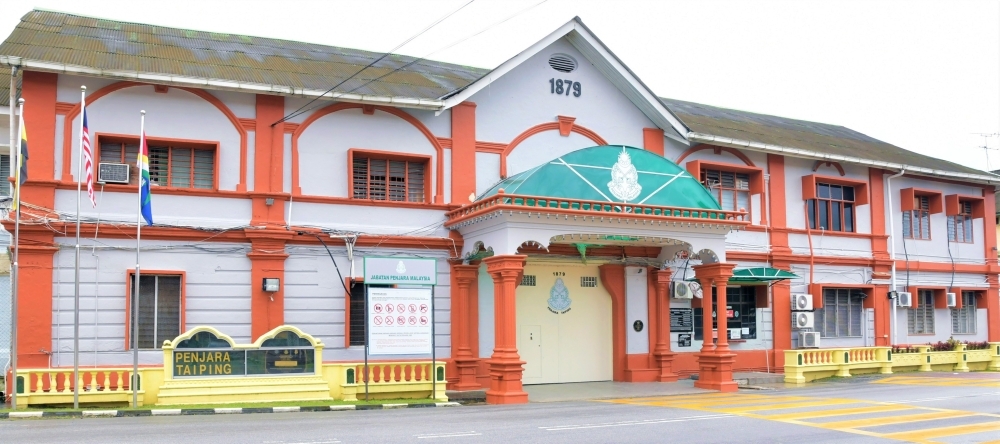
Mohd Hishamudin said the broader powers enabled the commission to conduct a thorough and independent public inquiry into the Taiping prison riot that occurred in January 2025.
The riot, involving about 100 inmates, resulted in the death of a High Court detainee.
Suhakam’s inquiry later found that a large number of prison officers had used excessive physical violence against the detainees and abused weapons and security equipment, including batons and pepper spray.
It also flagged serious overcrowding at Taiping Prison and recommended that the 146-year-old building be turned into a museum as it was no longer fit to serve as a prison.
A prison officer had already been charged under Section 304(b) of the Penal Code in December 2025, while another five Taiping Prison wardens were charged in July 2026 over injuries allegedly inflicted on inmates.
The real gap comes after investigations
At present, Suhakam can publish findings from a public inquiry and make recommendations to the relevant authorities.
While the amended law requires relevant authorities to inform Suhakam of any action taken after a human rights infringement is referred to them, it does not oblige them to accept or implement the commission’s recommendations.
Mohd Hishamudin said a stronger “respond and explain” mechanism was needed from the government to close that gap and strengthen reforms.
“Suhakam is not proposing that every recommendation automatically becomes legally binding,” he said.
Instead, he said authorities should be required to provide a written response within a reasonable period stating whether they accept, partially accept or reject a recommendation made by Suhakam.
For accepted recommendations, authorities should also provide a progress report setting out follow-up measures and a timeline for implementation, while rejected recommendations should be accompanied by reasons, he added.
Mohd Hishamudin said Malaysia could consider emulating Australia, where Section 46 of the Australian Human Rights Commission Act 1986 requires specified commission reports to be tabled in each House of Parliament within 15 sitting days of being received by the minister.
Still an ‘A-status’ rights body
Suhakam was also re-accredited as an “A-status” national human rights institution last June — recognition that Mohd Hishamudin said reflected its standing as an independent, credible and effective institution internationally.
Suhakam undergoes re-accreditation every five years by the Global Alliance of National Human Rights Institutions (GANHRI) Sub-Committee on Accreditation (SCA).
The “A-status” allows Suhakam to participate fully in international and regional human rights mechanisms, including the United Nations Human Rights Council and treaty body processes.
Nevertheless, Mohd Hishamudin stressed that credibility begins at home.
“Malaysians must have confidence that when they approach Suhakam, raise concerns or lodge complaints, they are engaging with an institution that is independent, impartial and able to carry out its mandate without undue interference,” he said.
Established through an Act of Parliament on September 9, 1999, Suhakam marked its 27th anniversary this year.
“After 27 years, the question is no longer simply whether Suhakam can investigate and make recommendations.
“The next stage of institutional reform should ensure that those recommendations receive a timely, reasoned and transparent response from the authorities concerned,” Mohd Hishamudin said.


