


KUALA LUMPUR, Oct 1 — The East Coast Rail Link (ECRL) could begin carrying passengers as early as mid-December, ahead of its original January 2027 launch target.
Prime Minister Datuk Seri Anwar Ibrahim said on September 23 that the government wants to see the ECRL completed before committing to other high-speed rail projects in the country.
Stretching 665km, the electrified rail network is set to transform travel between the East Coast and the Klang Valley, linking Kota Bharu in Kelantan to Port Klang in Selangor via Terengganu, Pahang and the Greater Klang Valley.
Here’s what we know so far about the ECRL and how close it is to opening:
1. How fast is the ECRL, and where will it run?
The ECRL network is being developed in two phases: the Kota Bharu-to-Gombak stretch, originally slated to begin operations in January 2027, and the Gombak-to-Port Klang section, scheduled to open in January 2028.
Transport Minister Anthony Loke said in August that the first phase was on track for completion in December, with the government pushing for passenger operations to begin as early as the middle of that month.
The passenger fleet will comprise 11 six-car Electric Multiple Unit (EMU) train sets built by China Railway Rolling Stock Corporation (CRRC) Dalian.
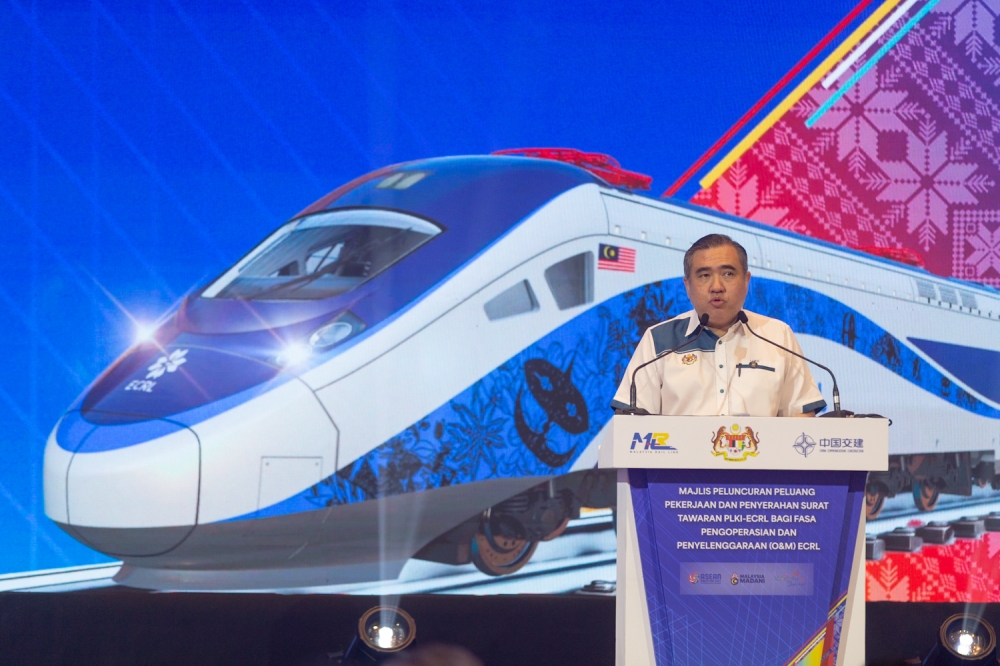
Malaysia Rail Link Sdn Bhd (MRL) chief executive officer Datuk Seri Darwis Abdul Razak told Bernama in September that the ECRL would nearly halve the travel time between Kota Bharu and Gombak, from about seven hours by road to around four hours.
ECRL services could also run from Gombak to Kuala Terengganu in about three hours and from Gombak to Kuantan in just one hour and 35 minutes on an express service, according to Loke.
The full ECRL network is planned to have 20 stations, comprising 10 passenger-only stations and 10 stations serving both passengers and freight.
2. How many passengers can the ECRL carry?
Each six-car EMU can carry up to 425 passengers in an all-economy configuration.
The passenger trains will operate at speeds of up to 160km/h and are equipped with facilities including toilets, luggage racks, food-and-beverage counters, prayer rooms with ablution areas and facilities for passengers with disabilities.
Loke has said the network could eventually carry up to 10,000 passengers a day, depending on service frequency.
3. Why is the ECRL being pushed for an earlier opening?
Loke recently challenged MRL and China Communications Construction Company (CCCC) to get the first phase of the ECRL running in time for the year-end school holidays in mid-December.
The earlier launch, however, remains subject to testing and commissioning being completed satisfactorily and without compromising safety requirements.
CCCC is the ECRL’s engineering, procurement, construction and commissioning contractor, while operations and maintenance will be handled through a joint venture involving MRL and China Communications Construction Company ECRL Sdn Bhd (CCCECRL).
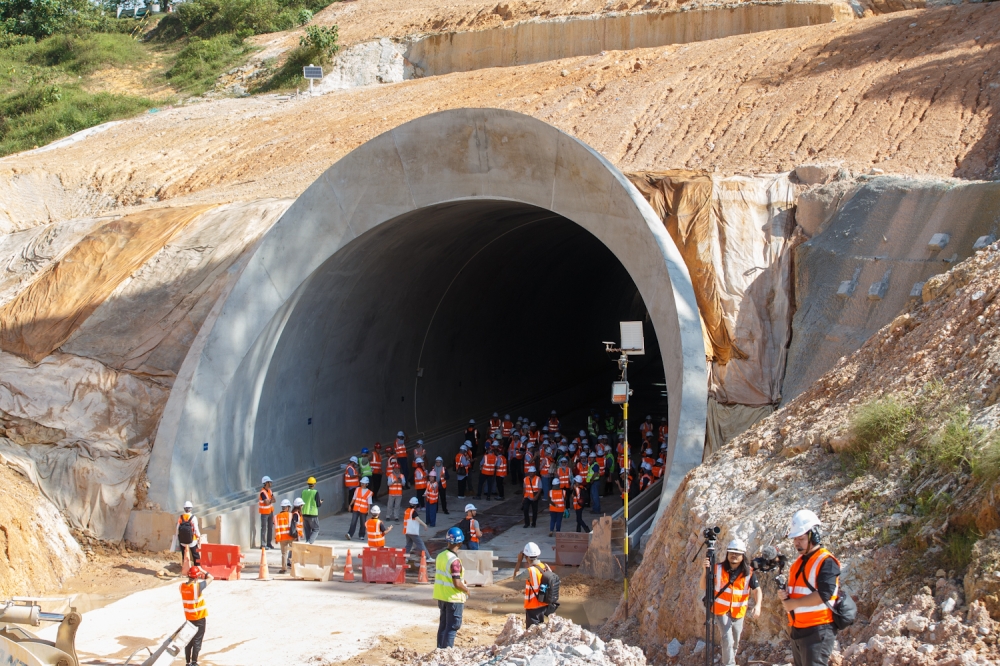
4. How close is the ECRL to opening?
MRL is already deploying comprehensive inspection trains (CITs) to detect potential problems along the rail network ahead of the planned start of operations.
More than 40 CIT test runs and 12 freight train tests had been carried out as of September 18, CCCECRL project director and senior adviser Kong Qi told The Edge Malaysia recently.
The testing has included speeds of up to 176km/h, above the ECRL’s planned passenger operating speed of 160km/h.
The trains are expected to complete full runs between Kota Bharu and Gombak by the end of September, before the mandatory Fault-Free Run (FFR) begins in October.
The Transport Ministry is also expected to announce ECRL fares by the end of the year.
5. Will the ECRL carry freight too?
Yes. The ECRL will also deploy electric locomotives for freight services along the network.
The freight trains can operate at speeds of up to 80km/h and haul as many as 45 wagons, with a maximum freight capacity of 3,500 tonnes per trip, the New Straits Times reported last December.
The electric locomotives are also equipped with intelligent human-machine interfaces and millisecond-level safety monitoring systems covering braking, fire protection and high-voltage insulation.


