


KUALA LUMPUR, Sept 28 — It is easy to remember Tun Dr Hasmah Mohamad Ali through the people and institutions around her: as the wife of Malaysia’s longest-serving prime minister, as a former First Lady, or as the woman who stood beside Tun Dr Mahathir Mohamad through decades of public life.
But those descriptions leave out much of the woman herself.
There was the teenager whose schooling was interrupted by the Japanese invasion, the young doctor who worked among rural communities in Kedah, and the woman who maintained interests and a public identity of her own outside politics.
There were also the less expected details: a RM10 payment she refused from a patient’s family, the trust she had to earn from rural villagers, a badminton team she helped establish with other ministers’ wives, and a violin she picked up again in her 80s.
As tributes pour in following her death at 100, here are 10 details that offer a glimpse of the Dr Hasmah that could have been missed by public eyes.
1. She was the only Malay woman in her medical batch
When Dr Hasmah enrolled at the King Edward VII College of Medicine in Singapore, she was the only Malay female student in her batch.
She graduated in 1955, beginning a medical career that would eventually take her from hospital wards in Kuala Lumpur to rural communities in Kedah.
Her time in Singapore was the beginning of a career that would see her become one of the country’s early Malay women doctors and, later, the first woman appointed as a medical officer in Kedah’s Maternal and Child Health Department.
2. She sat her final school exam as the Japanese invasion began
Dr Hasmah was just 15 when she sat her final Senior Cambridge examination at St Mary’s School in Kuala Lumpur in 1941.
She later recalled that on the day of her final paper, bombs were dropped on Singapore and Penang as Japanese forces invaded Malaya.
The invasion brought her schooling to an abrupt end. She did not return to school during the Japanese Occupation, instead remaining at home until the war ended.
She had initially wanted to become a journalist, but her mother’s illness during the occupation helped influence her eventual decision to pursue medicine.
The experience meant that one of the most consequential periods of Dr Hasmah’s life began not in a hospital or in public life, but as a teenager whose education was interrupted by war.
3. She worked with traditional midwives
One of the less remembered parts of her medical career was her work involving traditional birth attendants.
Dr Hasmah recalled working with Unicef to train traditional midwives in cleaner and safer practices.
Women were brought to a training school in Jitra, where they were taught clean midwifery. Those who completed the course received sterilised Unicef birth kits containing items such as scissors, cotton and thread, which they could replenish regularly.
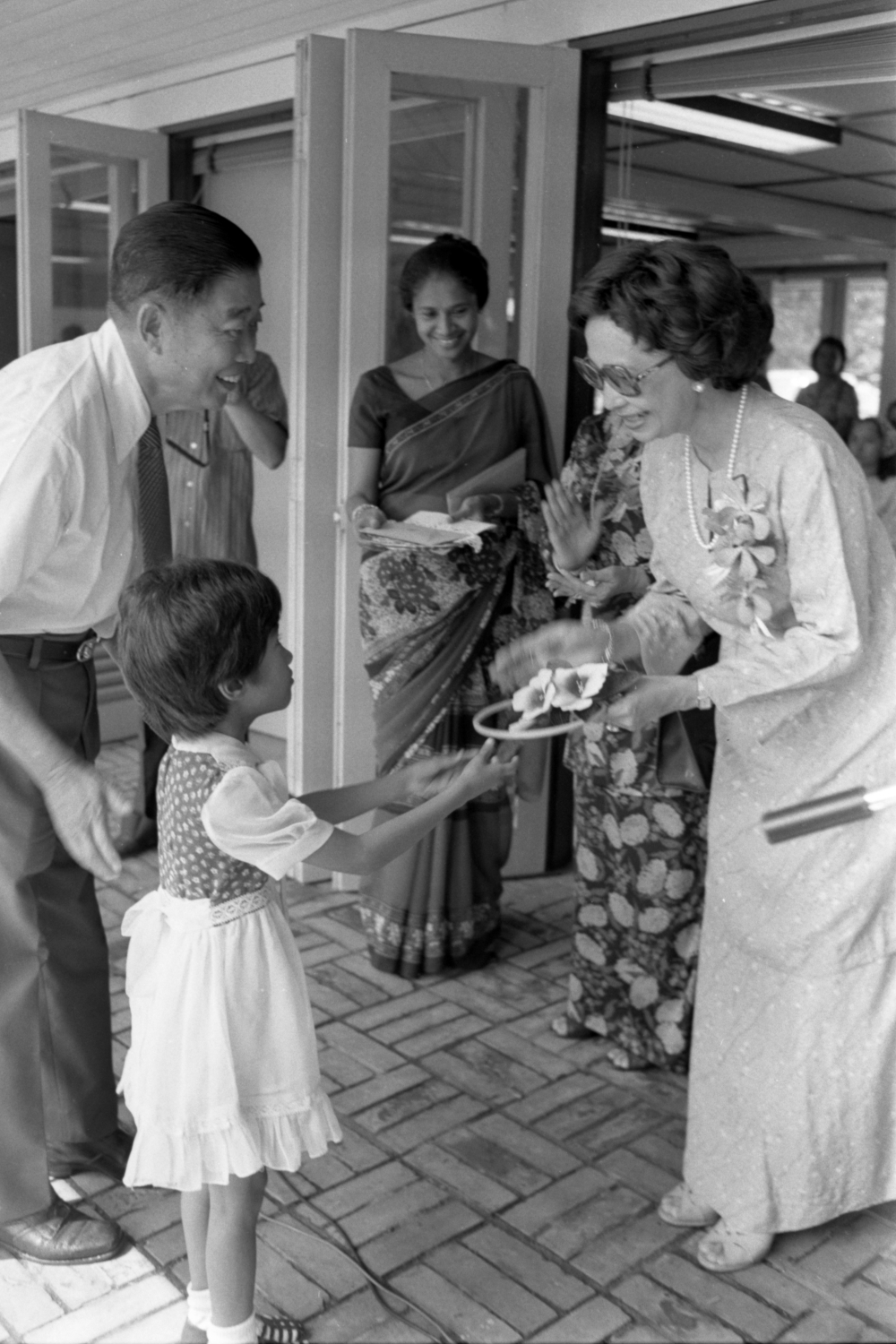
She also recalled how rural clinics were developed to retrain midwives and create a system in which government midwives could be called in when complications arose.
The work reflected the realities of healthcare in rural Malaysia in the early years after independence, when modern medical facilities were still limited in many communities.
4. She once rejected a RM10 payment from a patient’s family
One of the most revealing stories about Dr Hasmah came from her early medical career.
In a 2016 interview, she recalled that a man offered her RM10 after his wife had given birth and required a blood transfusion.
The blood was supposed to be provided by the hospital without charge.
Dr Hasmah said she initially felt angry, but then sympathised with the man after realising he was poor and believed he needed to pay for the blood.
She returned the money and told him to spend it on food instead.
“I was so angry I cried,” she recalled, adding that the incident made her suspect that some hospital staff had been improperly charging patients for blood.
She described a second incident in which a man offered her RM50 for a medical certificate while she was serving at a station near the Kedah-Thailand border. She reported the incident and became involved in a sting operation.
The stories, she said, were not included in her autobiography because she had forgotten about them when writing it.
5. Her proudest achievement was being accepted by rural Kedah
For all the positions and honours she would later receive, Dr Hasmah once said her proudest achievement in public service was much simpler: being accepted by the people of rural Kedah.
When she first arrived, villagers were suspicious of her. She was from another state, did not understand the local dialect and needed an interpreter to communicate with some of the people she was there to serve.
Over time, that changed.
She recalled how penghulus and other traditional leaders eventually accepted her as one of their own. During durian season, villagers would even pick her up and take her to the estates for what she described as a “nice durian lunch”.
For Dr Hasmah, that acceptance mattered because it showed that the communities she had come to serve trusted her.
It was during this time the infant mortality rate fell dramatically.
She and her team travelled to rural villages to provide treatment, immunisation and health education, at a time when many communities had limited access to healthcare.
By the time she was serving as Kedah’s State Maternal and Child Health Officer, the state’s infant mortality rate had fallen from 75 deaths per 1,000 births to seven per 1,000, according to the Perdana Leadership Foundation.
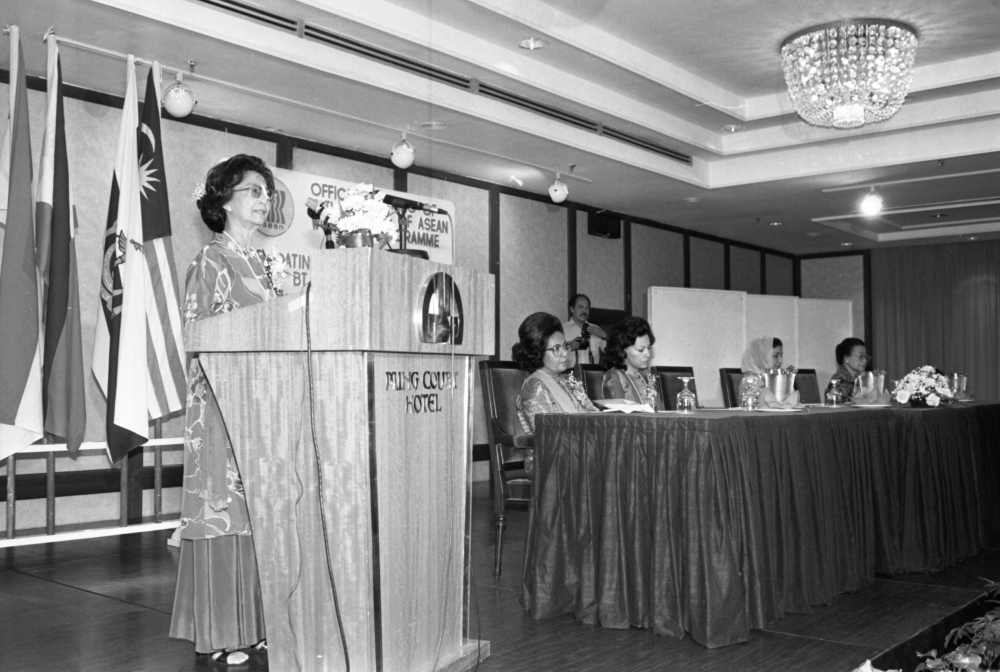
The figure cannot be attributed to one person alone, but it illustrates the scale of the public-health changes taking place during the period in which Dr Hasmah was helping lead maternal and child health efforts in the state.
6. She helped establish a badminton team for ministers’ wives
Badminton was more than a pastime for Dr Hasmah.
In a 2016 interview, she recalled that a sports committee involving ministers’ wives helped establish a badminton team for ministers’ and deputy ministers’ wives in 1985.
The players trained and played competitively, travelling to other states and encouraging the wives of other dignitaries to form their own teams.
Her involvement in badminton continued for decades. She later became a patron of the Badminton Association of Malaysia, while national players from the 1992 Thomas Cup-winning team remembered her as a maternal figure who visited training sessions and encouraged them.
It was a sporting side of Dr Hasmah that rarely featured as prominently as her medical and public-health career.
7. She returned to the violin at 86
Dr Hasmah had played the violin when she was young but stopped at 16 to concentrate on her studies.
Decades later, she picked it up again at the age of 86.
In 2019, at 93, she performed at the Yayasan Universiti Multimedia Charity Hi-Tea, playing Secret Garden’s The Things You Are to Me, Gubahanku and Terkenang-kenang in a 15-minute performance.
A year earlier, she had performed at the Duo Lagenda concert at Istana Budaya, dedicating her violin performance to firefighter Muhammad Adib Mohd Kassim, who had died earlier that month.
The performances offered a glimpse of a side of Dr Hasmah that rarely appeared in official photographs: a musician returning to an old passion well into her later years.
8. She was the first chancellor of Multimedia University
Dr Hasmah spent 15 years as the first chancellor of Multimedia University, from 1997 to 2012.
She acknowledged that she knew little about information technology when she was first appointed to the position.
But she remained closely involved with the university and its students.
She later recalled meeting former MMU students during her travels overseas, saying there was almost always someone who would approach her and tell her they were from MMU.
She also helped establish a Knowledge Endowment Fund to support students and researchers, while MMU later described her as its “Ibu Universiti” — or university mother.
The role gave her another connection with a younger generation, this time outside the medical profession.
9. She was an Umno member — but never held a party position
Despite spending much of her adult life at the centre of Malaysian public life, Dr Hasmah did not hold an official position in Umno.
In a 2015 interview, she said: “I am a member of Umno, but never held any position in Umno.”
She described the prime minister’s wife as an unofficial intermediary between the public and the prime minister, while stressing that she should not make promises involving government decisions or contracts.
But she did occasionally speak publicly on political issues.
In 2015, she accompanied Dr Mahathir to the Bersih 4 rally and described the demonstration as “people’s power”.
In 2017, she also spoke at a women’s rally against what organisers called “toxic politics”, addressing concerns including violence against women and political conduct.
In 2022, she called for more highly qualified and knowledgeable women to enter local politics, arguing that women in politics needed to understand current affairs and what people needed.
10. She was also a teacher — and one of her students carried that work forward
Dr Hasmah’s legacy was not only in the patients she treated, but also in the healthcare workers she taught.
After retiring from government service in 1979, she joined the University of Malaya’s Dental Faculty as a part-time lecturer, continuing until 1981 when Dr Mahathir became prime minister.
She also taught nursing students.
One of them was Matron Fadzilah Abdul Hamid, who went on to spend decades working with women and children affected by HIV.
Fadzilah said Dr Hasmah was among her teachers in nursing school and one of her role models.
“She inspired us with her work, especially when she served the rural community and those in need,” Fadzilah told Malay Mail in 2018.
Fadzilah spent 30 years as a Health Ministry nurse, including in rural areas in Selangor, Johor, Pahang and Kuala Lumpur, before overseeing operations and training at Rumah Solehah, a shelter for women and children infected or affected by HIV, from its inception in 1998.
In 2018, she received the Tun Dr Siti Hasmah Award from the Malaysian AIDS Foundation for her contribution towards the HIV/AIDS cause.
That connection offers a different way of looking at Dr Hasmah’s legacy.
It was not only about the patients she treated or the causes she championed, but also the people she taught — some of whom carried that work into the next generation.


