


KUALA LUMPUR, Sept 28 — Guardhouses, boom gates and security guards have become a familiar sight in residential neighbourhoods across the Klang Valley, but putting them in place is not simply a matter of getting enough neighbours to agree and hiring a security company.
There are rules governing how guarded communities are established, where a guardhouse can be built, when a boom gate can be closed, whether residents can be forced to participate and even where speed bumps can be placed.
And the rules are not exactly the same across Kuala Lumpur and Selangor.
In Kuala Lumpur, City Hall (DBKL) uses the PLANMalaysia guideline as a reference for guarded neighbourhoods.
The four Selangor local authorities Malay Mail is focusing on — Ampang Jaya Municipal Council (MPAJ), Subang Jaya City Council (MBSJ), Shah Alam City Council (MBSA) and Petaling Jaya City Council (MBPJ) — generally follow the Selangor Housing and Property Board (LPHS) framework, with individual councils setting additional requirements according to local conditions.
PLANMalaysia’s 2019 guideline was introduced to guide state and local authorities, technical agencies and residents’ associations in establishing and managing guarded communities in non-strata housing. It replaced the 2010 guideline.
The guideline itself notes that its implementation must be read together with existing laws and other relevant guidelines, and that local authorities can impose conditions according to their respective jurisdictions.
Here is what residents need to know.
1. First, how many residents have to agree?
This is one of the biggest differences.
Under the PLANMalaysia guideline, at least 85 per cent of residents must agree before an application can be made.
The percentage is calculated based on occupied homes. Residents are defined as homeowners or tenants living in the proposed guarded community, while homes that are not continuously occupied are excluded.
In Selangor, the LPHS framework provides for:
- 75 per cent consent for a guarded community using a manual boom gate; and
- 100 per cent consent for an automatic boom gate or access-card system.
The Selangor government has confirmed that the LPHS guideline remains the applicable framework, with individual local authorities able to impose more detailed requirements according to their respective areas and circumstances.
For DBKL, the current publicly cited requirement is at least 81 per cent consent for a guarded neighbourhood scheme, while automatic boom gates using facial recognition require 100 per cent consent.
So a neighbourhood does not necessarily need unanimous support simply to establish a guarded community.
But it is a different story if residents want an automatic access system.
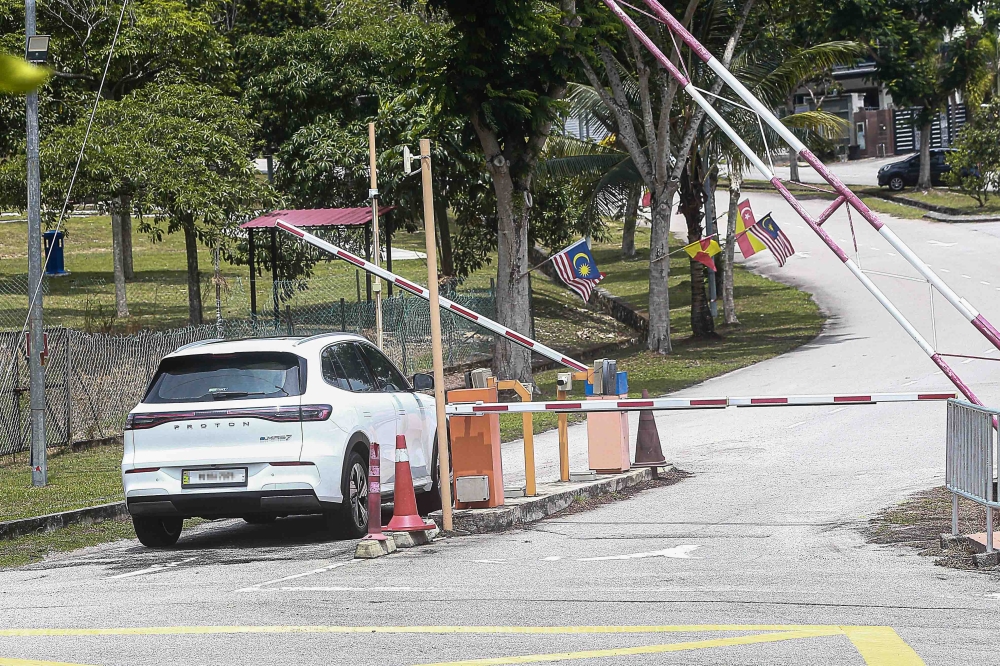
2. Getting the required percentage does not mean residents can be forced to join
This is an important protection for residents who disagree.
The PLANMalaysia guideline says the process of obtaining consent must not involve coercion or pressure on residents who do not agree.
The Selangor framework likewise states that there should be no coercion to join the scheme.
So if a neighbourhood reaches the required threshold, that does not mean every resident has automatically agreed to participate.
3. A resident who does not join cannot be locked out
This is perhaps the most important practical rule.
The PLANMalaysia guideline states that residents who do not participate in the scheme cannot be prevented from entering their homes at any time.
That means a resident who refuses to join cannot be denied access to his or her home merely for not participating in the scheme.
The Selangor guidelines contain the same basic principle.
4. A boom gate cannot simply be used to block access
The guidelines also prohibit vehicles from being obstructed when entering or leaving the neighbourhood.
This is significant because a guarded community does not automatically turn a public residential road into a private one.
PLANMalaysia’s guideline requires the scheme to have access arrangements that do not obstruct traffic, while its management conditions state that public authorities and members of the public must be allowed to enter and use public roads and facilities.
The Selangor guidelines similarly prohibit guards from denying lawful access to residents, members of the public and authorities.
This does not prevent an approved guarded scheme from operating security procedures at its entrance, but those arrangements cannot be used to bar people who are entitled to enter.
5. The boom gate is generally supposed to operate only from midnight to 6am
Under the PLANMalaysia guideline, a boom gate is generally allowed to operate from midnight to 6am.
A local authority may consider allowing it to remain closed 24 hours a day, but only if security guards are stationed there around the clock and can open the barrier whenever necessary.
This means a neighbourhood cannot simply install a boom gate and keep it permanently closed because residents prefer tighter access control.
6. Automatic access systems are a different matter
The PLANMalaysia guideline says automatic access cards can only be allowed if 100 per cent of residents agree.
Selangor’s LPHS framework similarly sets 100 per cent consent for automatic boom gates or access-card systems.
The Selangor government has said the higher threshold is intended to protect residents’ rights and avoid disputes over access between participating and non-participating households.
This contrasts with manual boom gates, for which the Selangor framework sets a 75 per cent consent threshold.
7. An automatic system does not necessarily mean one lane for everyone
This is where individual council rules become more detailed.
MBPJ’s guidelines allow an access-card arrangement to be considered with two separate lanes — one for residents and another for visitors — provided there are 24-hour guards and the other MBPJ conditions are met.
MPAJ also has requirements governing arrangements for residents and visitors when considering automated access systems.
So while the basic PLANMalaysia guideline does not prescribe a universal “resident lane” and “visitor lane” for every guarded community, individual councils may set more detailed conditions when automatic access is proposed.
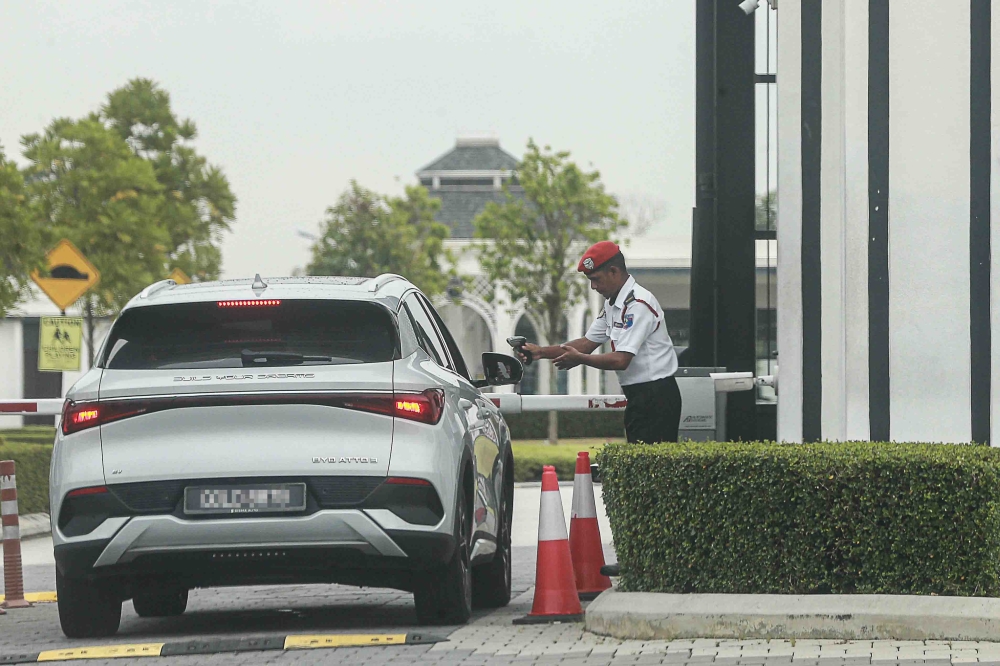
8. There are even rules on where speed bumps can go
This is another detail many residents may not know.
PLANMalaysia allows speed breakers or road humps to be installed before and after the guardhouse.
But the guideline does not give residents a free hand to put them wherever they want. They must comply with specifications issued by the relevant local authority.
MBSA, for example, gives specific dimensions based on road width.
Its guideline states that for a 50ft road, the road hump should be 5ft wide, while for a 66ft road, it should be 10ft wide.
So even something as seemingly simple as a speed bump outside a guardhouse is subject to council requirements.
9. The guardhouse itself cannot just be built anywhere
PLANMalaysia says the guardhouse should be located on the road shoulder and must not obstruct traffic.
It cannot be built on or in the middle of the road under the national guideline.
The guideline also says the guardhouse cannot be built until the relevant temporary construction permit or approval has been obtained.
The national guideline specifies a maximum size of 1.8m by 2.4m, although Selangor councils have their own specifications.
For example, MPAJ, MBSJ and MBPJ generally use a 6ft by 8ft specification, while MBSA has different dimensions depending on whether a toilet is included.
10. A permanent guardhouse needs another layer of approval
If a guardhouse occupies the road shoulder and is a permanent structure, the residents’ association may need a Temporary Occupation Licence (TOL) from the District and Land Office under Section 65 of the National Land Code 1965.
The PLANMalaysia guideline also requires the guardhouse location to be shown on plans submitted to the relevant land office and local authority.
So a residents’ association cannot simply construct a permanent guardhouse on the road reserve because residents have voted for it.
11. There should be at least two access routes for emergencies
PLANMalaysia’s technical requirements say a guarded community should have at least two entry and exit routes for emergency purposes.
This is separate from the question of whether there is a residents’ lane and a visitors’ lane.
The requirement is about ensuring sufficient access in an emergency, rather than simply creating a convenient arrangement for residents and visitors.
12. Entrance gateways may require separate approval
The PLANMalaysia guideline restricts structures that span or obstruct the entrance road as part of a guarded-neighbourhood scheme.
However, individual councils may have their own procedures for considering entrance gateways.
MBPJ, for example, allows applications for entrance gateways to be considered separately through the planning-permission process, subject to the necessary technical approvals.
So residents should not assume that approval for a guarded-community scheme automatically allows them to build a large gateway or arch over the entrance road.
13. You cannot simply build a wall around the neighbourhood
Perimeter fencing is generally prohibited.
PLANMalaysia says perimeter fencing that surrounds the guarded community and blocks access is not allowed.
However, a local authority can consider fencing where there are legitimate safety concerns, such as a large drain, river or highway.
The Selangor councils have adopted broadly similar provisions.
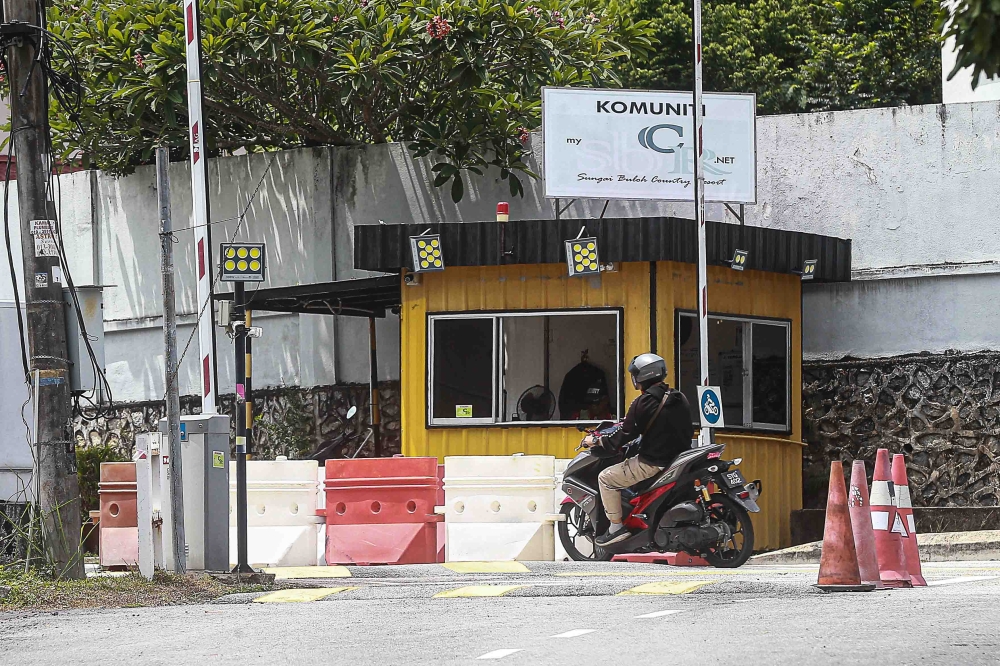
14. Guards cannot demand your identity card
Security guards are not allowed to keep or demand a member of the public’s or a resident’s identity card simply as a condition of entering the neighbourhood.
The PLANMalaysia guideline says it is sufficient for guards to record a visitor’s name and vehicle registration number.
MBSA goes further by prohibiting guards from scanning identity cards.
15. Government officers and emergency services cannot simply be turned away
The guideline requires security guards to allow members of the public and authorities to enter the housing area and use public roads and facilities.
This means a guardhouse is not a checkpoint with the authority to decide that government officers, enforcement personnel or other authorised parties cannot enter.
MBPJ’s guidelines also specifically require residents’ associations to brief guards on the identities of agencies such as MBPJ, the police, the Fire and Rescue Department, the Land Office and ambulance services.
16. The neighbourhood generally has to be a cul-de-sac
PLANMalaysia says guarded communities should only be established in residential areas that do not have roads connecting them to neighbouring communities.
In other words, the model is intended for areas where roads effectively terminate within the neighbourhood rather than forming an important through-route.
The guideline describes this as allowing only cul-de-sac-type areas, subject to the local authority’s discretion.
17. Public facilities can disqualify an area
A guarded community is generally not supposed to be established in an area containing public facilities such as schools, mosques, public halls and public open spaces, or areas served by public bus routes.
The principle is that a security arrangement for one residential community should not prevent wider public access to shared facilities.
The Selangor councils have adapted this differently.
For example, MBSA allows certain smaller shared facilities such as small surau and Rukun Tetangga posts, while excluding larger facilities such as schools, halls and football fields.
18. The security company must be properly registered
The residents’ association cannot simply hire anyone to stand at the guardhouse.
PLANMalaysia requires the appointed security company to be registered with the Home Ministry (KDN), with the employment and operation of guards subject to the relevant requirements.
The guideline also states that the appointment of security guards must comply with the Private Agencies Act 1971 and KDN requirements.
19. Guards cannot use dogs for patrols
This may come as a surprise to some residents.
The PLANMalaysia guideline specifically says security guards are not allowed to use dogs for patrol and security purposes.
20. A guarded community is not supposed to be permanent by default
PLANMalaysia says guarded communities are not encouraged as a long-term arrangement.
The national guideline also provides for a permit system rather than treating the scheme as a permanent change to the neighbourhood.
Under PLANMalaysia’s application procedure, the permit is valid for one year and runs alongside the expiry of the Temporary Occupation Licence for the guardhouse.
The Selangor councils have their own approval periods, generally allowing temporary schemes for a limited period and requiring renewal.
21. The residents’ association has to put up a notice before applying
It is not simply an internal residents’ association decision.
PLANMalaysia requires the applicant to put up a banner informing residents at the main entrance for 30 days after submitting the application.
The application itself also has to go through the local authority’s One Stop Centre (OSC).
22. The approval permit has to be displayed
Once approved, the residents’ association has to display the valid permit at the guardhouse or on the notice board at the main entrance so it can be inspected by the authorities.
Operating a guarded community without the necessary permit, or constructing a guardhouse without approval, can result in enforcement action.
23. What happens if the scheme is cancelled?
The neighbourhood is supposed to be returned to its original condition.
PLANMalaysia says that when guarded-community status is removed, the residents’ association must notify the local authority and remove the guardhouse, boom gate and fencing, where applicable.


