


KUALA LUMPUR, Sept 6 — As Malaysia commemorates 69 years of Merdeka, the National Archives of Malaysia (ANM) said history must be more than a record of the past, serving instead as a source of inspiration and lessons for Malaysians to understand how the nation was built.
Although one of the most basic and essential functions of a national archive is to serve the government’s interests, ANM director-general Zaidin Mohd Noor said its foremost responsibility is to serve as a source of enlightenment and improvement for all segments of society.
“Although ANM has a substantial collection of official records, we also collect records from private organisations, NGOs and individuals, as well as conduct oral history interviews.
As custodian of the nation’s heritage, he said such accounts could provide a fuller picture of historical events by documenting the people, processes and decisions that may not have been captured in the main historical narrative.
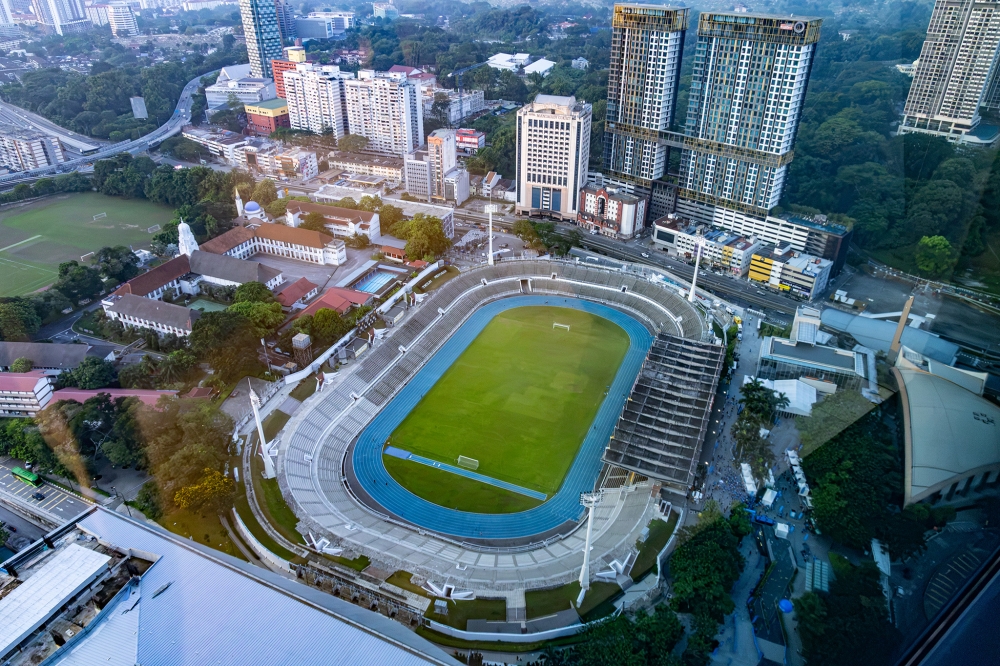
“For example, if we want to understand the Proclamation of Independence at Stadium Merdeka, we also need to understand how the stadium was built, its architecture and the people involved in making it happen.
“Our role as custodians and researchers is to bring these records to the public and use them as a source of inspiration so that they do not remain silent or static witnesses to the nation-building process,” he told Malay Mail during a recent interview.
In the context of Merdeka, Zaidin said ANM currently holds about 30,000 archival files — roughly 200,000 pages of documents — related to the Malayan Union alone.
The Malayan Union was a British-administered system introduced in 1946 to consolidate the Malay states and Straits Settlements under a central government.
However, it faced strong opposition from Malay political groups and was replaced by the Federation of Malaya in 1948.
“And if people study these documents, they can learn how the country was formed and built.
“That can inspire society to take the achievements of the past as a guide and a source of pride, showing that if we were able to build the nation then, we can continue to build and improve it today,” he added.
Nevertheless, Zaidin acknowledged that while ANM had preserved and safeguarded records relating to Malaysia’s nation-building history, it could not claim that the historical record was complete.
He said partial gaps remain and continued efforts are needed to fill them, particularly to provide society with sufficient context to fully understand and assess specific historical events.
“Take for example the lowering of the Union Jack at Dataran Merdeka and the raising of the Malayan flag at midnight on Aug 31, 1957.
“It is not just about the flags, we also want to know who the people chosen for the occasion were, and why they were selected,” he said.
He said a stronger historical record would also help prevent interpretations based on assumptions, as future generations would have a firm factual foundation from which to understand and assess past events.
“We cannot change what happened in the past and if something happened, we have to accept that it happened.
“By accepting the past as it happened, history can move beyond being a silent witness to becoming a lesson and guide for the present and future,” he said.


