


AUGUST 29 — Every Merdeka and Malaysia Day, many in my and the older generation look back with pride at the founders of our nation. But August 31 and September 16 must be more than annual remembrances of 1957 and 1963. They should be moments when we ask ourselves a harder question: what kind of Malaysia do we want to build?
Nearly seven decades after Merdeka, and six decades after Malaysia Day, our nation — with her 34-million population — has become an industrialised, trading nation, a major part of global semiconductor supply chains, with millions of professionals. DOSM estimates that Malaysia had almost six million university graduates in 2024. Graduate unemployment had fallen to around 3.2 per cent.
Our forefathers built institutions, opened universities, created industries and expanded opportunities that previous generations could scarcely have imagined. Today, Malaysians of every community are doctors, engineers, scientists, lawyers, entrepreneurs, academics, executives, artists, programmers and innovators.
We should draw confidence from that progress. But why have our politics remained trapped in the anxieties of the past? The answer: fear — a powerful, and convenient agent. When people are worried about their economic future, it is easy to tell them that it is someone else’s fault and identity politics will safeguard their interests. It is easier to manufacture insecurity than to boost productivity. It is easier to identify an enemy than to create better jobs. It is easier to tell Malaysians what they should fear than to show them what they can become.
We must not allow irresponsible politicians to stoke our deepest insecurities. True political leadership should make people confident about the future, not trap them in fear. Younger Malaysians, especially, must resist this temptation.
This does not require anyone becoming less Malay/Bumiputera, Chinese, Indian, Iban, Bidayuh, Kadazan-Dusun, Murut or anything else. Rather, we ought to be secure enough to realise that someone else’s identity does not threaten our own.
For Malays and Bumiputeras, this also means recognising how much we have progressed. Their participation in universities, professional sectors, entrepreneurship, government, business and technology have expanded enormously over the decades.
Admittedly, there remain inequalities that must be addressed. But cultivating a permanent sense of race-based fear or grievance will not resolve this. As the majority community, the Malays and Bumiputras should, by now, know what they are capable of. We can and will engage the world without fearing it.
And that same confidence should assure every Chinese, Indian, Sabahan and Sarawakian that this is also their country. This is the Malaysia we should aspire towards. Because the problems facing the next generation are colour-blind. Artificial intelligence will transform jobs. Climate change affects every household. The energy transition will reshape industries. Global supply chains are being reorganised. Major powers are competing for technology, investment and talent.
While we have achieved a labour market of more than 16 million people, the real challenge is to create sufficiently productive, skilled and well-paid jobs for the next generation. The median wage of Malaysian formal-sector employees is just over RM3,000 a month — not a huge contributor to our fiscal capacity. Income disparities have widened.
Those are challenges worthy of our political energy. What we should be obsessed with is upward social mobility. Getting people degrees is not enough. A university education is pointless if young graduates cannot break out of the low-income cycle, or cannot get jobs that match their skills.
Education remains one of Malaysia’s great engines of social mobility. But it needs a serious revamp in the face of a rapidly changing labour market. Tomorrow’s jobs require a new toolkit: digital literacy; problem-solving, technical and critical thinking skills; adaptability; effective communications, creativity and the ability to work alongside increasingly sophisticated technology.
Schools, universities, technical and vocational institutions, and employers must respond accordingly. Our measure of success must be whether each generation of Malaysians, through education and employment, can save, own a home and nurture their families. So, upward social mobility and expanding the middle class
should be the Government’s key priorities.
A confident Malaysia begins when the rakyat sees that hard work pays, that education can open doors and is open to everyone, and that a person’s origins aren’t their destiny. This is what will inspire hope in a society that tomorrow can be better than today.
That is why the questions we should be debating are: How do we raise wages? How do we distribute wealth more equitably? How do we reform our schools and universities’ syllabus for the unstoppable digital economy? How do we raise the productivity of Malaysian SMEs? How do we build internationally competitive companies? How do we ensure that all Malaysian children can fulfil their potential?
The answers to these questions will not come from the Malays or Bumiputeras alone. Or from any single race. They require the wisdom, energy and goodwill of all Malaysians. Our population’s diversity — something few countries have — is an advantage to be harnessed.
We are at home in South-east Asia, with a proven ability to build cultural and commercial bridges with most of the world at a time when the world is becoming more fragmented (think Asean Chairmanship in 2025!). But all this will go to waste if we keep distrusting each other due to fear-based politics.
Our greatest natural resource is not oil, gas or land. It is Malaysians. And yet we often waste our talent just because someone has the ‘wrong’ surname, comes from the ‘wrong’ state, worships differently or speaks another language.
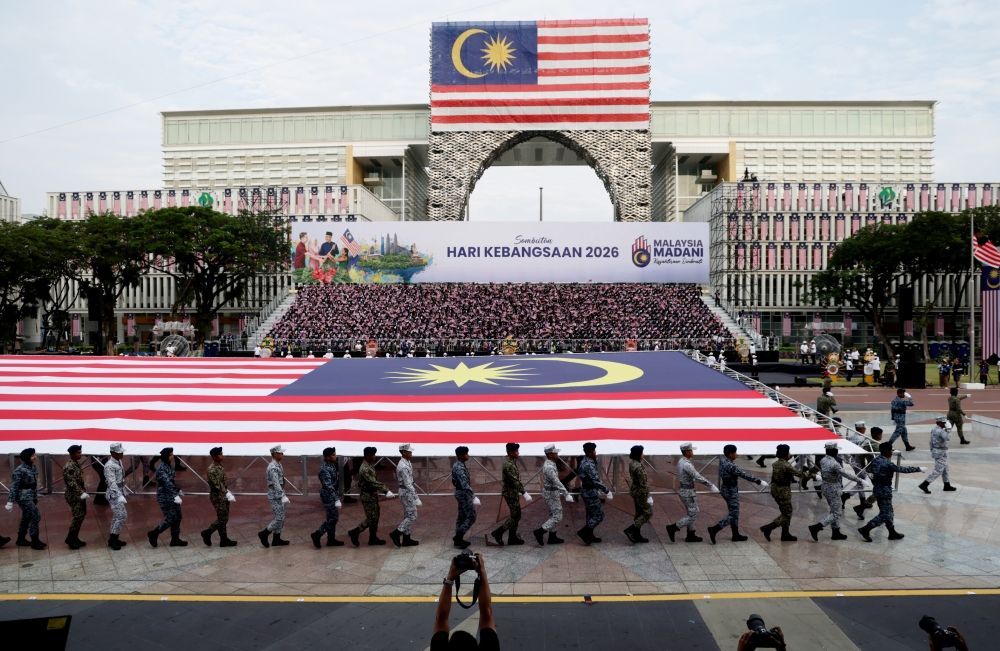
Merdeka itself required extraordinary courage, as did forming Malaysia with Sabah and Sarawak in 1963. Our founders believed that different communities could build a country, together. They did not agree on everything. But they shared the conviction that they could only secure an independent Malaysia by working together.
Our generation needs that same courage again — to unite and work together to reject divisive politics, today’s ‘colonial masters’. We may continue to disagree about policies and politics. That is democracy. But that should not distract us from the fact that Malaysia’s challenges are too great, and the world is moving far too quickly, for us to waste another generation fearing each other over identity politics.
Today, Malaysians need a different ‘Merdeka’, a different Malaysia Day and a different Malaysia. We need true freedom from the politically motivated fears and insecurities that hold us back. We need the confidence to believe that unity against divisive, identity politics is what will make us stronger together. And the courage to rebuild a Malaysia that all Malaysians, in every state, truly deserve.
*Tengku Datuk Seri Zafrul Abdul Aziz is senior political adviser to the prime minister and chairman of MIDA.
**This is the personal opinion of the writer or publication and does not necessarily represent the views of Malay Mail.


