


KUALA LUMPUR, Aug 26 — Buying a strata property could eventually involve more than knowing the purchase price, monthly instalment and maintenance fee.
With the recently launched National Housing Policy or Dasar Perumahan Negara (DRN) 2026-2035, the government proposes factoring longer-term maintenance and replacement costs into sale and purchase agreements for strata housing.
It is among several measures in the DRN aimed at improving the long-term maintenance and management of housing, including better maintenance planning, professional building management and amendments to the Strata Management Act 2013 (Act 757).
The policy takes a life-cycle approach to housing, meaning the focus is not only on constructing and selling a property but also on how much it will cost to operate, maintain and eventually replace components of a building over its useful life.
Firstly, what are strata and non-strata properties?
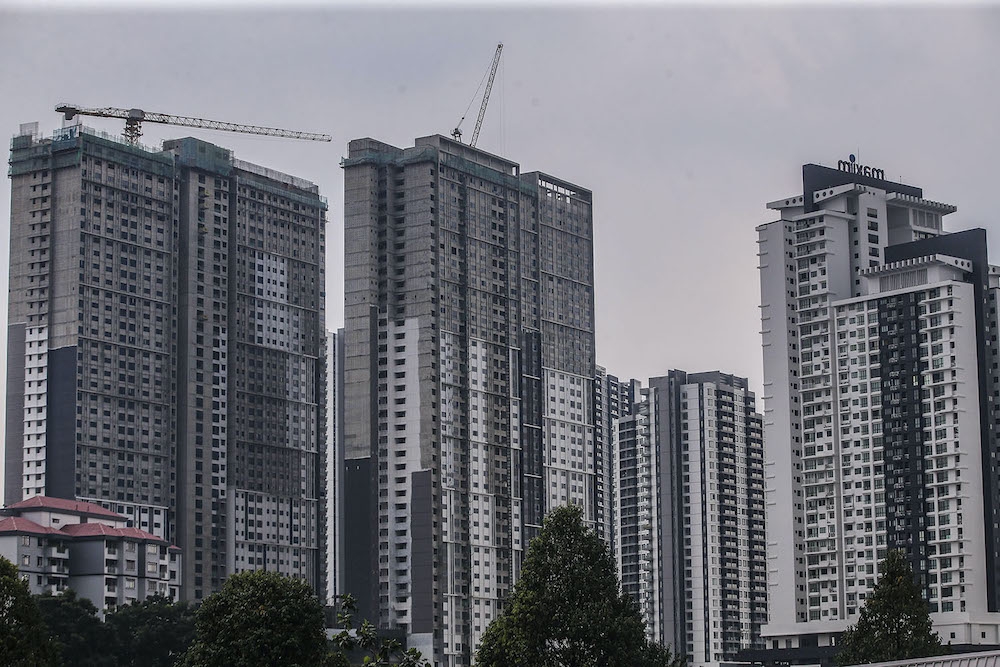
A strata property is one where ownership is divided into individual parcels or units, while areas and facilities such as lifts, corridors, swimming pools, landscaping and other shared facilities are treated as common property.
Condominiums and apartments are the most familiar examples, although certain landed developments can also be strata schemes.
Owners therefore have rights and responsibilities relating to both their individual parcel and common property, which is why they pay maintenance charges and contribute to a sinking fund.
A non-strata property, such as a conventional landed house with its own individual title, generally does not operate under the same shared management structure.
This distinction matters because the condition of common facilities can affect the cost and value of a strata property even though they are outside the individual unit.
Maintenance and replacement costs
One of the DRN’s specific proposals is to amend sale and purchase agreements for strata housing to include estimated maintenance charges and replacement costs throughout the property’s life cycle.
The policy would give buyers a clearer picture of the longer-term cost of owning a property, beyond its purchase price and recurring maintenance charges.
Life Cycle Costing
The DRN proposes the use of Life Cycle Costing (LCC) for the design and maintenance of public housing, referring to the LCCsoft (software) application developed by the Construction Industry Development Board (CIDB) and the JKR Life Cycle Costing manual.
Life-cycle costing considers the total cost of an asset over its useful life, including operation, maintenance and future replacement.
The DRN also proposes guidelines for housing maintenance and facility management.
Strata management and maintenance costs
The policy proposes a performance assessment approach for strata management, including how maintenance costs are managed.
Rather than focusing only on whether maintenance fees are low, the approach would consider whether spending is adequate and sustainable given the age, design, facilities and condition of a development.
JMBs, MCs and strata management
The DRN is looking to strengthen the capacity and understanding of Joint Management Bodies (JMBs) and Management Corporations (MCs).
Under the existing framework, the Strata Management Act governs strata management, while the Strata Titles Act 1985 (Act 318) covers strata ownership.
A JMB operates during the joint-management period, while an MC comes into existence when the strata register is opened.
The government also plans to amend the Strata Management Act as part of the policy, with the changes intended to keep pace with the changing needs of strata management.
Professional management
The policy proposes increasing the number of professional building and property managers, alongside training for officials involved in property, planning and housing management.
The aim is to strengthen professional capacity in managing increasingly complex strata developments, including common facilities, maintenance, finances and insurance.
Building condition and urban renewal
The DRN requires dilapidation reports for residential buildings identified for urban renewal and building condition reports for public-housing maintenance.
Such reports could help determine whether a building requires maintenance, rehabilitation or redevelopment.
It wants to improve urban renewal guidelines, cost-benefit analyses (CBA) for redevelopment projects and greater protection and participation of existing communities.
For older strata schemes, this could provide a more structured basis for deciding whether a building should be maintained, rehabilitated or redeveloped.
Universal design
The DRN wants compliance with Universal Design Guidelines in all new housing developments.
Universal design aims to make buildings usable by a wider range of people, including older residents and persons with disabilities.
The policy complements measures such as grants to modify existing homes for senior citizens and persons with disabilities.
What this means for strata owners
For prospective buyers, the most significant proposal is the inclusion of estimated maintenance and replacement costs over the property’s life cycle in the sale and purchase agreement.
For existing owners, the focus is on stronger JMB and MC management, professionalisation and amendments to the Strata Management Act.
As for older developments, building-condition assessments, life-cycle costing and cost-benefit analyses could play a greater role in decisions on maintenance, rehabilitation or redevelopment.
The bigger picture
The DRN points towards a shift from managing strata buildings around their immediate maintenance needs to managing them according to their entire life cycle.
For strata owners, the question could eventually become not simply “how much is my maintenance fee”, but “what will it cost to maintain this building over its useful life”.
What already exists vs what the DRN is changing


