


KUALA LUMPUR, Aug 14 — Malaysia is still searching for a permanent model of governance eight years after the collapse of the country’s decades-old political order, with parties continuing to adjust to shifting alliances and electoral calculations, Transport Minister Anthony Loke said.
Loke, who is also DAP secretary-general, said the political landscape had gone through multiple permutations and collaborations since 2018, with political actors continuing to work out arrangements they believe could strengthen their positions.
“As I say, we are into uncharted territories right now,” he told Malay Mail in an interview.
“After the collapse of the decades-old model in 2018, I think we are still trying to find a permanent model, a permanent model of governance in Malaysia,” he said.
Loke said political parties and politicians would continue making calculations based on their chances of winning elections and remaining in power.
“Political parties and politicians will continue to calculate their function. They want to maximise their political function,” he said.
“And I think from 2018 until now, we have experienced different permutations, different calibrations.
“But as far as I’m concerned, I think it’s not going to end soon. So this will keep evolving,” he said.
Balancing party and government
The shifting political landscape has also left Loke navigating the competing demands of his roles as DAP secretary-general and Cabinet minister in the Unity Government, where the party works alongside former political rivals including Barisan Nasional.
Asked whether DAP had changed after becoming part of the government, Loke said the party had not abandoned its positions, but had to operate within the constraints of a unity government.
“No (the party has not changed). Of course, we need to coordinate, we need to work within the constraint of a unity government,” he said.
Loke said DAP leaders would continue articulating the party’s positions, while ministers had to observe collective responsibility within the Cabinet.
“As a secretary-general, of course I have to carry the position of the party, but at the same time I’m leading the Cabinet, so I have to carry that expression in the government.
“So I have to play that role in a very challenging way,” he said.
He said this meant he could not publicly criticise Cabinet colleagues, coalition parties or government policy while serving as part of the administration.
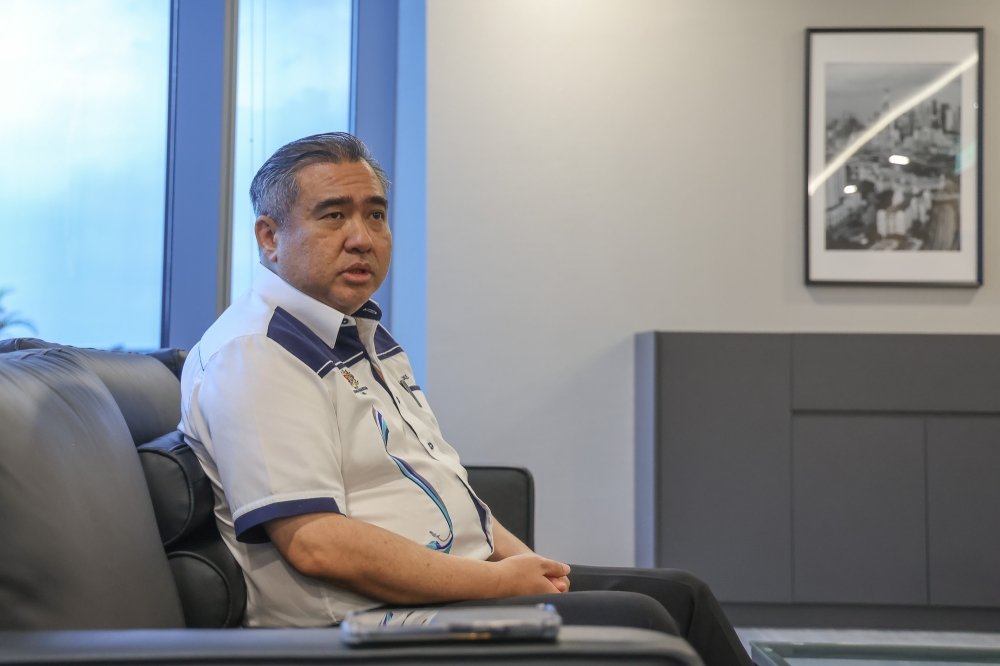
“Being part of the government, say for example, I cannot criticise another Cabinet member or the parties that are within the coalition government, that will be out of line in terms of collective responsibility,” he said.
“Nor can I criticise the government’s policy, because I’m part of the government,” he said.
At the same time, Loke said DAP could still take positions critical of government policies or actions, creating a delicate balance for the party as it remains part of the ruling coalition.
“But at the same time, sometimes the party takes a different position, and takes a position which is critical to the government’s policy or government’s action.
“So this is a situation where we have to face,” Loke said.
Loke said major decisions would continue to be brought before DAP’s Central Executive Committee (CEC) so the party could reach a common position.
“As far as I know, I mean any major decision will be brought back to the Central Executive Committee (CEC) for a common opinion or common position and a common decision that will be made by the CEC,” he said.
Political alliances will keep changing
Loke acknowledged that some political developments could be disappointing, but said parties would continue making decisions based on their electoral interests as Malaysia adjusts to its post-2018 political reality.
The shifting relationship between PH and BN was evident in the state elections, with the two federal coalition partners contesting separately in Johor and Negeri Sembilan.
In Johor, BN contested all 56 seats on its own, with state leaders citing the state’s political circumstances and grassroots views. PH subsequently announced it would also contest all 56 seats.
In Negeri Sembilan, BN initially remained open to working with PH but later decided to contest independently after PH announced it would contest all 36 seats
“This is something which is disappointing, but it happens.
“We have to, we just have to soldier on. We have to keep the faith alive,” Loke said.
He said political actors would continue searching for a governing arrangement that would put them in control, but ultimately the direction of Malaysian politics would depend on voters.
“I think political parties, different political actors will continue to search for a model which everyone of course would hope that they are in charge, they want to be in control,” he said.
“I think the public has to realise what is at stake and we have to soldier on, but at the end of the day, it’s the choice of the voters.”


