


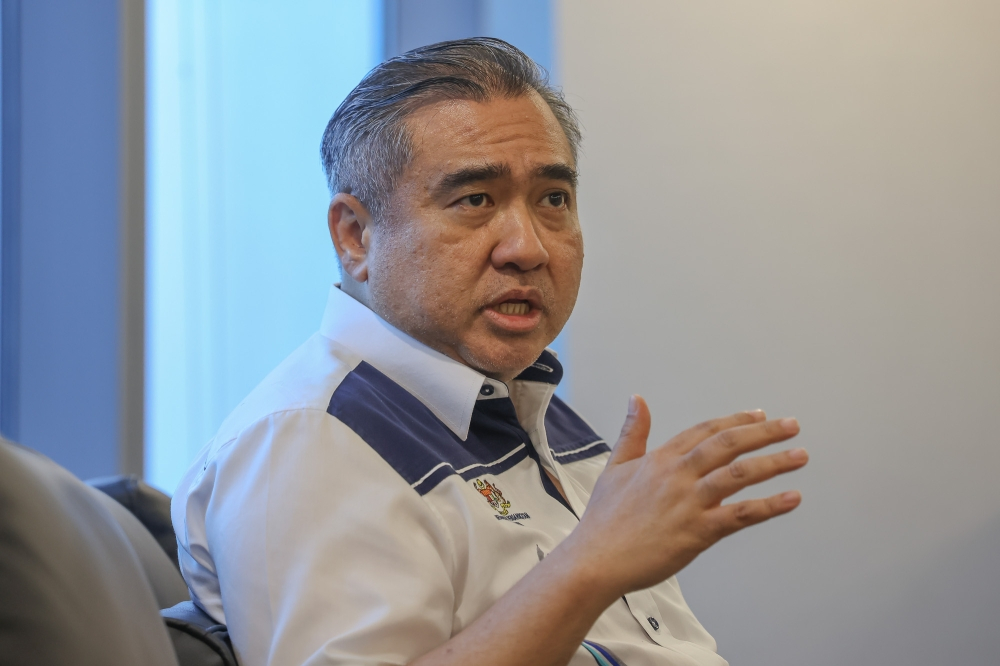


KUALA LUMPUR, Aug 14 — Nearly four years into his second stint as transport minister, Anthony Loke can point to gains in public transport and rail use, but says Malaysia’s growing vehicle population, ageing infrastructure and gaps in connectivity continue to complicate efforts to overhaul the country’s transport system.
One of the areas where Loke has sought to make the biggest changes is Prasarana Malaysia Berhad, which operates the Klang Valley’s Light Rail Transit (LRT), Mass Rapid Transit (MRT) and monorail services.
Loke said Prasarana was in poor shape when he returned to the ministry in late 2022, with frequent disruptions and maintenance problems affecting public confidence.
“Prasarana at the end of 2022 was in a really bad shape. And in terms of maintenance, in terms of a lot of disruption. Public confidence towards Prasarana was extremely low,” he told Malay Mail in an interview.
“Even simple things are not running. Escalators in the station are not running, the light bulbs are out, toilets are not functioning, trains disrupted and so forth,” he said.
Loke said his first act as minister was to conduct a spot check at an MRT station to signal his focus on Prasarana.
“That is to send a message, to set the tone and send a message. And I wanted to focus on Prasarana,” he said.
He subsequently made Prasarana a permanent feature of post-Cabinet meetings and required the company to report on key performance indicators, particularly maintenance and service disruptions.
“I made it a point that they have to report everything on the key parameters and the dashboard, and drove them to focus on maintenance,” he said.
The number of disruptions fell in 2024 and 2025, although the situation deteriorated again in early 2026, particularly on the ageing Kelana Jaya Line, while additional trains planned for the line have yet to arrive.
“By and large, compared to 2022, our scenario is in a better shape today in terms of the overall operations, in terms of the overall planning and management,” he said.
Rail use grows as vehicle numbers climb
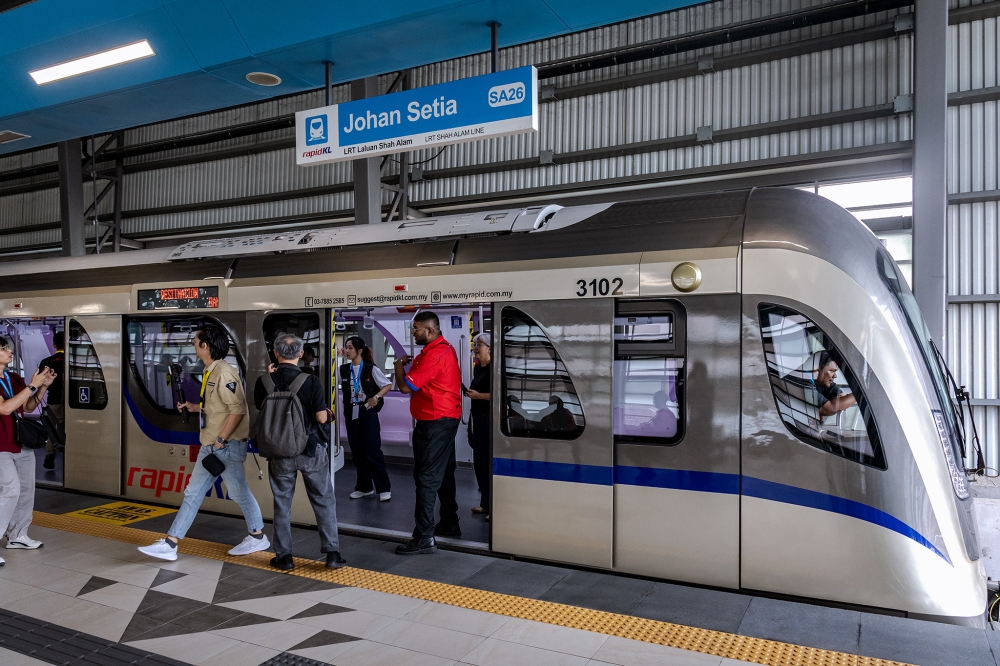
Loke said the recovery in urban rail use to pre-Covid levels showed that public transport demand remained strong, with certain lines including the Kelana Jaya Line now facing overcrowding and ridership continuing to rise following the opening of the LRT3 Shah Alam Line.
“We have consistently surpassed one million in daily ridership.
“But the growth in rail use is happening alongside a continuing increase in vehicles on Malaysian roads.
“But can you imagine without that the rail system, the traffic will be even worse off, right?” he said.
Malaysia recorded more than 700,000 vehicle sales last year, Loke said, reflecting a structural problem that has made it difficult to reduce congestion despite continued investment in public transport.
“This is a structural issue which not many people would understand, you know, people complain why traffic jam is still ongoing, without realising that the car population is increasing,” he said.
Loke said Malaysia’s automotive policy had encouraged vehicle ownership but lacked a corresponding policy to take older cars off the road.
“The car population will increase every day,” he said.
However, he said introducing an end-of-life vehicle policy would be difficult because many Malaysians still depend on older cars, particularly in semi-urban areas.
“And in our country, it’s not that practical yet, because not everyone can afford to get a newer car,” he said.
“And there is a real need for vehicles, especially in the semi-urban areas.
“Malaysia’s dispersed population also means public transport cannot reach every corner of the country.
“The fact is that, public transport cannot reach every corner of the country,” Loke said.
Bridging the first and last mile
The ministry has sought to address that gap through Demand Responsive Transit (DRT) services operated by Prasarana in the Klang Valley, alongside feeder buses linking residential areas with rail stations.
Loke said there were about 380 points for DRT services, but landed housing areas, particularly on the outskirts of the Klang Valley, remained difficult to serve.
“On the outskirts of Klang Valley, we have a lot of landed properties, and landed housing estates, which make it difficult for the last mile and first mile to reach every corner in every household,” he said.
“We know, for example, the buses, they will not be able to serve every single lane or every single house in the housing estates.”
The ministry has also sought to encourage carpooling and ride-sharing, but Loke said the varied needs of commuters meant there was no single solution.
“We try multiple approaches, but there will not be a one-size-fits-all kind of solution,” he said.
Moving more cargo onto rail
Beyond moving passengers, Loke wants to make greater use of Malaysia’s railway network to transport cargo, with the ministry acquiring more locomotives, refurbishing older ones and adding wagons to increase freight capacity.
The government is also pushing for a rolling stock leasing programme between Malaysia and China to secure more trains and enable additional passenger services.
Loke said the railway network was a strategic national asset that had not been fully utilised.
“Railway is actually a very strategic asset of the country, which in the past we have not really fully utilised,” he said.
With the double-track railway network, the upcoming East Coast Rail Link and other upgrading projects, the government wants to create a rail artery across the peninsula for both passengers and cargo.
“We want to have this artery of transport network throughout peninsula so that we can connect the entire peninsula by railway, not only just for passengers but also for cargo,” he said.
The network would also connect major ports including Port Klang, Penang Port and Port of Tanjung Pelepas.
One project the ministry is pushing for is the Southern Bypass Line, which would connect Seremban directly to Port Klang and allow cargo trains from the south to bypass Kuala Lumpur.
Loke said freight trains from the south currently had to pass through Kuala Lumpur before heading to Port Klang, creating a bottleneck as cargo services shared the network with passenger trains.
If approved by the Ministry of Economy and Ministry of Finance, he said, the bypass would allow cargo from the south to travel directly to Port Klang.
Road safety remains a priority
Road safety, particularly involving heavy vehicles, has also taken up a significant part of the ministry’s work, with two major tragedies last year intensifying scrutiny of public service and heavy vehicles.
“Two tragedies happened within a month, which, you know, caused a lot of public concern and debate,” he said.
The ministry subsequently rolled out measures including stricter enforcement and regulation, new safety technologies and wider use of telematics systems.
Loke acknowledged that the measures came at a cost to operators and faced industry pushback, but said safety could not be compromised.
“But, safety is something which we have to deal with seriously,” he said.
Airfares remain largely market-driven
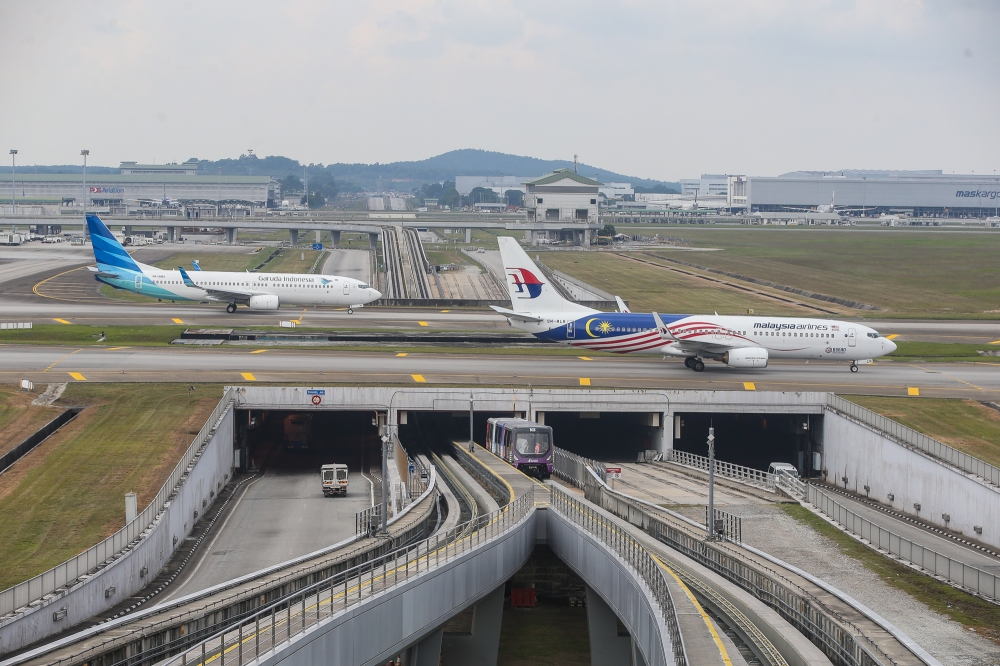
On airfares, Loke said the government had limited room to intervene as ticket prices were largely determined by market forces.
Malaysia does not have a policy of capping airline ticket prices except during selected major festive periods for flights between Peninsular Malaysia and Sabah and Sarawak, with the fare cap applying for about 12 to 14 days a year during major festivals including Chinese New Year, Hari Raya, Gawai and Christmas.
“We can’t afford to cap the fares every day,” he said.
Loke attributed higher airfares partly to increased jet fuel prices, which he said had risen by 30 to 40 per cent, as well as airlines cutting capacity because of higher operating costs.
“To be fair to the airlines, most airlines are trying to keep flying, even though they have some reduction in capacity, but overall it’s not that many,” he said.
The ministry has been engaging airlines to maintain basic connectivity while encouraging them to restore capacity, with most airlines agreeing to review their normal flight schedules by September and October.
“We have tried to encourage the airlines to slowly bring back their capacity,” Loke said.
For Loke, however, the work across Malaysia’s transport sector has no clear endpoint.
“Public transport is a never-ending effort,” he said.
“It’s not that we have done this and it’s finished.”


