


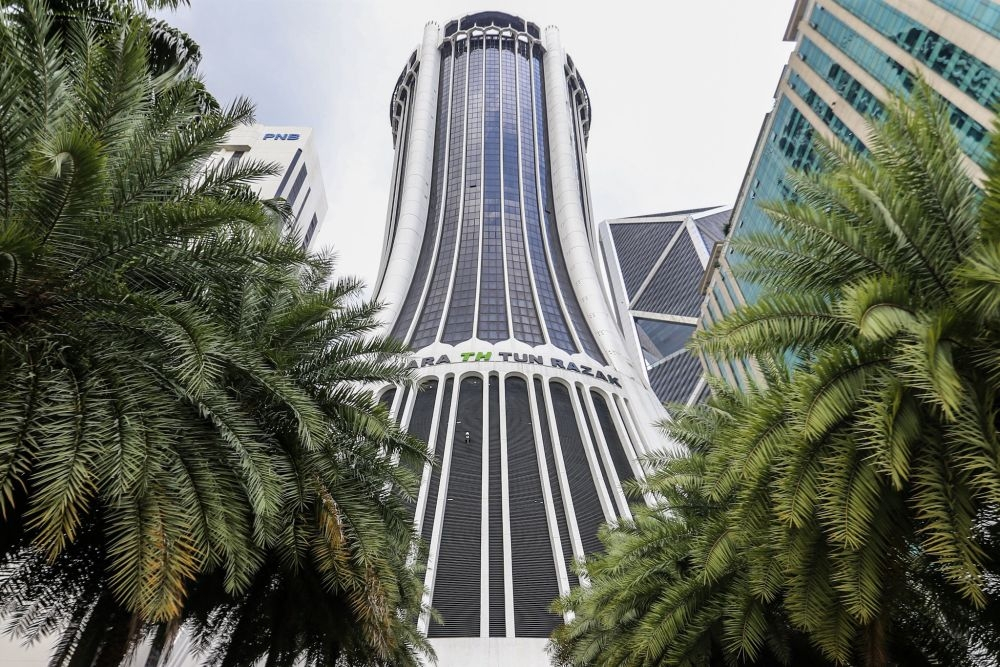


KUALA LUMPUR, Aug 11 — Today, in a special sitting of Parliament, MPs are expected to debate a Royal Commission of Inquiry (RCI) report on the country’s Muslim pilgrims’ fund Lembaga Tabung Haji (TH).
Here’s a quick and simplified summary on the 252-page RCI report and some of its key findings:
What is Lembaga Tabung Haji and what is its purpose?
It has two main functions: to administer or manage the fund (which includes the savings by depositors and investments); and to manage all matters regarding pilgrims’ welfare.
The Tabung Haji Act 1995 (Act 535) also enables TH to enter into joint ventures, buy and sell shares, and set up companies if approved by the Religious Affairs Minister.
How big is it?
Currently, TH manages the savings of over 9.8 million depositors.
Based on the latest statistics available on TH’s website, it was managing RM91.747 billion for 9.55 million depositors in 2024.
What is the RCI about?
The RCI was set up to:
- investigate Lembaga Tabung Haji’s management and operation issues from 2014 to 2020;
- determine if there had been any concealing of information and misleading statements given;
- recommend appropriate action for any breaches of law.
When was the RCI conducted and when was its report released?
From its initiation to its completion and its release, the RCI spanned the administration of three prime ministers.
During Bersatu’s Tan Sri Muhyiddin Yassin’s time as prime minister, the Cabinet on August 14, 2020 decided there needed to be an RCI, and on July 14, 2021 agreed to set up the RCI and on October 8, 2021 decided on the RCI’s scope of investigations.
On January 20, 2022, the RCI chair, former chief justice Tun Md Raus Sharif and five other RCI members were appointed.
The report dated July 19, 2022 was presented to the Yang di-Pertuan Agong on August 30, 2022, and this was when Umno’s Datuk Seri Ismail Sabri Yaakob was prime minister.
The Malaysian government declassified and released the RCI report on July 29 this year, with Prime Minister Datuk Seri Anwar Ibrahim explaining that it was not released three years ago as it could have caused depositors to panic and withdraw their savings from TH.
What did the RCI report find and what did it recommend?
1.Tabung Haji’s financial crisis in 2017; TH issued dividends (‘hibah’) when liabilities exceeded assets
In 2017, TH faced a serious financial crisis as it actually had a RM1.4 billion net loss (instead of the RM3.4 billion net profit recorded in its 2017 financial statement), if accounting standards had been fully complied with.
The RCI said there were five factors that led to the crisis, including TH’s “creative accounting practices” in order to enable it to declare high dividends.
Under the Tabung Haji Act, TH can only declare dividends or distribute profits (hibah) if its assets are more than its liabilities.
But instead of waiting for the audited financial statements and using the asset values there for the years 2014 to 2017, TH used other methods (such as using estimated values via Realisable Asset Value; and tweaking when it should reduce asset values due to impairment losses) in order to have higher asset values for calculations on dividend rates.
The RCI said TH’s dividend or profit distribution (hibah) from 2014 to 2017 did not fulfill the Tabung Haji Act’s controls to ensure depositors are paid from actual profits and not from their own deposits, and the high dividends pre-2018 also caused TH’s reserves to shrink.
Among other things, the RCI said TH’s dividend or distributed profit in 2014 and 2015 exceeded its actual profits for the year, while its liabilities exceeded its assets in 2016 and 2017.
In 2018, the government had to bail out TH in order to close the deficit gap and enable TH to declare dividends for that year, and also to prevent triggering a “bank run” and market instability if TH failed to declare dividends.
This was done through the government’s fully-owned special purpose vehicle Urusharta Jamaah Sdn Bhd (UJSB) using RM19.9 billion to buy over TH’s assets valued at RM9.7 billion.
TH could only pay 1.25 per cent dividend in 2018 when it started fully complying with the accounting standards, but has since been able to issue higher dividends — with the 3.5 per cent declared in 2025 being the highest in eight years.
2. Bonuses too high/unauthorised bonuses
The RCI said TH gave very high bonuses to its employees from 2010 to 2017 (including 2014 to 2017 when audited financial statements showed TH’s liabilities to be higher than its assets), and said this practice should be stopped.
The RCI notes TH had from 2018 started controlling bonus payouts, based on TH’s financial capabilities.
TH’s subsidiary TH Properties Sdn Bhd breached the Companies Act 2016 when giving unauthorised bonuses totalling RM1,148,400 to 14 persons (2017) and RM1.045 million to 10 persons (2018).
The RCI recommends getting back those unauthorised bonuses totalling more than RM2.19 million from TH Properties’ directors and officers.
3. How Tabung Haji’s governance can be improved
The RCI proposed multiple amendments to the Tabung Haji Act (Act 535) to improve TH’s administration.
This includes changing the law to specifically ban active politicians from being directors in TH and its subsidiaries, and to require TH directors to have specific expertise (such as in banking, accounting, economy) instead of only requiring them to be Malaysian Muslims.
4. Investments
Noting suspicious transactions and concealing of information, the RCI proposed a forensic audit on how problematic investment decisions involving 14 companies were made, which caused TH to face severe decline in asset values.
The RCI said TH and its subsidiaries’ directors, management and employees who were involved should be held responsible for these investment losses suffered.
The RCI said TH should focus on fund management portfolios, and should not be involved in high-risk investments (especially what TH classifies as “strategic investments”).
The RCI noted the expansion of TH’s original purposes to also being Muslims’ economic pillar had resulted in its investments in areas where it lacked expertise (such as properties and plantations), resulting in huge losses involving its subsidiaries.
The RCI proposed TH set up a new department (with the proposed name of Dana Haji or Haji fund) to manage investments and to be supervised by the Securities Commission of Malaysia.
5. Policy changes for deposits, pilgrimage payment, pilgrimage subsidies (HAFIS)
The Haj or pilgrimage cost per person has continued to increase from year to year, from just RM15,555 (2003) to RM22,900 (2019) and to RM25,540 (2022), with the RCI saying it is projected to go up to over RM35,000 (2030) and RM50,000 in 2050.
Currently, Malaysian pilgrims do not pay the full Haj cost, as TH has since 2001 been using its investment profits to subsidise up to half or more of the cost.
From 2009 to 2019, first-time pilgrims only had to pay RM9,980 even as the full Haj cost increased annually, while this was increased in 2022 to RM10,980 (paid by B40 pilgrims) and RM12,980 (non-B40 pilgrims).
The RCI said TH’s pilgrimage subsidy or HAFIS bill was projected to continue increasing amid rising costs, which would also affect TH’s profit distribution (hibah) or dividend issued to depositors.
So the RCI proposed TH change its policies:
- Minimum deposit for depositors to be eligible for their turn for first Haj: To increase from RM1,300 to the current Haj cost paid by pilgrims (was RM12,980 in 2022) to encourage regular and disciplined savings;
- To limit big withdrawals of deposits and require one-month notice before withdrawal;
- Give Haj subsidies (HAFIS) only to those who need it; those who can afford should pay full Haj cost.
After the RCI report’s 2026 release, TH on July 30 said it has managed to keep Haj costs at RM33,000 per person for three consecutive years.
What did Tabung Haji say after the release of the RCI report?
Among other things, TH said it has already carried out 75 per cent of the RCI’s recommendations and is carrying out the others.
TH also said it had, since 2022, only announced dividends based on audited financial statements.
It also said TH is now in a stronger financial position and that it has started to rebuild its reserves.
TH said it has successfully tackled RM12.6 billion in investment losses via the 2018 recovery plan (RM10 billion through UJSB’s asset purchase) and RM2.6 billion in stages up to the end of 2025.
What happened after RCI report’s release?
Following the report’s release, the Malaysian Anti-Corruption Commission (MACC) and the police have launched investigations, while the Inland Revenue Board (IRB) has also started investigating several individuals after finding discrepancies between their declared income and their assets.


