




MARANG, June 21 — Malaysia’s shrimp supply is guaranteed to be sufficient even after the country imposed a temporary ban on five shrimp species from Thailand starting June 1.
Department of Fisheries (DOF) director-general, Datuk Adnan Hussain, said shrimp associations and local farmers have drawn up plans to raise production levels to cater for domestic consumption and overseas markets.
“Our shrimp are also exported to countries including the Gulf states, South Korea, the European Union and Australia. Our supply remains sufficient, and we have received feedback from farmers and associations that they support this temporary restriction and are now planning to increase production capacity to meet domestic and export demand,” he said.
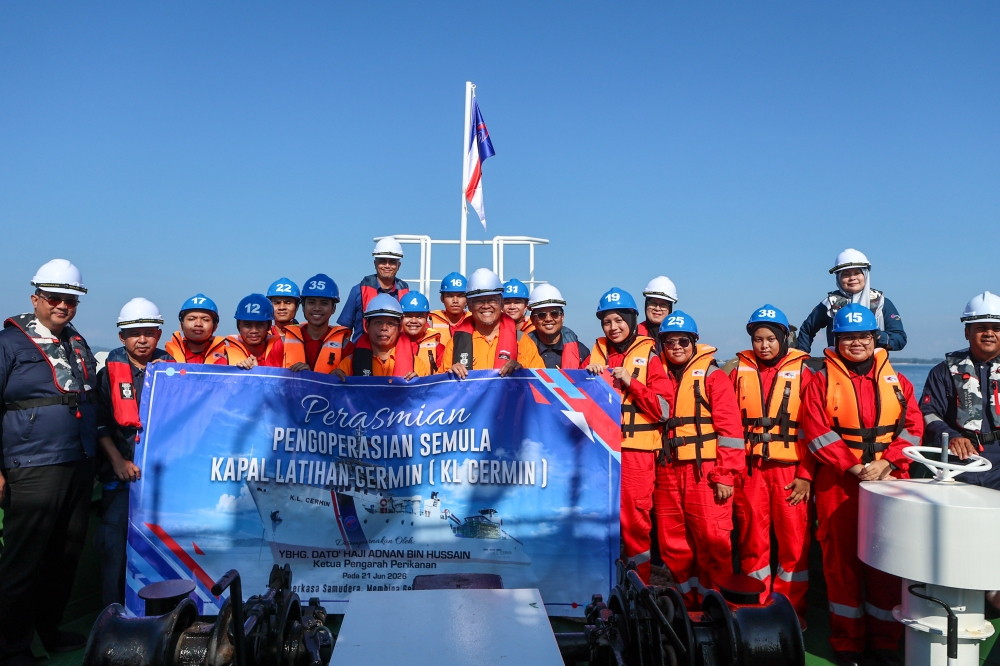
He spoke to reporters after officiating the reopening of the Training Vessel KL Cermin at the Fisheries Academy Malaysia here.
He said Malaysia records annual shrimp imports of about 11,000 metric tonnes from Thailand and exports roughly 3,000 metric tonnes in return.
Adnan said the temporary import ban would protect the domestic industry from an oversupply of imported products and tighten biosecurity controls to ensure the fisheries sector remains free from disease and illegal chemicals.
On May 16, Malaysia strengthened import controls on Thai fishery products by enforcing a Certificate of Analysis (CoA) requirement for siakap (seabass) and imposing a temporary ban on five shrimp species, namely Penaeus esculentes (brown tiger prawn), Fenneropenaeus merguiensis (banana prawn), Penaeus vannamei (whiteleg shrimp), Penaeus monodon (giant tiger prawn) and Penaeus stylirostris (blue shrimp).
Thailand has reportedly indicated it could escalate the matter to the World Trade Organisation and Asean if talks fail to resolve Malaysia’s temporary restriction on imports of the shrimp species.
Earlier, Adnan said the KL Cermin, which belongs to the Fisheries Academy Malaysia, has returned to service following repairs and upgrades carried out since 2023 at a cost of RM10.14 million, including engine improvements, repairs to the technical trawl system, and the purchase of new fishing gear.
He said the vessel, a modern training ship with a gross capacity of 160 metric tonnes, was specially built to support practical training, research and skills enhancement in the fisheries industry. — Bernama


