


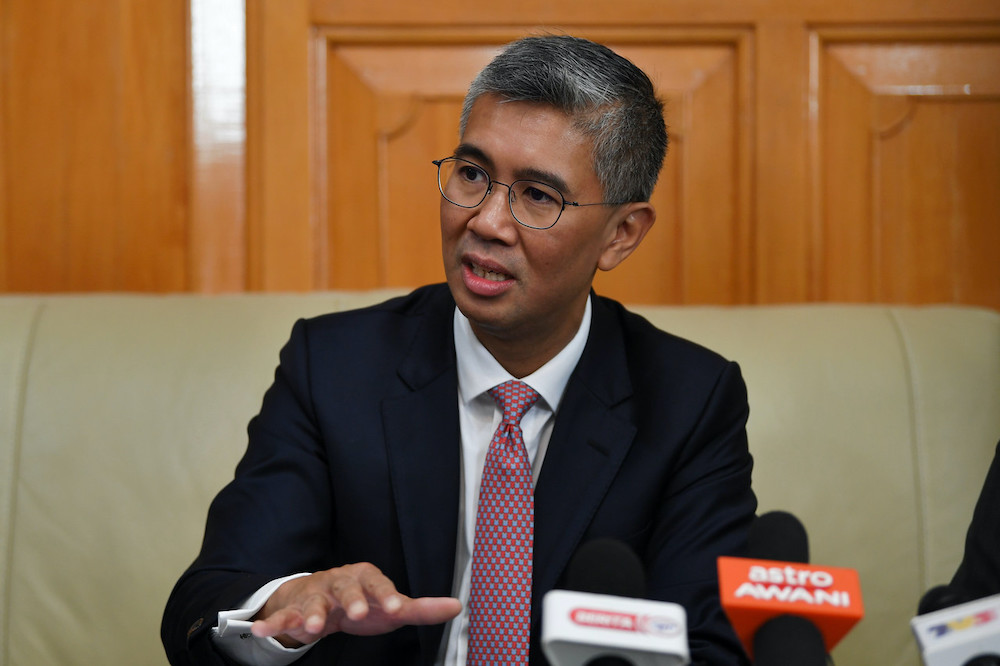


KUALA LUMPUR, Nov 4 — Budget 2021 will focus on addressing the economic impact of Covid-19 on Malaysia, Datuk Seri Tengku Zafrul Tengku Abdul Aziz said in a prelude to its tabling in Parliament this Friday.
In an interview with Harian Metro published today, the first-term finance minister indicated that the budget for next year will be increased, and that the bulk will go towards the government’s operating expenditure, even as he assured Malaysians that the Health Ministry will get more funds to address the pandemic.
“This time it is a combination of finding solutions to help the rakyat, and to aid in the nation's economic growth during the fight against the Covid-19 pandemic,” Tengku Zafrul was quoted saying.
He said the policy must balance between the two, with recovery already visible but even more important is to preserve it.
“One of the ways to do so is to ensure Covid-19 is properly controlled, with the hopes that Malaysia will begin to show more recovery by 2021.
“For the Budget, the Health Ministry will assuredly receive a larger allocation this time round,” he said.
Preparing the allocation is necessary for the purchase of Covid-19 vaccines, as Tengku Zafrul said the government cannot tell the rakyat they have no allocation for it.
“But whether it is to be announced in Budget 2021 or not remains unknown, since we do not know when the vaccine will be available on the market,” he said.
When asked if the government will consider giving cash handouts to aid the rakyat, the minister said the budget is designed to aid those among the rakyat who really need it as at the present, it is not just the B40 category who are affected but the M40 as well.
Tengku Zafrul said many will be covered, including the disabled, women, youths, graduates, small traders, cab drivers, and other sectors.
“What I am saying is, we are trying to use data to bring about a solution, but not one that can be applied to all levels. Additionally raising the tax rate when the economy is not doing so well is not a wise move to increase the nation's revenue,” he said.
Tengku Zafrul also said the private sector must play its part and cooperate with the government, adding that he has previously mentioned how government-linked companies and government-linked investment companies should assist and give their full commitment.
“But I feel the private sector should cooperate with the government for mutual assistance. They have done so before when the government announced the Prihatin and Penjana packages.
“But the government's main focus now is to save whatever there is now, with the help of everyone including the private sector,” he said.
On the moratorium, Tengku Zafrul said a targeted one is more effective in helping the rakyat affected by the pandemic, particularly those who have lost their jobs or face reduction in salaries.
“This is better as those with money can continue to make their payments, while at the same time assisting those unable to afford it. Similarly banks will have the cash flow and are able to provide loans to companies that need it.
“So regardless of B40, M40 or T20 categories, if you have lost your job you can apply for the moratorium. Likewise if your salary has been reduced by 50 per cent,” he said.
Tengku Zafrul added more data and study is needed to improve the effectiveness of the targeted moratorium, for greater accuracy and detail.
He said the government's decision to implement the targeted moratorium was due to the revelation that the automatic moratorium from April 1 until September 30 benefited 7.7 million Malaysians, with a small segment not really needing it.
“If we give (the moratorium) to everyone including big companies, officers and entrepreneurs, they would use it for other purposes. Many of the wealthy used the moratorium to invest in the share markets.
“That is why I want to widen the scope, we have been discussing with the banks via Bank Negara Malaysia, so wait for the budget on Friday,” Tengku Zafrul said.
As of October 9, banks have received 640,000 applications to extend the moratorium and financial assistance, with 98 per cent of the applications approved. The minister said this indicates many others have continued their repayments again.
“We did a study with the Merdeka Centre which ended on October 30, and it indicated 70 per cent of respondents say they do not need the moratorium for the time being,” he said.


