




KUALA LUMPUR, March 26 — Chinese developers have halted work on four man-made islands off Johor waters over environmental concerns raised by Putrajaya and Singapore.
US paper the Wall Street Journal (WSJ) reported yesterday several Johor fishermen as expressing concern about their livelihoods, while environmentalists reportedly raised concerns about possible coral reef damage and water pollution.
“We understand that there are challenges when pioneering new visions, but that should not discourage us,” the WSJ quoted a spokesman from Guangdong-based developer Country Garden Holdings as saying.
Guangdong-based Country Garden Holdings is the developer behind the Forest City property project that is working in collaboration with state investment firm Kumpulan Prasarana Rakyat Johor.
According to a survey conducted by the WSJ, only about 40 per cent of those in Johor knew of the Forest City project “but perceived that it would not be economically advantageous to them and would prove to be a source of water pollution and loss of income as a result of shrinkage or limited fishing ground”.
Local daily The Star reported last January that the property project has been allowed to continue since being suspended for about six months after the size of the project was scaled down by at least 30 per cent to 1,368.05ha.
Malaysiakini reported last July that the Johor ruler Sultan Ibrahim Sultan Iskandar is the largest shareholder of Esplanade Danga 88 Sdn Bhd, which formed a joint venture with Country Garden Holdings for the controversial Forest City property project.
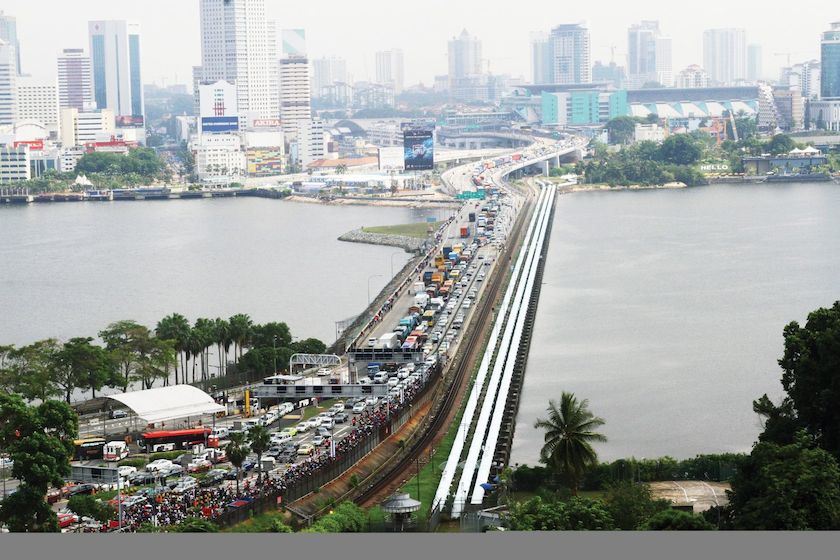
Another Chinese developer, Guangzhou R&F, has also reportedly halted its Princess Cove project which involves two man-made islands that straddle both sides of the Johor-Singapore Causeway.
The WSJ reported Singapore’s government as expressing concern and saying that the projects were too close to its borders.
A representative of Country Garden Holdings later contacted Malay Mail Online to say work has now restarted following the Department of Environment’s approval for its Detailed Environmental Impact Assessment (DEIA) and Environmental Management Plan.


