


PERTH, April 29 — According to Australian Prime Minister Tony Abbott, the chance of finding floating debris from missing Malaysia Airlines flight MH370 has become highly unlikely, and a new phase of the search will focus on a far larger area of the Indian Ocean floor.
“The search effort for Malaysia Airlines Flight MH370, which vanished while flying from Kuala Lumpur to Beijing on March 8 with 239 people on board, has so far failed to turn up any trace of wreckage from the plane,” Abbott was quoted as saying.
“Given the amount of time that has elapsed,” he said that efforts would now shift away from the visual searches conducted by planes and ships and towards underwater equipment capable of scouring the ocean floor with sophisticated sensors.
He admitted, however, that it was possible nothing would ever be found of the jetliner.
Malaysia, China, Japan, New Zealand, South Korea, Britain and the United States are assisting Australia in conducting the most expensive search in aviation history.
It remains unclear what caused the Boeing 777 to veer sharply off its course and disappear from radar as it prepared to cross into Vietnamese airspace.
Malaysian authorities have still not ruled out mechanical problems, but say evidence suggests it was deliberately diverted from its scheduled route.
Malaysia is under pressure to bring closure to the grieving families by finding wreckage to determine definitively what happened to the aircraft.
But the empty expanse of water northwest of the Australian city of Perth is one of the most remote places in the world and also one of the deepest, making the search complicated.
Authorities had been focusing on a 10 square km (6.2 square mile) stretch of seabed about 2,000 miles from Perth, after detecting what they suspected was a signal from the plane's black box recorder on April 4.
The US Navy Bluefin-21 underwater drone searching the seabed has so far failed to turn up any sign of the plane.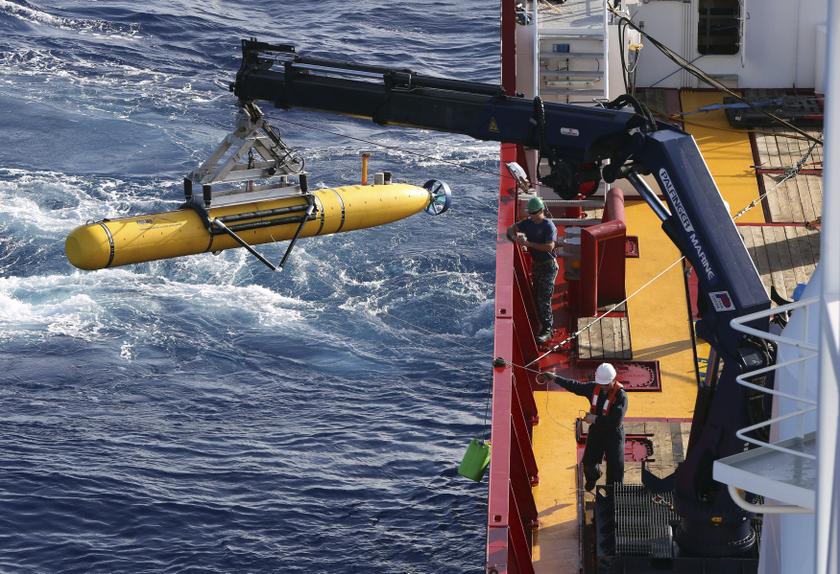
Abbott said that the new search area, which spans 700 km by 80 km (435 miles by 40 miles), could take between 6-8 months to completely examine, at a cost to Australia of as much as A$60 million (RM182 million).
The search operations have up until now been handled primarily as a military operation by the countries involved, but Abbott said that one or more commercial companies would be hired by Australia and Malaysia to handle the next phase. — Reuters


