


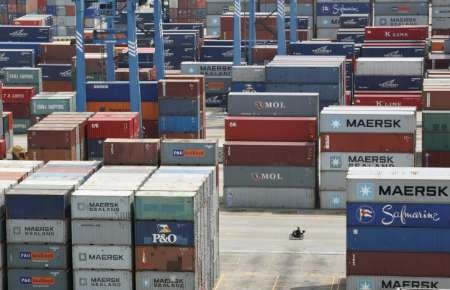


PETALING JAYA, Aug 6 — As Malaysia’s exports fell for the fifth month in a row this year, financial daily Wall Street Journal (WSJ) yesterday affirmed investors’ worry over Malaysia’s fundamentals and its desperate need for reforms.
Yesterday, the Department of Statistics (DOSM) released Malaysia’s external trade statistics for June, highlighting a 6.9 per cent decline in exports year-on-year to RM56.7 billion.
“In recent years Malaysia has drawn strong inflows of capital attracted by brisk growth, stable monetary policy and benign inflation in Southeast Asia’s third-largest economy,” contributor Abhrajit Gangopadhyay wrote in a WSJ blog post.
“But as US Treasury yields have risen in recent months, investors are taking a closer look at Malaysia’s fundamentals — and they don’t like what they see.”
Gangopadhyay noted that despite clinging to power in the May polls with the slimmest majority in the nation’s history, ruling coalition Barisan Nasional (BN) has yet to present a timeframe to implement the long-delayed goods and services tax (GST).
In June, Putrajaya had again delayed the implementation to an undetermined time, despite economists saying that a reform of the tax structure was necessary to lift Malaysia out of a middle-income trap.
BN also has not amended Malaysia’s subsidy system for cheaper petrol and food to benefit only the low-income citizens, he noted.
“The government did, however, find time for another handout: It recently announced a bonus for civil servants and government pensioners ahead of the Muslim festival of Eid al-Fitr, at a cost of RM670 million,” said Gangopadhyay, referring to the Aidilfitri celebrations this week.
The DOSM also announced yesterday that Malaysia registered a RM3.6 billion (3.2 per cent) fall in total trade year-on-year.
Meanwhile, trade surplus fell 53.1 per cent year-on-year from RM9.2 billion to RM4.3 billion.
Malaysia’s falling trade came on the back of other worrying signs which included its biggest ever outflow in a single month, as foreign investors sold RM6.6 billion worth of government bonds in June, reducing foreign ownership of government debt from 49.5 per cent to 46.8 per cent.
Since May 9, the ringgit has also fallen 8.8 per cent against the US dollar as global investors fled emerging markets as a response to a possibility that the US would retract its aggressive stimulus, sinking the currency to a three-year low.
Last month, the World Bank had cut its forecast for Malaysia’s economy in 2013 to just 5.1 per cent, down from last year’s 5.6 per cent, as it warns of a risk that Malaysia might record its first current account deficit since 1997.
Global ratings agency Fitch Ratings had last week revised Malaysia’s sovereign debt rating from “Stable” to “Negative”, citing a gloomier prospect for the country to tackle its rising debt burden following a divisive election result this year.
Fitch’s report noted that the federal government debt rose to 53.3 per cent of gross domestic product (GDP) at the end of 2012, up from 51.6 per cent at the same period the year before.
The general government budget deficit had also increased from 3.8 per cent of GDP in 2011 to 4.7 per cent in 2012, coming from a 19 per cent rise in public wages expenditure in a pre-election year.


