


KUALA LUMPUR, Oct 9 — What began as a football meme celebrating Indonesia’s victory in a regional tournament has turned into a social media controversy for Indonesian men’s grooming brand Kahf, sparking boycott calls in Malaysia and drawing celebrities into the debate.
The brand has since deleted the post and apologised, but the backlash has continued, with the dispute spilling beyond football into questions of national pride, respect and how brands engage with their audiences online.
Here’s what you need to know about the Kahf controversy.
How it began
The controversy began after Indonesia defeated Thailand on penalties to win the inaugural Fifa Asean Cup on October 5.
Following the victory, Kahf’s official Threads account, @kahfeveryday, shared a football-themed meme featuring the words “HATI-HATI BEDA LEVEL”, which translates to “Careful, different levels”.
The image placed the Indonesian flag above those of Malaysia, Thailand, Singapore and several other countries, accompanied by the caption “Tutor cara masuk Eropa dong”, loosely translated as “Teach us how to get into Europe”.
While apparently intended as football banter, the post drew criticism from social media users who interpreted it as belittling Indonesia’s regional neighbours.
The backlash
The post quickly attracted criticism, particularly from Malaysian social media users who questioned why a brand selling products across the region would publish content they considered disrespectful.
What began as criticism of the meme soon escalated into calls to boycott Kahf products in Malaysia, with some users also targeting its sister brand, Wardah.
The hashtag #BoikotKahf began circulating online, while some users shared videos of themselves discarding Kahf products.
The controversy also prompted wider debate over the boundaries between sporting rivalry and national pride, and whether brands should engage in potentially provocative humour on their official social media accounts.
Kahf apologises
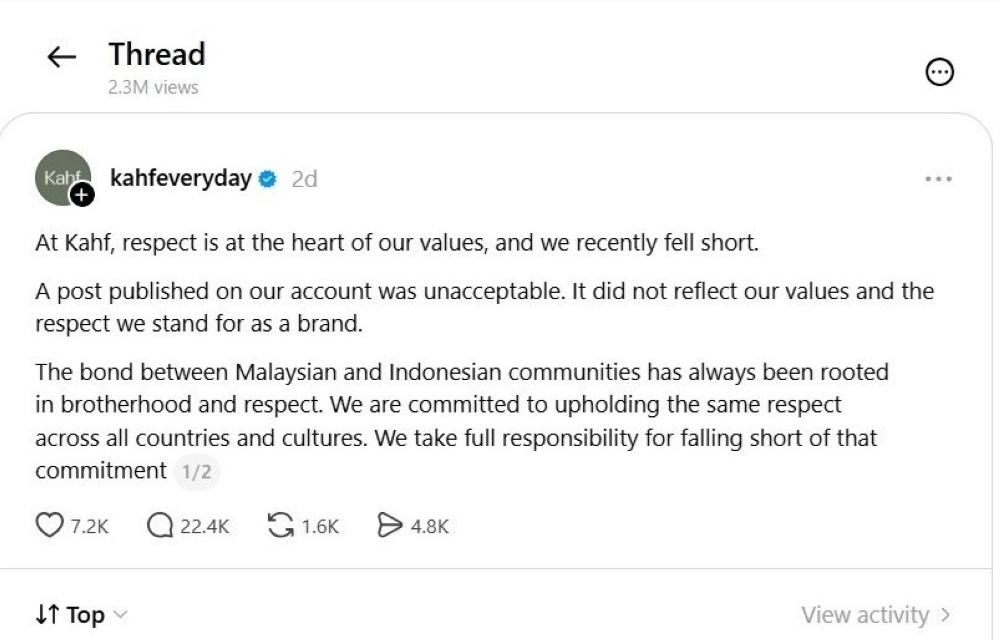
Kahf subsequently deleted the post and issued a public apology on Threads, acknowledging that the content was inappropriate and did not reflect the respect the brand sought to uphold.
The company took responsibility for the post and apologised for the disappointment it had caused.
It also acknowledged that rebuilding public trust would require more than words, pledging to demonstrate its commitment through its actions.
However, the apology did not immediately put an end to the criticism, with some Malaysian consumers questioning whether the response went far enough.
Malaysian and Indonesian celebrities weigh in
The controversy has also drawn reactions from public figures on both sides of the border, with opinions divided over the backlash and how the brand should move forward.
Indonesian actor Boy Hamzah attracted criticism after reportedly posting a video suggesting that Malaysia’s smaller population meant a boycott would have little impact on Kahf.
He also made controversial remarks about the countries’ shared history, including a claim that Malaysia would not exist without Indonesia.
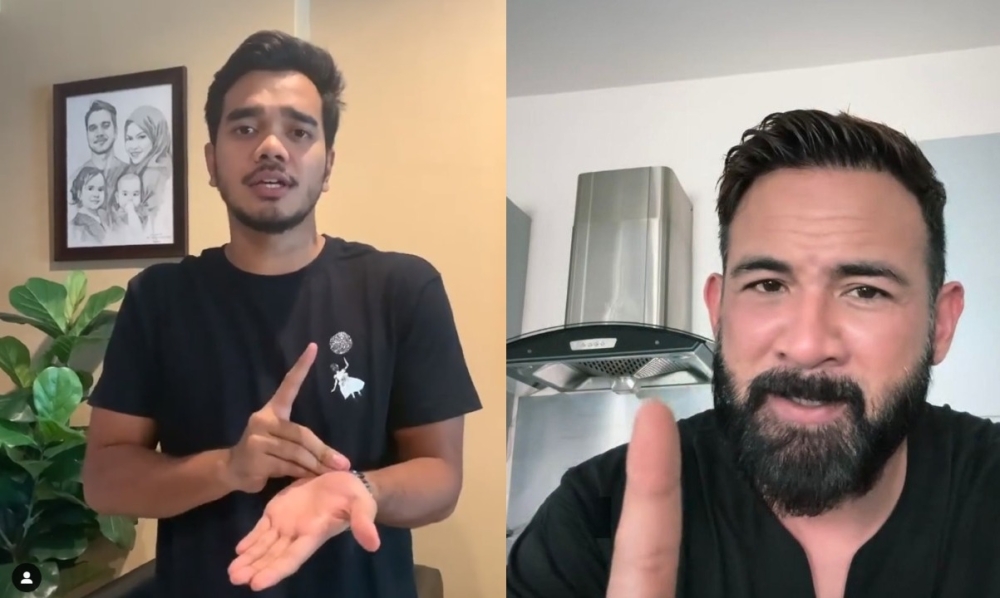
In Malaysia, singer, actor and television host Alif Satar, who serves as a Kahf brand ambassador, distanced himself from the tone of the original post.
Alif said he did not support content that belittled any country or individual, stressing that Malaysia and its people deserved respect.
While acknowledging Kahf’s apology, he maintained that rebuilding trust required meaningful action rather than words alone.
He also urged people to respect differences of opinion without resorting to insults or putting others down.
Malaysian Muay Thai fighter and kickboxer Johan Ghazali, meanwhile, took a different stance, saying he would continue supporting Kahf despite the controversy.
Johan acknowledged that the brand had made a mistake but argued that it deserved an opportunity to move forward after apologising.
Most recently, Malaysian actor Sharnaaz Ahmad weighed in through an Instagram video yesterday, urging Malaysians and Indonesians not to allow online disagreements to undermine their longstanding ties.
Sharnaaz also criticised Kahf’s decision to use its business account for provocative football banter, while suggesting that the dispute should not be prolonged once an apology had been made.
He called for greater mutual respect between the two countries and cautioned against allowing disagreements over sport or social media posts to damage relationships within their entertainment industries.
What happens next?
Although Kahf has removed the offending post and apologised, the controversy continues to generate discussion about brand accountability, cultural sensitivities and the risks of using sporting rivalries to engage audiences online.
For Kahf, the immediate challenge is whether it can regain the confidence of Malaysian consumers who were offended by the post.
Whether its apology and subsequent actions will be enough to restore that trust remains to be seen.


