


DUNGUN, Oct 8 — The surviving rows of two-storey wooden shophouses, known locally as ‘kedai kayu’, in Kuala Dungun are more than remnants of traditional architecture; they stand as witnesses to the history of a town once the centre of trade and economic activity in the district.
Built in 1933, the wooden buildings still carry the character of a bygone era, with timber main structures and windows, though some have been modified over the years to meet modern business needs.
Kuala Dungun trader and resident Ang Ah Kiang, 76, said the buildings are closely linked to the town’s history, which saw it develop from a fishing village into an important trading centre.
He said Kuala Dungun’s role later changed as economic activity picked up following the rapid development of the iron ore mining industry in Bukit Besi, particularly from the 1930s to the 1960s, before the mine closed in 1970.
“The economic growth also indirectly spurred trade in Kuala Dungun, including the emergence of various shops supplying the needs of residents and workers,” he told Bernama when met here today.
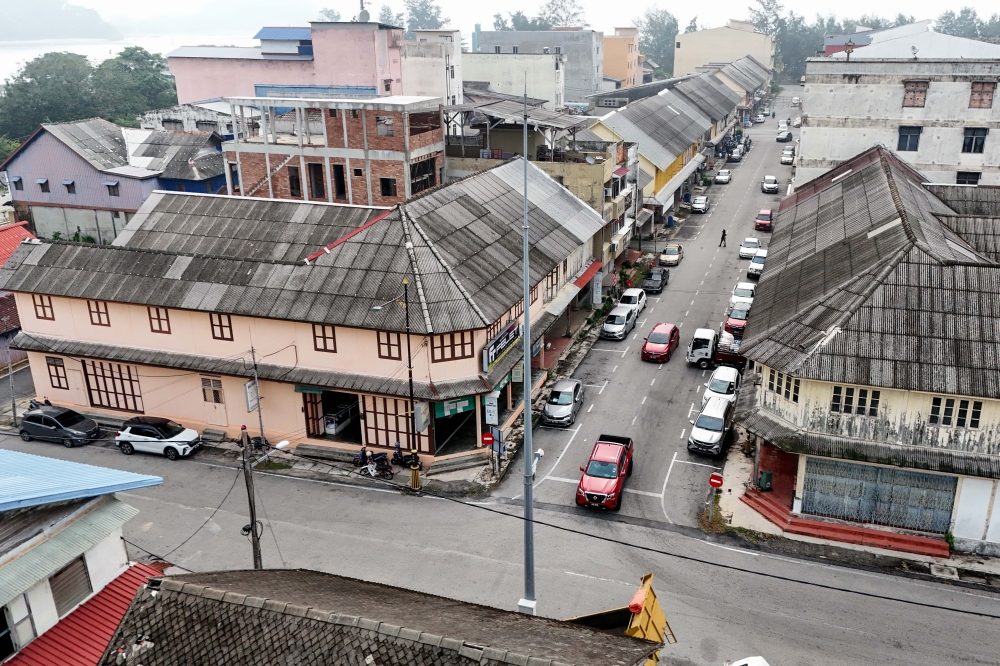
Ang said the wooden shops still operating today show the continuity between Kuala Dungun’s trading activities in the past and its business activities today, noting that some of the wooden shops in Kuala Dungun were built between 1930 and 1960.
He said about 100 wooden shop units were built during the period, and the premises now house a range of businesses, including restaurants, hardware stores, electrical shops, motorcycle dealers, plastic goods shops, grocery stores and photo shops.
Meanwhile, restaurant operator Mohd Kamal Hamid, 59, said he has rented the more than 90-year-old shop since 1986, after his father rented the premises in 1980.
He said that although the wooden shop, which he rents for RM1,200 a month, has undergone several renovations, its original structure has been preserved.
“I was told that the original owner of this wooden shop was a former employee of the iron ore mining company in Bukit Besi, and that the building was purchased in the 1930s,” he said.
Meanwhile, the Dungun chapter of the Malaysian Historical Society honorary secretary Wan Mohd Rosli Wan Ngah said that in 1933, the Dungun District Office reorganised Kuala Dungun by creating wooden shop lots as a commercial centre to support the growth of trade in the area.
According to him, more Chinese residents were settling in Kuala Dungun at the time, purchasing land and newly completed wooden shophouses.
“Malay residents living in Kuala Dungun were relocated to a new and more comfortable village, Kampung Tanah Lot,” he said.
However, he said Hokkien Chinese from southern China had begun migrating to the district as early as 1922, with many settling along the outskirts of the Sungai Dungun estuary.
“They came to open businesses such as grocery, seafood and rubber shops, and later dominated the wooden shophouses in Kuala Dungun after the town was reorganised in 1933,” he added. — Bernama


