


KOTA BHARU, Sept 28 — A common concern among traditional arts practitioners is the lack of successors to inherit their skills and knowledge as younger generations are often less inclined to carry on the art forms passed down by their parents.
However, Kelantan wayang kulit practitioner Kang Boon Ann, a Peranakan Chinese, has no such concerns — his entire family is actively involved in staging wayang kulit, a traditional form of shadow puppetry, performances.
Affectionately known as Che Ann, he is the founder of the Sri Cindayu Wayang Kulit Association and is among the state’s better-known non-Malay wayang kulit practitioners. Today, he and his family are working hard to preserve an art form more closely associated with the Malay community.
The family not only stages wayang kulit performances but also nurtures a new generation of practitioners. According to Che Ann, they are also making full use of modern communication technology to promote the centuries-old art form and keep it alive.
Primary school
Sharing his journey in wayang kulit, Che Ann, 58, said his interest in the traditional art was sparked while he was still in primary school.
Growing up in Kok Lanas at a time when television sets were not yet found in every household, he said wayang kulit was among the main forms of entertainment in the community, with performances often staged after the harvest season.
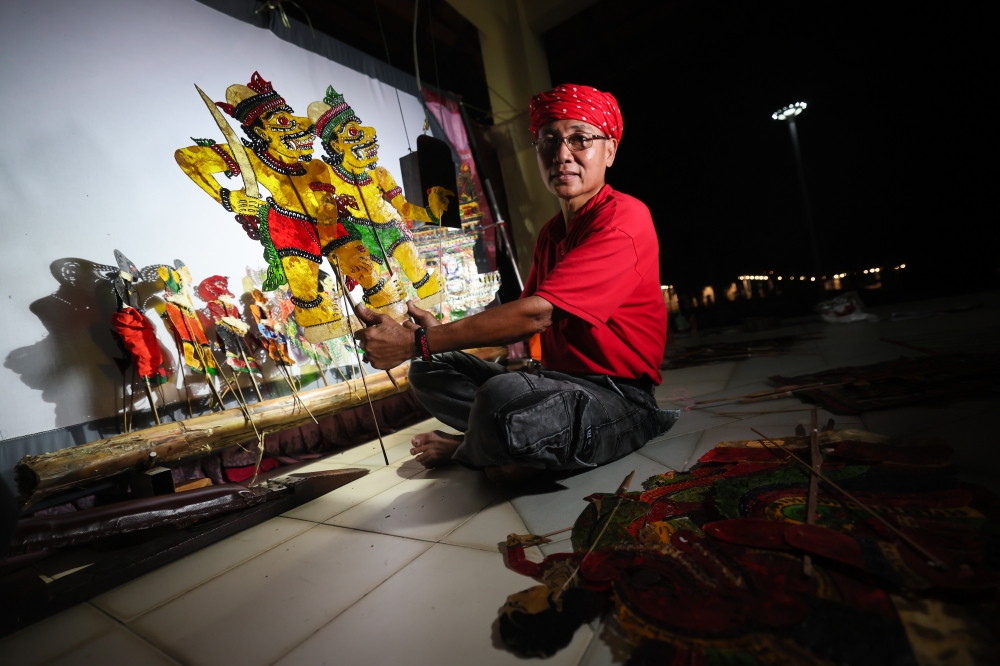
“I have been interested in wayang kulit since I was seven years old. There was no television back then. After the harvest season, villagers would stage wayang kulit performances and I would often accompany my grandmother to watch them.
“When I returned home, I would take my school exercise books and try to draw the puppets,” he told Bernama in an interview.
His fascination with the art was so strong that almost every page of his exercise books was eventually filled with sketches of wayang kulit puppets.
“My teacher used to scold me because the exercise book that was supposed to be used for homework was already filled with drawings. The only part without any drawing was the cover,” he recalled with a laugh.
From mechanic to ‘wayang kulit’ advocate
After completing his studies, Che Ann worked as a mechanic, but his passion for wayang kulit remained strong.
“I worked for 10 years before opening my own workshop in Kok Lanas. It was there that I met the late Tok Dalang Dollah Baju Merah. He taught me how to make the puppets,” he said.
Dollah Baju Merah, whose real name was Abdullah Ibrahim, was one of Kelantan’s renowned tok dalang, or wayang kulit puppeteers, and was highly regarded among practitioners for his skill in bringing a wide range of characters to life through his performances.
He died in September 2005 at the age of 67 due to health problems.
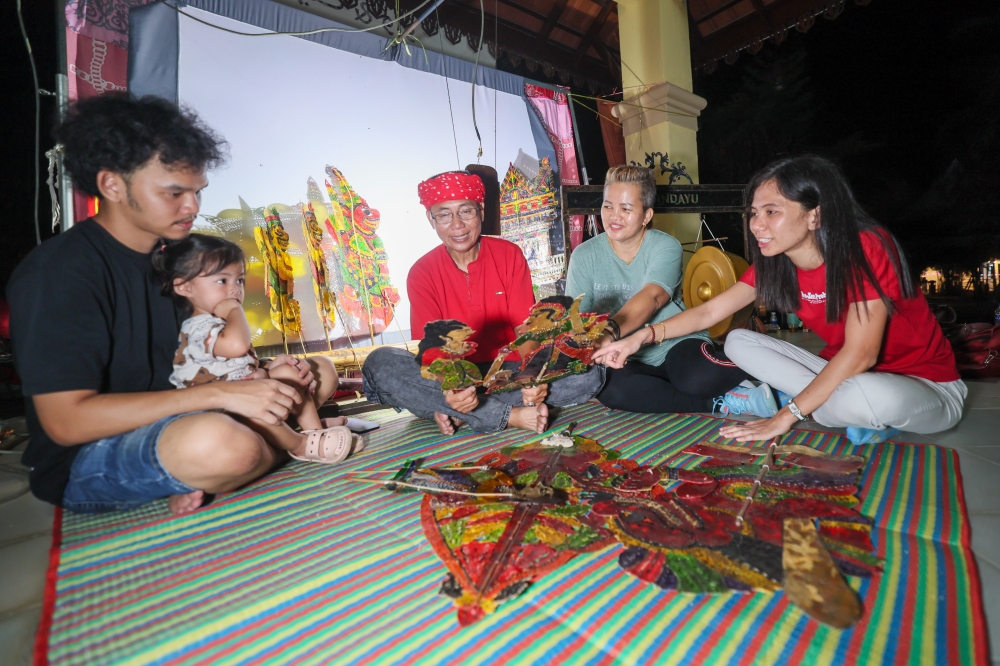
Che Ann said the late puppeteer taught him how to make puppets step by step for a year, from preparing and drying cowhide to crafting the puppets. Another puppeteer, the late Dollah Ramboo, taught him the art of performing wayang kulit for three years.
Che Ann later apprenticed under another craftsman Yusoff Mamat of Kampung Laut, Tumpat, to further hone his skills in producing coloured puppets.
According to Che Ann, he initially made wayang kulit puppets for his own personal collection. However, his skills attracted media attention, with reports about his work gradually bringing him wider recognition.
“Back then, I could see that wayang kulit was becoming increasingly subdued. There were fewer people performing it. That made me think that perhaps we should try to revive the art,” he said, adding that this was when he began dreaming of establishing his own wayang kulit troupe.
Family joins in
However, turning that dream into reality was not easy.
In 2005, Che Ann gathered several musicians to train them to play the various traditional Malay musical instruments used in folk ensembles such as wayang kulit. However, the effort did not last long as one by one, they stopped attending.
His wife Eh Tian Eh Awang, 52, then suggested an idea that would eventually change the course of their family’s journey.
“Fewer people from outside were coming for my training sessions. My wife said that instead of stopping our efforts, it would be better if our whole family learned to perform wayang kulit,” he said.
The suggestion marked a turning point. Che Ann began training his wife, two children and other family members to play the traditional musical instruments, manipulate the puppets and understand the various aspects of the wayang kulit performance.
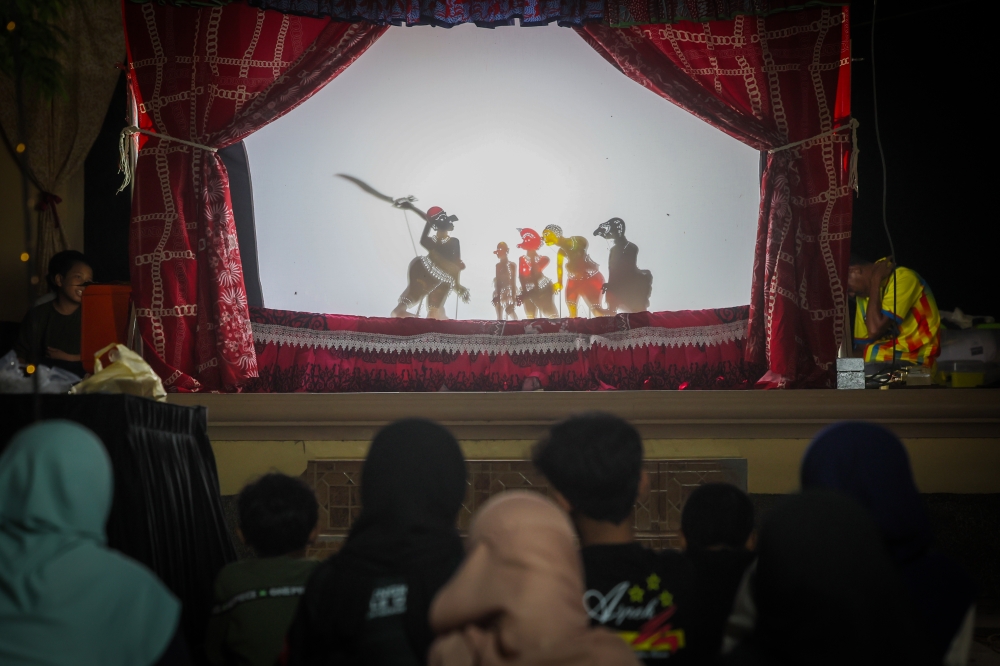
Today, almost the entire performance is carried out by his family.
“Almost everyone in my family is involved. My wife used to play the gong, while the children played the musical instruments. Now, they can also perform as the tok dalang and teach others,” he said.
Legacy
Today, Che Ann’s children have mastered almost every aspect of the wayang kulit performance.
His daughter Kang Siew Lie, 32, or Lily, said she began attending training at the age of 14 and has never regretted continuing the family legacy.
“I feel that it would be such a waste if we did not continue this legacy because the knowledge is already right in front of us. Other people are willing to come and learn, so we ourselves need to become the successors to our father’s efforts,” she said.
In addition to playing the canang, Lily went on to master the gong, kesi and gedombak after furthering her studies in the performing arts.
For her, however, becoming a tok dalang presents a far greater challenge.
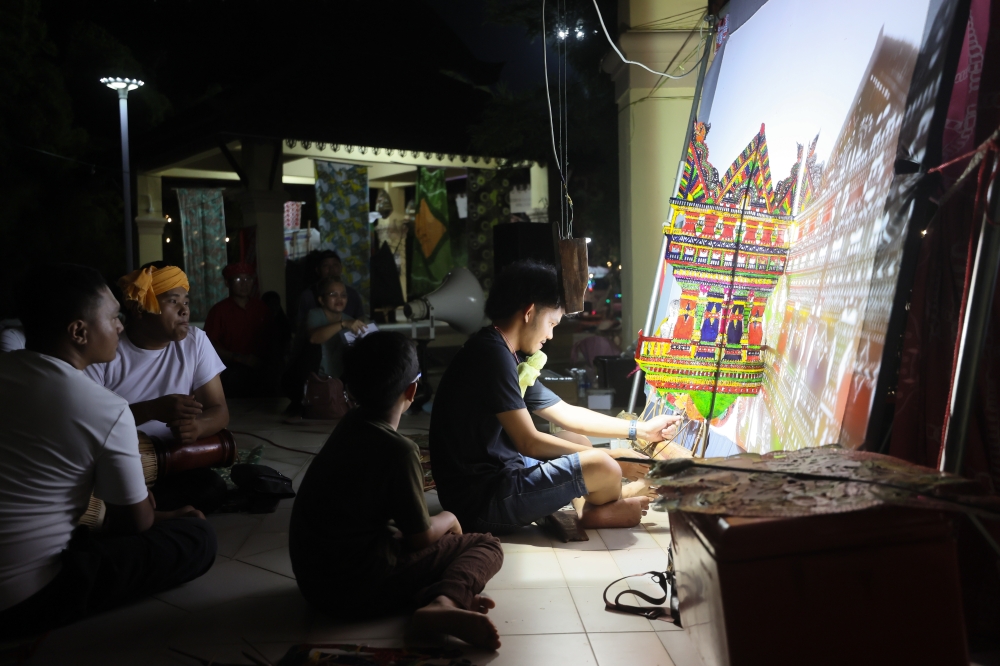
“Before becoming a tok dalang, you must first master the musical instruments. But the biggest challenge is producing different voices for the various (puppet) characters because female voices have certain limitations,” she said.
Her younger brother Kang Xiau Ren, 29, or Aaren, has emerged as a new-generation tok dalang who can switch between the role of puppeteer and musician depending on the requirements of a performance.
According to Aaren, training never ends because a tok dalang must constantly hone his skills.
“Even when I am driving, I would practise speaking in different voices,” he said, adding that a tok dalang needs more than just storytelling skills.
“One hand moves the puppet while the other searches for the next puppet. At the same time, your mind is thinking about the next scene, your mouth continues telling the story and your ears are listening to the rhythm of the music.
“Wayang kulit puppets are lifeless objects. We are the ones who bring them to life.”
Adapting heritage to the times
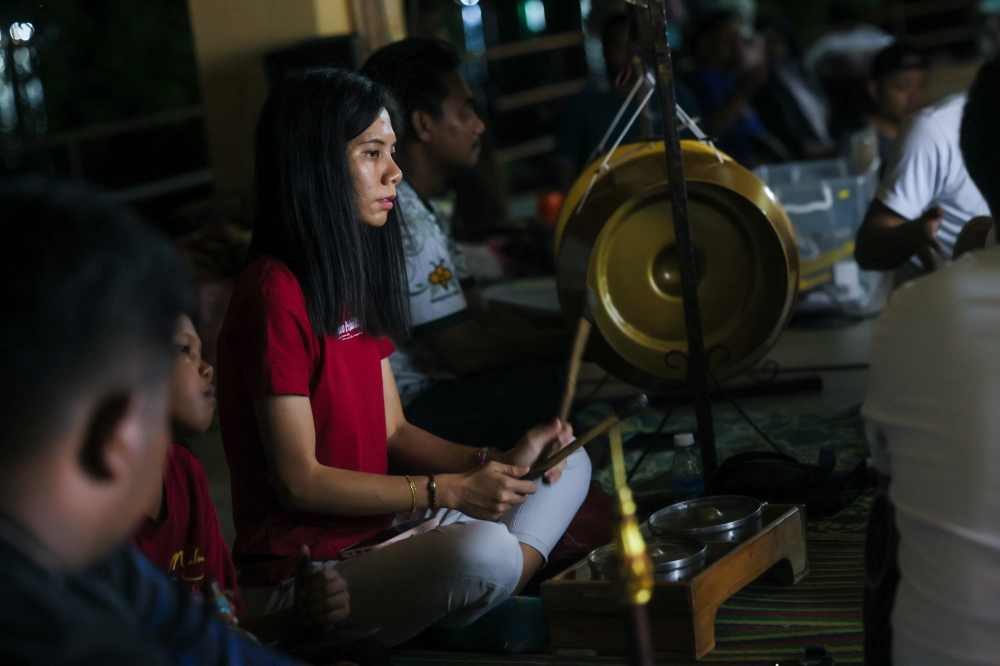
To keep wayang kulit relevant and appealing, the family has embraced social media while remaining committed to preserving the identity of the traditional art form.
Che Ann said TikTok has become an important platform for introducing wayang kulit to younger audiences.
“There have been people who watched us on TikTok and then came to meet us because they wanted to learn. This is what we want — for them to get to know wayang kulit first, and then develop an interest in it,” he said.
Aaren, meanwhile, has introduced several new elements, including digital sound effects, in the battle and archery scenes to enhance the audience’s experience.
“I do not want to change the tradition. I only add elements that can help the audience immerse themselves in the story, while the traditional music remains,” he said.
Beyond staging wayang kulit performances, the family also runs workshops at schools and educational institutions to nurture new practitioners.
Participants are introduced not only to the history of wayang kulit but also taught how to make puppets, play traditional musical instruments and stage performances.
While acknowledging that wayang kulit continues to face various challenges, including a shortage of successors and changing public tastes, Che Ann remains confident that the traditional art form still has a future.
He said for him, wayang kulit is no longer merely a personal passion but a responsibility to safeguard.
“I am not asking everyone to become a tok dalang. It is enough for them to know about wayang kulit. Once they know it, they will begin to appreciate it. And when they come to love it, they will make the effort to preserve it themselves,” he said. — Bernama


