


KUALA LUMPUR, Sept 27 — Do you like the look and feel of leather? Have you always wanted to try making something from leather, say a journal or a wallet?
Or are you looking for a new hobby? Or perhaps seeing leather in dozens of colours is your idea of heaven?
You can find it all at Kelang Leather, a 43-year-old homegrown brand — which was one of the last working tanneries in Malaysia and is now a leather crafting hub.
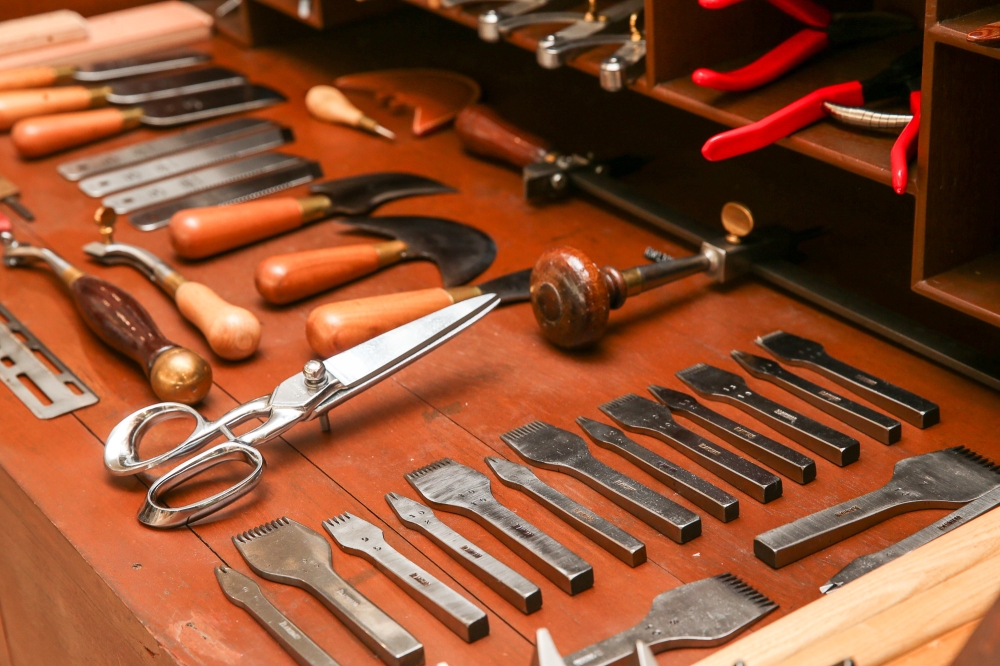
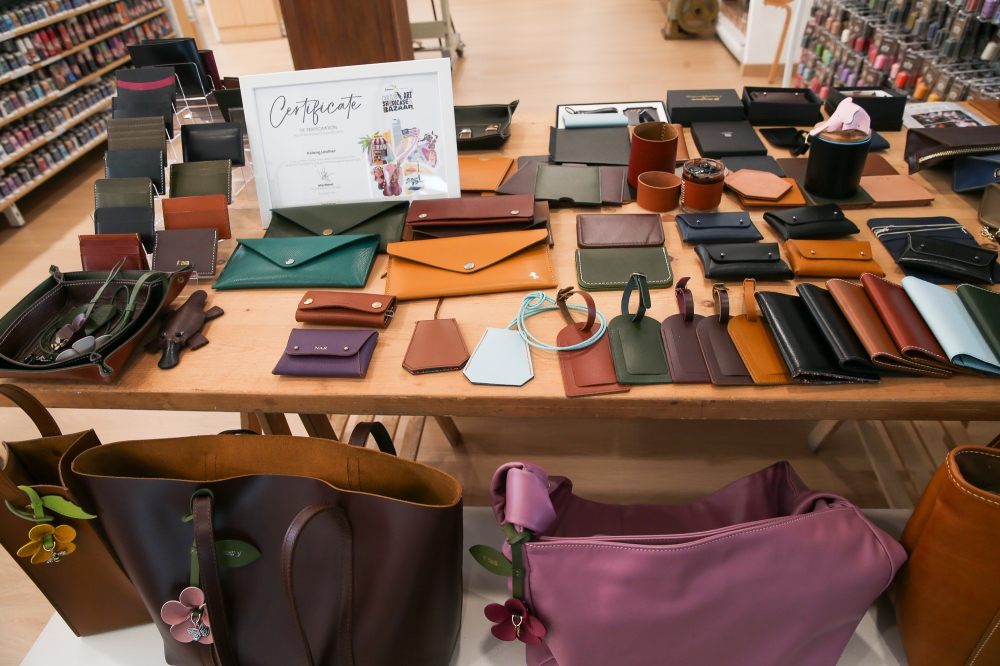
At Kelang Leather, you can buy leather, leather crafting tools, leather care products or “Made in Malaysia” handmade leather goods as gifts; join workshops to pick up new skills and experience; and get expert tips on using leather for the best results.
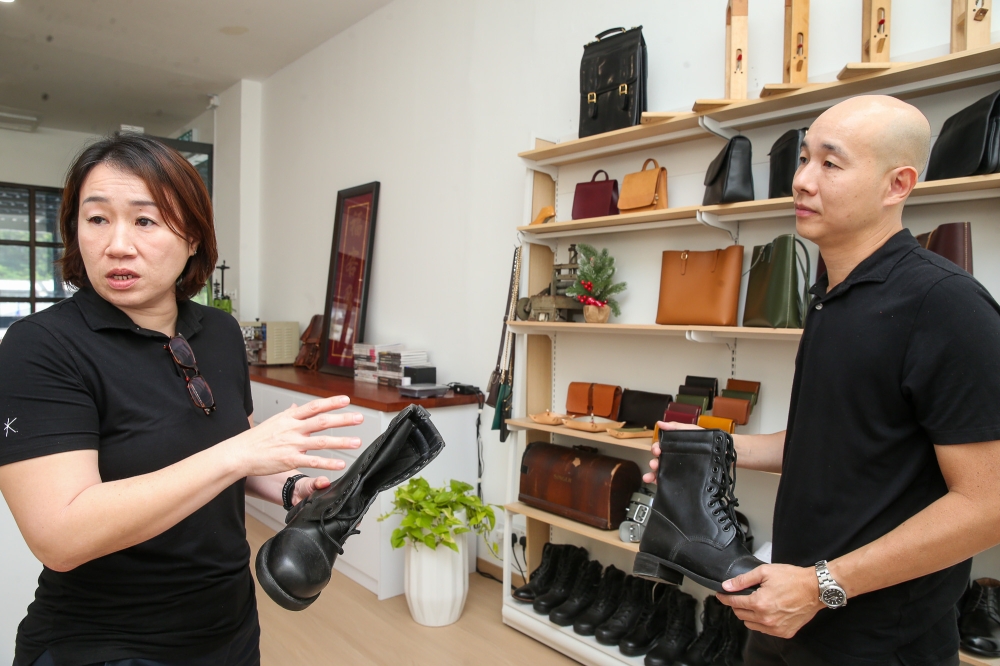
You will find no better guide to leather and leather crafting than siblings Alec Wong, 42, and Ann Wong, 45, now the managing director and marketing director of Kelang Leather respectively.
Both of them practically grew up at the tannery as they helped out there from young, with accounting graduate Ann joining the company 22 years ago and computer science graduate Alec 18 years ago.
They took over Kelang Leather in 2020 and want to spread their passion for and knowledge of all things leather.
Their father Wong Shang Teck, 77, started Kelang Leather as a tannery in 1983, naming it after its location then in Pandamaran, Klang.
How it all began
Ann told Malay Mail their grandfather came from China to Klang at the age of 10, and later opened a traditional Chinese medicine store that also doubled as a grocery store.
He even collected and sold rainwater as drinking water, as there was no piped water supply in Pulau Ketam then.
This entrepreneurial spirit was passed down to Shang Teck who started Kelang Leather, and now to the two siblings who are running the business.
In the 1960s, the Pulau Ketam-born Shang Teck, who had finished his Form Five studies, started work at a tannery in Menglembu, Ipoh.
After a two-year training stint in Germany at chemical companies producing chemicals for tanneries, Shang Teck returned to the Ipoh tannery for some years before striking out on his own.
Ann said her mother’s family was in shipping and logistics, and her maternal grandfather offered a Klang warehouse for Shang Teck to use as a tannery.
This was advantageous as the tannery imported raw materials and chemicals, and it was close to the port, she said.
Alec said it was the only tannery in Klang, with other local tanneries located at places like Taiping, Perak and at Old Klang Road, Kuala Lumpur.
Kelang Leather’s evolution from 1983 until now
Initially, Kelang Leather as a tannery also did the liming process when turning hides into leather, by removing hair and fat.
They subsequently imported wet blue hides (which had already gone through the liming process) that only needed minimal tanning (such as fat liquoring and dyeing).
Ann said Kelang Leather then turned these hides into finished leather (such as through dyeing and embossing), and sold them to local makers of leather shoes, wallets, bags and belts in Kuala Lumpur, Penang, Ipoh and Johor.
In the 1990s, Kelang Leather also started mass production of leather goods as an OEM producer, Alec said.
“And slowly as times got tougher, the economy started to change — we started to do other things, so we ventured into making shoes, we were also doing belts, handbags, small leather goods,” he told Malay Mail.
From 2005 to 2018, Kelang Leather was a subcontractor that produced leather belts, boots, and bags for the government’s uniformed bodies, according to strict specifications.
Ann said Kelang Leather was at one point producing 10,000 pairs of boots annually and at least 6,000 to 8,000 belts per order for government use.
In the early 2000s, Kelang Leather shut down the tannery’s wet tanning side and focused on doing leather finishing work, Alec said.
In 2016, Kelang Leather stopped operating its tannery completely as they faced manpower difficulties with locals finding the work too uncomfortable, dirty and strong-smelling.
After it stopped making government orders in 2018, Kelang Leather continued to be an OEM producer until 2020 — the year Covid-19 hit.
Ann said Kelang Leather did not resume operating its Pandamaran factory — where the machines are still stored — after Covid-19, and that the brand has now pivoted to the next stage of its journey.
A business that turned around, adapted and evolved with the times
During the Covid-19 lockdowns, Ann said YouTube tutorials were popular as people learnt new hobbies while staying at home, which prompted her to sell leather and leather crafting kits online then.
“So I actually sold a lot of leather on Shopee during that time,” Ann said. This enabled Kelang Leather to sustain itself financially then.
“Then we realised that a lot of people are interested in the craft, and we started to bring in nicer raw materials, better tools,” she said.
After the lockdowns when people started going back to work and spent less on leather crafting supplies, Kelang Leather in 2024 decided to open a retail store and workshop space at Zebra Square in Kuala Lumpur.
(Kelang Leather moved out of Zebra Square recently and will operate from its new space in Petaling Jaya from October 1.)
Kelang Leather shifted from mass production to a retail model while offering leather crafting classes as well.
What Kelang Leather offers now: Gifts, workshops and more
After the pandemic, Kelang Leather started making premium gifts and customised corporate gifts, with clients including banks and major property developers.
“Now there are a lot of companies who are happy to support ‘Made in Malaysia’ products,” Ann said.
With minimum orders such as for leather journals starting at 100 pieces and 3,000 pieces being the biggest order they have ever done, Ann said Kelang Leather can complete such orders within 30 to 90 days.
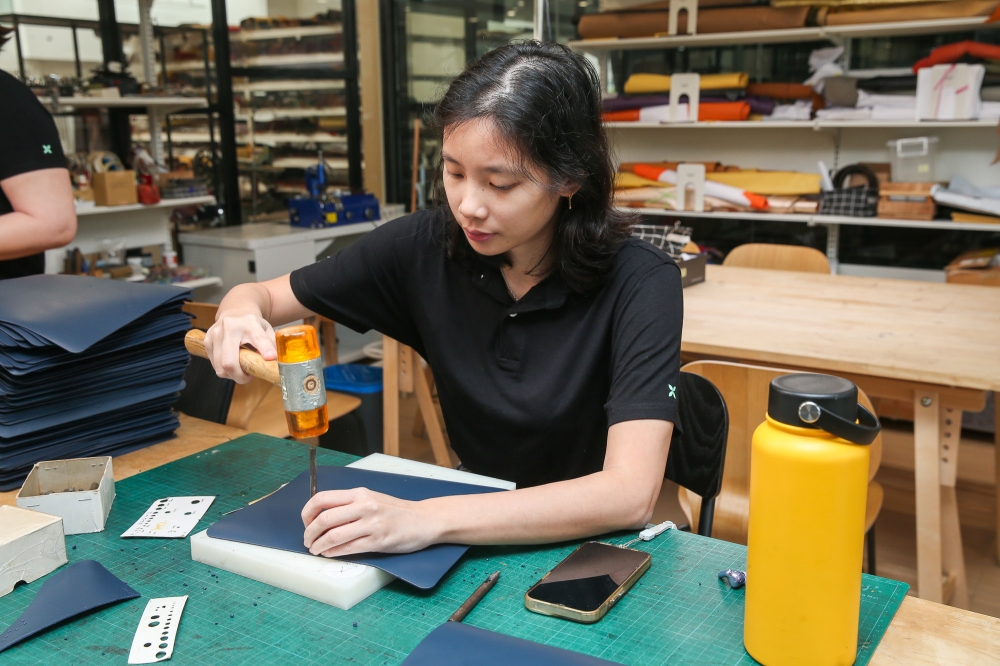
Apart from creating new designs and prototypes, Kelang Leather’s artisans also produce the leather goods by hand, with only minimal use of machines when necessary.
“So we are actually helping the job market as well, to train more people to know this skill and to use this skill to start their business. It is not just a hobby, it can be turned into a business,” she said.
Ann added that Kelang Leather offers consultancy services and technical support for customers who do leather crafts as a business, such as planning production cycles if these customers receive big orders.
Kelang Leather also offers leather-crafting workshops on an appointment basis starting from RM250 per person, and can also arrange such workshops for corporate groups.
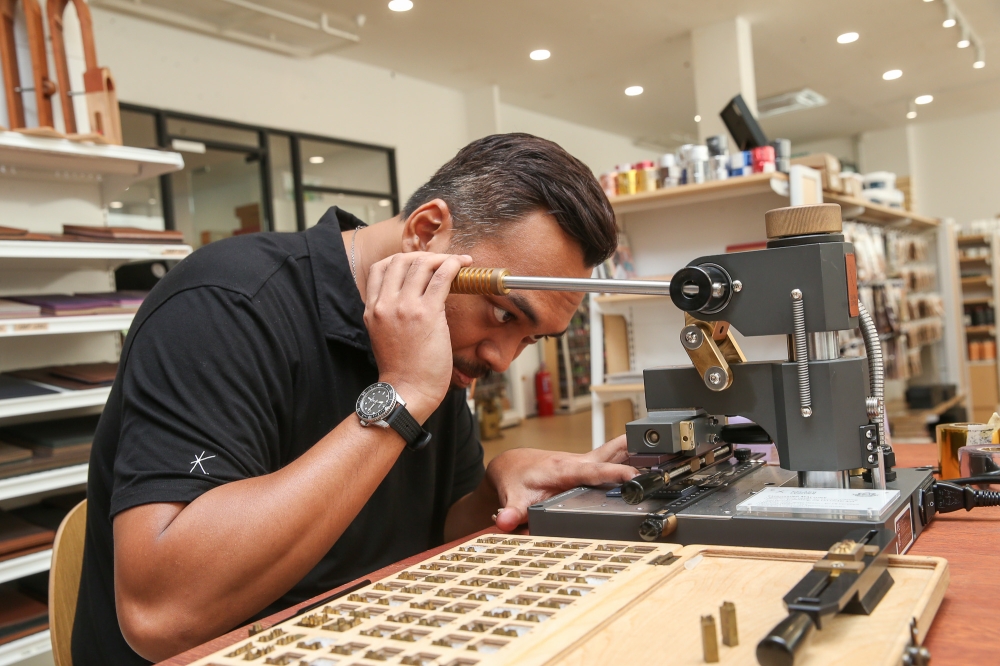
‘Dream team’: Building a leather crafting community
Kelang Leather had around 50 workers at its tannery at its peak, and now has about 15 people aged 21 to 60 on its team.
“So this is actually like a dream team,” Ann said, adding that leather crafting is “not just a job” for them.
“It’s the fact that they are all people who like to craft, they are all people who like to make products with their hands,” she said.
Alec said some of Kelang Leather’s team members were previously their customers: “We are building a community of leather crafters.”
What leather can you get here for your next project?
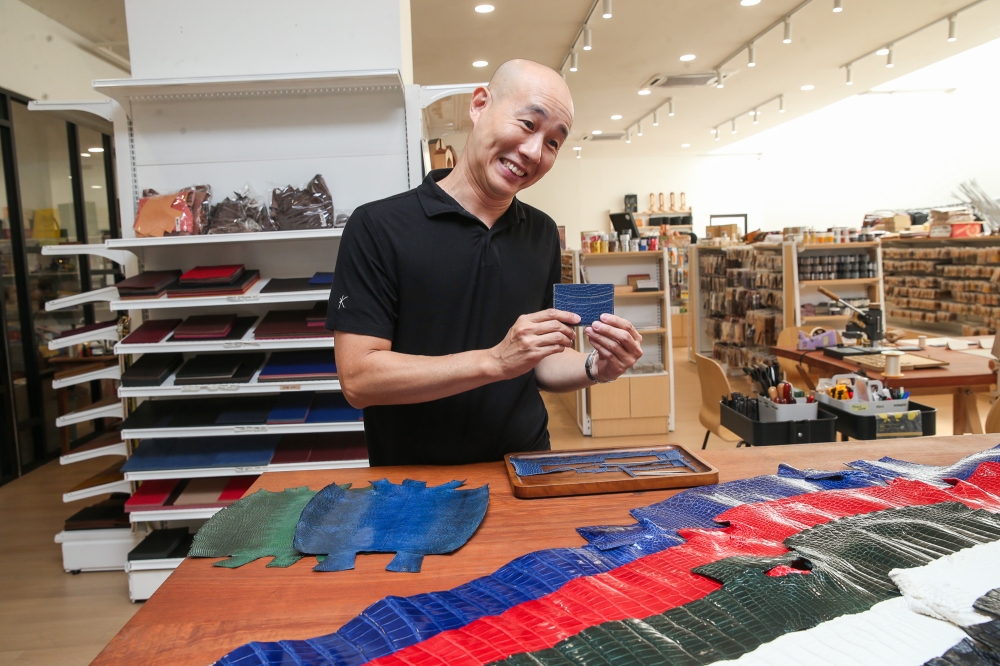
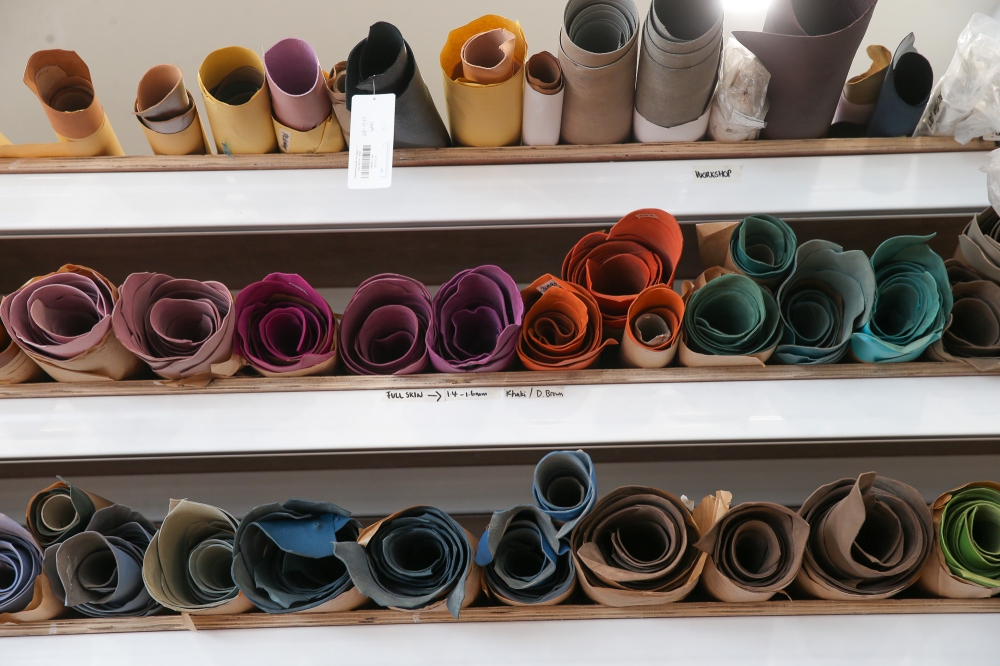
Kelang Leather offers responsibly-sourced and sustainable leather, ranging from the most common types (cow, sheepskin, goatskin, buffalo) to the exotic ones with CITES certification (crocodile skin, monitor lizard and ostrich leg).
Alec also said Kelang Leather has never bought or sold pigskin and does not offer snakeskin.
Currently, there is only one full-fledged local tannery in Sekinchan, Selangor that produces leather for the local market, which is where Kelang Leather gets crocodile and monitor lizard leather.
Kelang Leather imports the rest of its leather from neighbouring countries and Europe, including Walpier’s vegetable-tanned leather from Tuscany, Italy and goatskin from France’s Alran tannery.
Busting myths about leather
Countering the claim that animals are killed for their skin, Alec said leather has instead always been a by-product and that using it prevents it from going to waste.
“As much as we consume meat, there will be leather. You’ll be surprised by the amount of leather that gets discarded instead of being turned into usable leather,” he said.
Ann said leather is actually a sustainable material: “If you don’t use the leather, it’s just going to the landfill, it’s going to be buried in the ground.”
Alec said there is no substitute yet that works as well as actual leather for safety wear or to keep warm in cold and wet areas.
Alec said the idea that leather cannot last is a myth, explaining that it could be due to lack of knowledge on how to care for it or using the wrong leather part for the wrong products.
Unlike genuine leather which can take 25 years to decompose, Alec said fake leather (otherwise known as PU leather) may have top layers that decompose quickly but also have plastic layers that will take virtually forever to decompose.
* Kelang Leather will be opening its new retail store and leather crafting workshop at Block B, Level 2, Menara Harvey Norman, Petaling Jaya on October 1.


