















GEORGE TOWN, Sept 10 — A 10-year-old boy holds up his injured hand with only three fingers.
An injured elephant lies on the ground waiting for treatment at the Friends of the Asian Elephant Hospital in Lampang, Thailand.
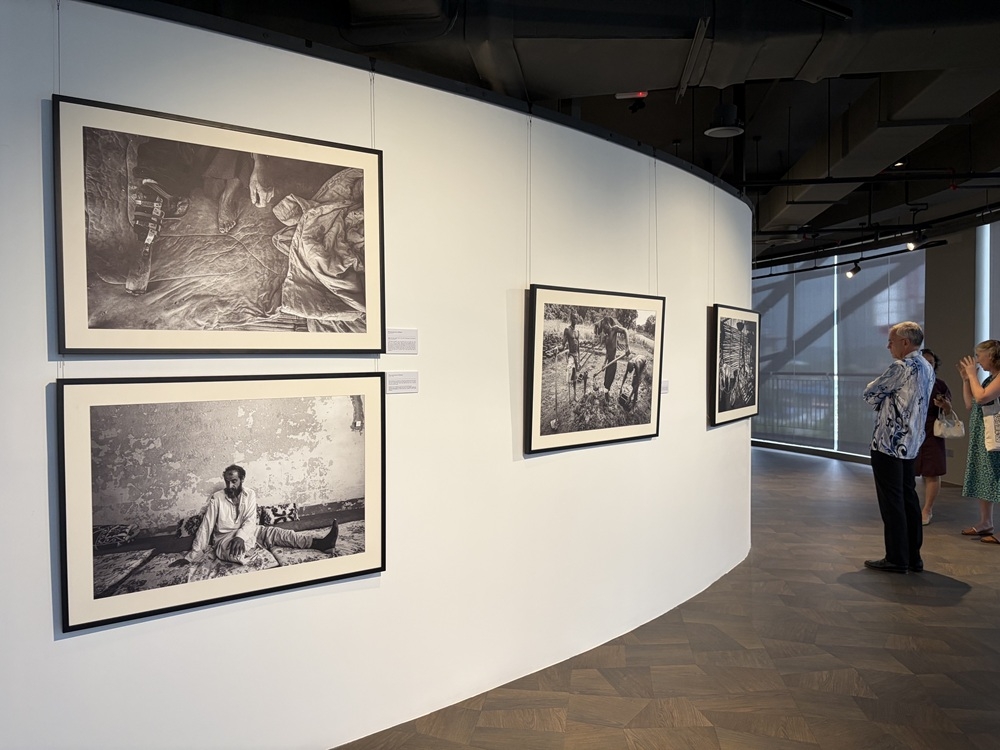
A man who lost both his limbs in a land mine explosion sits on a chair, contemplating his fate.
These images, often captured in black and white, of ordinary people and animals have one common theme — they were victims of the lasting impacts of the danger posed by land mines and unexploded ordnance.
A total of 38 photographs and four contemporary paintings are featured in an international photography and art exhibition titled ‘Scars of Wars’ at the Ling Xiang Xiong Art Gallery.
The exhibition, which was officially launched today, featured photographs taken between 2007 and 2025 by Alison Locke, Cory Wright, Giovanni Diffidenti and Werner Anderson, alongside artworks by Professor Lin Xiang Xiong.
The director of the International Campaign to Ban Landmines-Cluster Munition Coalition (ICBL-CMC), Tamar Gabelnick, said more than 60 countries continued to face landmine dangers after their conflicts ended.
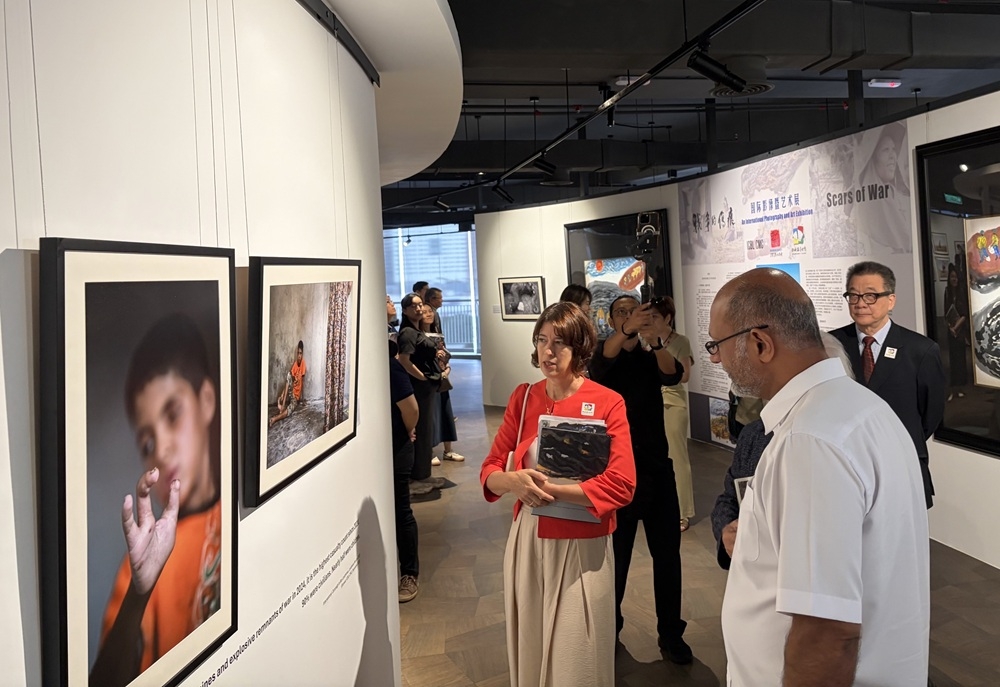
“A mine laid in a war decades ago will kill a child walking to school today just as effectively as it would have killed a soldier back then,” she said in her speech at the launch.
She said more than 270 million cluster munition bomblets were dropped on Laos during the Vietnam War era, with about 80 million still in the ground.
“People are still being killed and injured every year by a war that officially ended before many people in this room were born,” she said.
Cambodia and Vietnam were also clearing areas contaminated by mines and bombs from conflicts more than five decades ago.
In parts of Vietnam, the danger continued to prevent farmers from cultivating their land safely.
Cluster munitions scatter hundreds of smaller explosives, or bomblets, across wide areas.
Many fail to detonate and can remain on the ground or in trees for years.
Some resemble balls or toys, making them especially dangerous to children, she added.
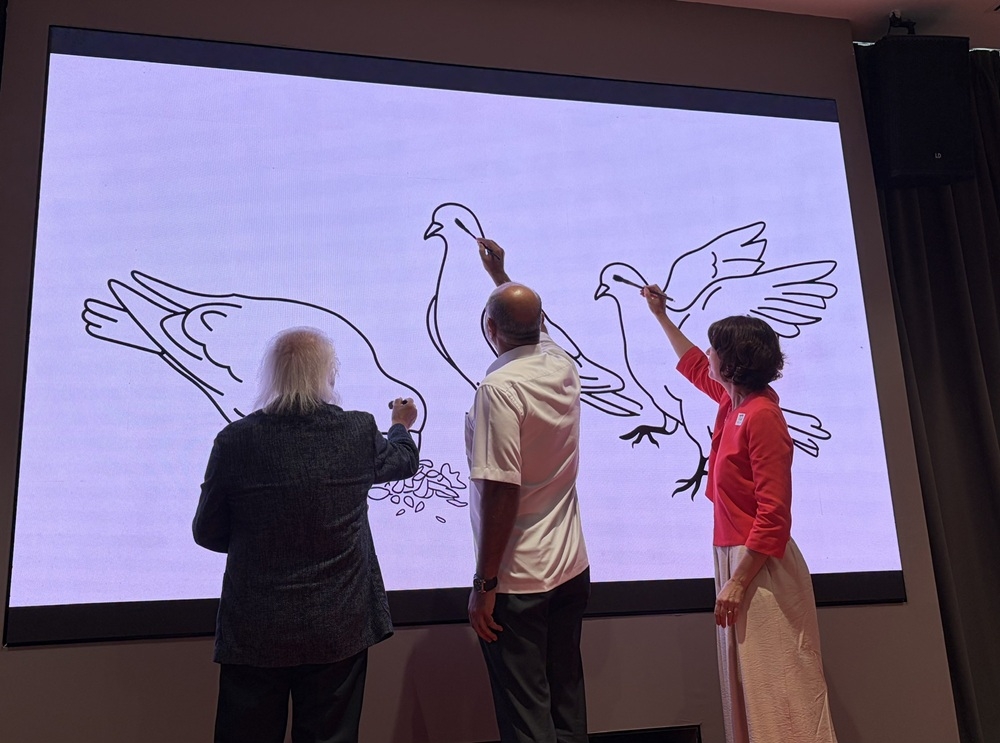
Digital Minister Gobind Singh Deo, who officiated the launch, said the works showed that war was ultimately about people rather than borders, military strategy or geopolitics.
“Ultimately, war is about people — and it is often ordinary people who carry its deepest scars,” he said.
The photographs document the effects of landmines and explosive remnants of war on individuals, families and communities, while Lin’s works, created under his “Art for Peace” philosophy, explore humanity, compassion, resilience and reconciliation.
“These works may come from different artists, countries and experiences, but they speak with one voice — do not look away, and do not allow suffering to become something we simply accept,” Gobind said.
Speaking to reporters later, he called for the images to be shared through new technologies and with groups involved in campaigns to prevent such suffering from being repeated.
Gobind said the media plays an important role to help raise public awareness on this issue beyond the exhibition in the gallery.
He said Malaysia was a state party to the Anti-Personnel Mine Ban Convention, commonly known as the Ottawa Convention.
“Landmines do not recognise the end of a war,” he said.
“Years after the fighting has stopped, they can still prevent families from returning home, farmers from working their land, communities from rebuilding and children from walking safely.”
Gabelnick said no South-east Asian country had joined both the Mine Ban Treaty and the Convention on Cluster Munitions.
More than 160 countries have joined the Mine Ban Treaty, signed in 1997, while more than 110 have committed to the Convention on Cluster Munitions, adopted in 2008.
The ICBL and its founding coordinator, Jody Williams, jointly received the Nobel Peace Prize in 1997 for their efforts to secure the Mine Ban Treaty.
Despite the treaties, clearance work still requires funding, survivors need continued support and the weapons remain in use in some parts of the world.
“The photographers did not take these photographs for them to sit in a book on a shelf,” Gabelnick said.
“They took them so that people like you and me would see them, feel something and perhaps do something.”
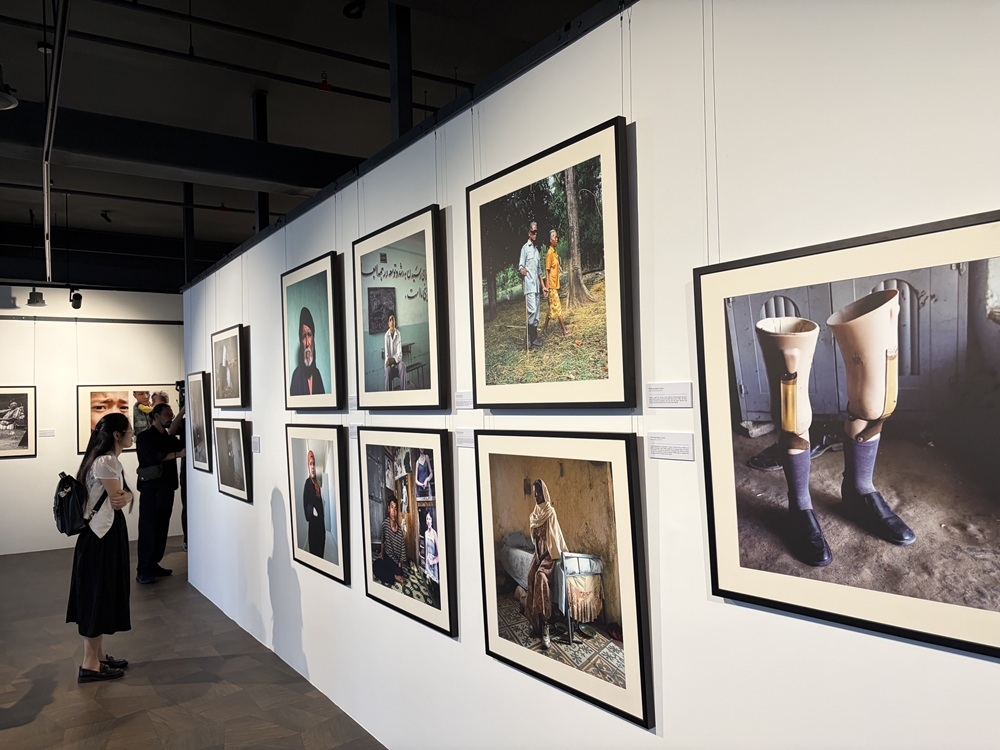
Meanwhile, Lin said the exhibition featured scenes from the frontlines of war captured through photography, as well as historical images of people courageously rebuilding their lives after the war despite having lost their limbs.
“We can also see works of art depicting how people continued to live, work and persevere after the war as they sought to build a better tomorrow,” he said.
He said the photographs inspired him to create four paintings; Broken in Body, Unbroken in Spirit, Clearing Mines To Cultivate the Land, Farming with Broken Limbs, For Tomorrow and The Fields May Live Again.
His paintings portrayed those who have lost their limbs to landmines, the international efforts by volunteers to clear the mines from fields and farmland, those who have lost their limbs working in the farms and a scene of volunteers risking their lives to clear mines from fertile farmlands.
“I hope the photographs and artworks exhibited in ‘Scars of War’ will awaken and inspire those who see them.”
“May they serve as a condemnation of the history of war, uphold justice for the overwhelming majority of people around the world, and help build a global village in the 21st century in which humanity can coexist in harmony,” he added.
The exhibition, held from September 10 to November 10, was organised by the ICBL-CMC, the Global Chinese Arts and Culture Society and the Lin Xiang Xiong Art Gallery.