


KUALA LUMPUR, July 22 — Tetra Pak is reinforcing its role in supporting food and beverage manufacturers beyond packaging, helping customers develop new products and respond to rapidly evolving consumer trends.
This is in line with growing demand from food and beverage manufacturers for partners that can support the innovation process from product development through to commercial production as consumer preferences continue to evolve.
Tetra Pak Marketing Director for Market Malaysia, Singapore, Philippines, and Indonesia (MSPI), John Jose said manufacturers today require more than packaging solutions, as shorter product cycles and shifting consumer preferences are driving companies to bring new products to market more quickly.
“We’re supporting customers throughout their innovation journey, from developing a new product idea right through to commercial production. It’s an end-to-end ecosystem that brings together product development, processing expertise, packaging solutions and our co-packing network,” he said.
Consumer trends are driving faster innovation
Jose said consumer expectations have expanded beyond taste and quality, with health, convenience, sustainability and transparency increasingly influencing purchasing decisions.
“Changing lifestyles and consumption patterns require shorter product cycles and agile innovation,” he said.
At the same time, he noted that manufacturers are contending with rising raw material and utility costs, labour shortages and intense competition, making it increasingly important to shorten product development cycles while responding quickly to market trends.
To support this, Tetra Pak combines consumer insights with its Customer Innovation Centres and Product Development Centres, where manufacturers can prototype, test and refine new products before investing in commercial production.
“We continuously track consumer behaviour and market trends to identify opportunities in categories such as functional drinks, ready-to-drink coffee, plant-based products and convenient meals.
“Instead of shutting down their own production line to run a test batch, they can use our pilot facilities to prototype, test and validate new concepts rapidly before moving to commercial production,” he said.
Betting on a new protein source
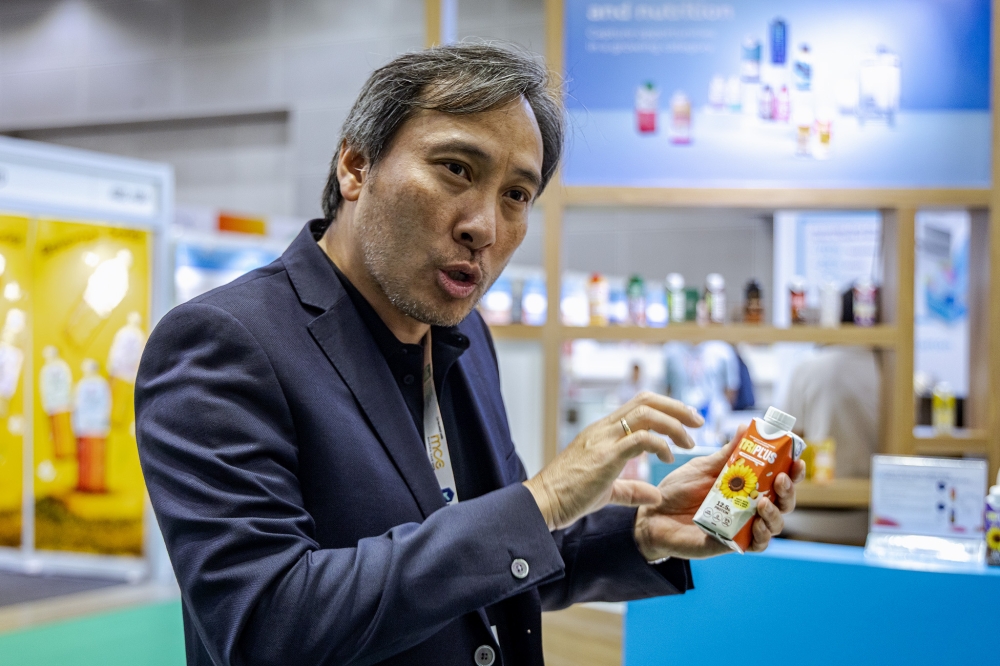
Among the areas Tetra Pak sees as offering the strongest growth opportunities is protein-based nutrition, with the company pioneering sunflower protein as a new ingredient platform for beverage manufacturers.
“Protein is one that we are betting on,” Jose said.
The protein — sunflower protein — is intended to complement, rather than replace, established plant proteins such as soy, pea and oat, giving manufacturers another avenue for innovation as they develop differentiated products for the growing functional beverage market.
“From our market research, we found that soybean drinks were beverages for an earlier generation, and its popularity has somewhat declined, so there is not much that we can move on from there.
“Consumers are actively replacing generic beverages with functional, targeted nutrition, demanding products that offer clear health benefits without sacrificing flavour or quality.
“Sunflower protein, however, has presented a fresh innovation for beverages, on top of its protein content that is higher than soy,” he said.
With around 50 per cent protein content, a 98 per cent digestibility rate and a naturally neutral, subtly nutty flavour, Jose said sunflower protein offers manufacturers greater flexibility in developing beverages while catering to growing demand for plant-based nutrition.
“By showcasing sunflower protein, we are presenting a viable raw material solution that helps brands capture fast-growing plant-based and hybrid-milk functional categories,” he said adding that the company managed to launch the next-gen protein ingredient earlier this year.
“With its flexibility, we hope it will inspire customers to explore new ways to innovate and grow within this emerging category,” he said.
Beyond protein, Jose said ready-to-drink coffee and tea remain among the categories Tetra Pak is most optimistic about because they continue to evolve with changing consumer tastes.
“Sunflower protein will work well with coffee and tea drinks as these are fast-growing categories and they’re so flexible.
“There’s something for everyone when it comes to coffee and tea because you can create so many different mixes, flavours and formats,” he said.
As part of that focus, Tetra Pak’s participation in the Malaysia International Food & Beverage Trade Fair (MIFB) 2026 has allowed it to publicly showcase the sunflower protein beverage prototype in Malaysia for the first time, demonstrating how the ingredient can be incorporated into next-generation ready-to-drink coffee, tea and other functional beverages.
Helping manufacturers stay competitive amid rising costs
However, Jose said, as manufacturers also face mounting pressure from higher packaging, freight and operating costs, Tetra Pak has been working closely with customers to minimise supply chain disruptions arising from geopolitical events, including the conflict in the Middle East.
Jose said Tetra Pak’s global manufacturing footprint allows it to optimise sourcing across different factories and adapt logistics where possible to cushion customers from supply chain disruptions.
“We try to help minimise the impact of the Middle East conflict, and Tetra Pak has a global network of factories so we are able to leverage the different factories to find the best solution for the customer to minimise the impact from the situation.
“But sometimes the impact is undeniable and the price needs to change, but we try to help customers the best that we can, apart from monitoring the situation, in terms of logistics, how we can help in this area, how we can optimise sourcing of packaging materials from the different factories,” he added.
Among other technologies showcased at the MIFB is Tetra Pak ® FactoryOS ™, a digital platform that integrates production data across manufacturing operations to improve efficiency, reduce downtime and minimise waste.
According to Jose, factories using the platform have recorded improvements in equipment effectiveness, fewer unplanned stoppages and lower product waste.
Introducing another new innovation, Jose said the Tetra Recart ®, a paper-based carton packaging solution for shelf-stable foods such as soups, sauces, vegetables, pet food and ready-to-eat meals, offers manufacturers an alternative to conventional formats such as cans or glass while improving logistics efficiency, warehousing flexibility and supply chain performance.
Balancing innovation with sustainability
Jose said sustainability remains a key consideration as manufacturers seek to reduce waste, improve resource efficiency and prepare for evolving environmental regulations.
“We’re working hand in hand with partners in Malaysia to build a more resilient and sustainable food system while helping manufacturers improve efficiency and reduce their environmental footprint,” he said.
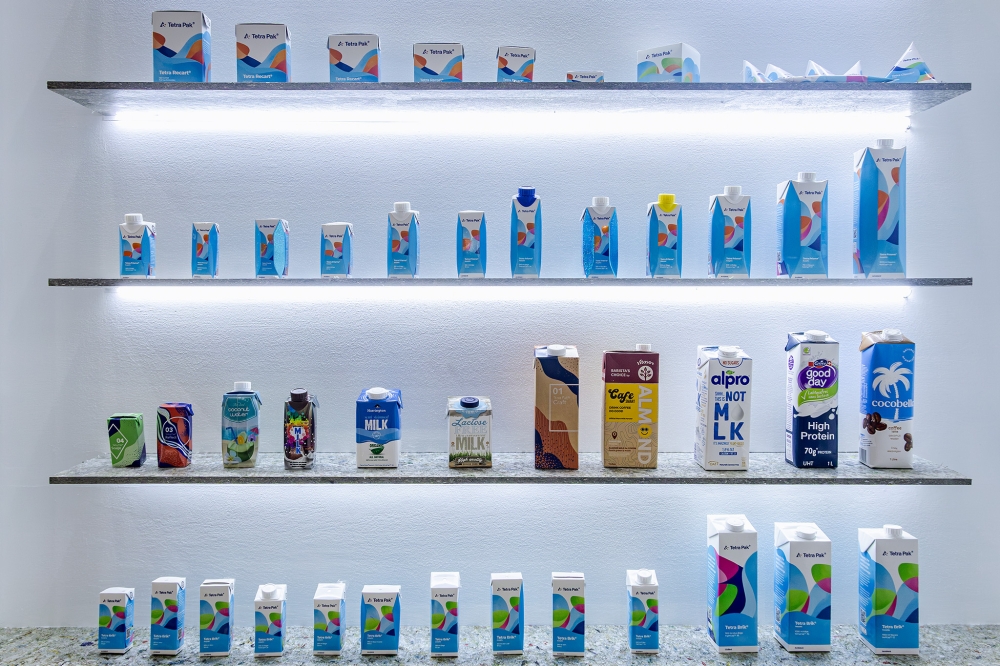
“We have also successfully implemented a recycling system here (Malaysia) — working with local partners to create a more sustainable ecosystem,” he said.
In addition, he said Tetra Pak continues to invest in increasing the renewable content in its packaging, strengthening Malaysia’s carton recycling ecosystem and develop lower-carbon manufacturing solutions while supporting customers as they prepare for future circular economy and extended producer responsibility (EPR) requirements.
Click here to learn more.


