


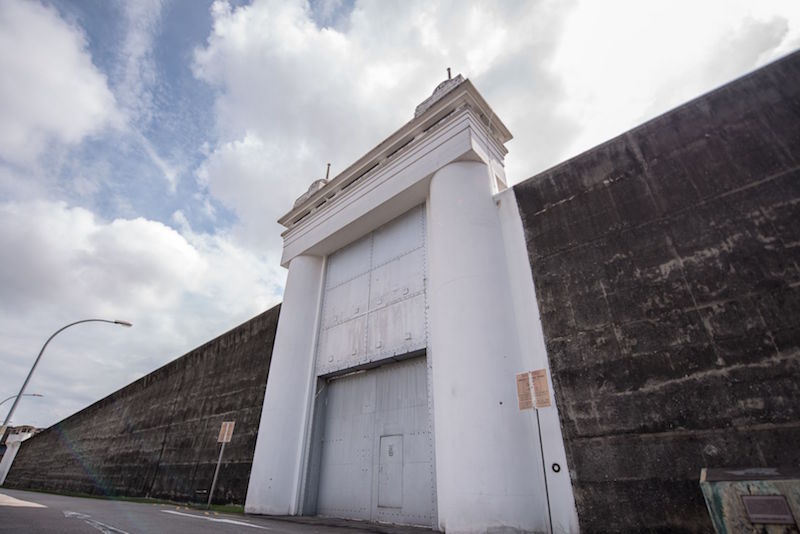


SINGAPORE, Feb 16 — The double-leafed steel entrance gate, two corner turrets and 180-metre stretch of wall of the World War II-era Changi Prison was yesterday gazetted as the Republic’s 72nd national monument.
They were preserved before the second phase of construction of the new Changi Prison complex began in 2004.
As Singapore was surrendered to the Japanese 74 years ago on this day, today’s gazetting was chosen to remember Singapore’s wartime experience and as “a grim reminder of this dark episode” in the island nation’s history, the National Heritage Board (NHB) said.
Before World War II in 1936, the maximum security prison designed by the Public Works Department was built to mainly relieve overcrowding in the cells.
When it became operational on January 4, 1937, the prison, which was designed to hold 600 prisoners, was acclaimed as the most modern institution of its kind in the East, boasting a comprehensive alarm system and electrical lights in its cells.
When Singapore fell to the Japanese on February 15, 1942, the prison and its surrounding barracks became the principal Prisoner-of-War (POW) camp in South-east Asia, where more than 2,500 civilians and POWs, including the British civil service as well as the then-Governor of the Straits Settlements, Sir Shenton Thomas, were packed into.
By May 1944, there were more than 5,000 prisoners at Changi Prison, where they endured overcrowding, malnutrition and diseases such as beri beri, malaria and dysentery. At one point, the extreme scarcity of food had also forced the POWs to turn to a range of wildlife (including sparrows and rats) to supplement their diet.
In the post-war years, several members of the People’s Action Party like CV Devan Nair, Lim Chin Siong, and Fong Swee Suan, who were arrested for their involvement in labour strikes, were imprisoned there as well
Said Jean Wee, Director of the Preservation of Sites and Monuments division at NHB: “Changi Prison stands today as an enduring symbol of the suffering of those who defended Singapore during the tumultuous war years between 1942 and 1945.
“We hope that this monument will serve as an important reminder to all Singaporeans of the tremendous sacrifice by POWs and to treasure the peace and harmony we have today, and continue to safeguard it with resilience and courage.”
With today’s gazetting, the prison joins the ranks of other World War II-related monuments like the former City Hall, Cathay Building, Ford Factory, Command House, Esplanade Park Memorials and the Civilian War Memorial.
The last national monument that was gazetted was the Fullerton Hotel building in December last year. — TODAY


