















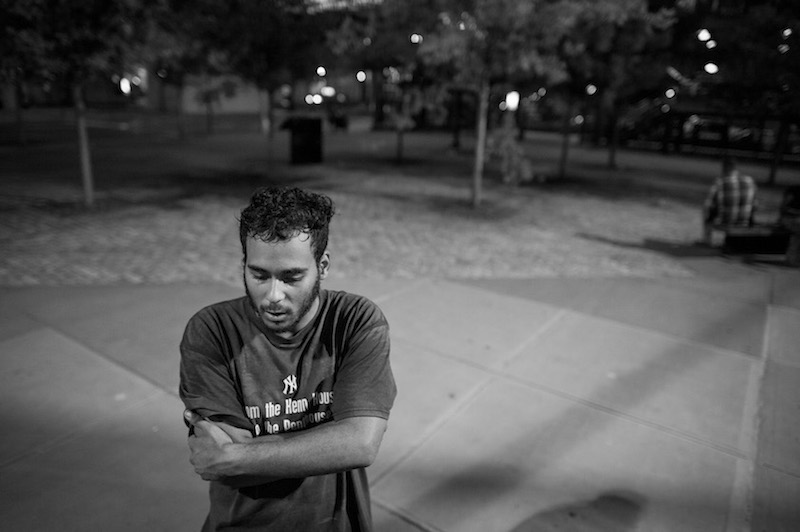
NEW YORK, Sept 8 — A reporter and a photographer visited homeless encampments across New York City, interviewing dozens of people, from teenagers to those in their 70s. Some had serious medical conditions; one woman was pregnant. They spoke of job losses, mental health issues, substance abuse and problems with the city shelter system that drove them to the streets.
Name: Jose Morales, 19
Originally From: Highbridge section of the Bronx
Homeless Since: May 2014 (sporadically)
Location: Outside Heritage Field in the Bronx
Jose Morales and his 17-year-old girlfriend, Kimberly Williams, who is five months pregnant, had built a shelter out of a blanket tethered to a fence, underneath the No. 4 train.
Morales said he grew up in a troubled home in the Bronx and eventually attended high school at a residential treatment centre for drug and alcohol addiction. When he got out, he went into foster care with a family in Brooklyn, because his mother had been sent to prison on drug charges. He rebelled.
“I didn’t want to listen, I didn’t want to do no chores, I didn’t want to obey no curfew,” he said. “If I was able to go back right now, I’d apologise and fix it.”
He was sent to another foster home in the Bronx. That was when he met Williams over Facebook. When she was kicked out of her home on Long Island after a fight with her grandmother, Morales allowed her to stay with him — a violation of house rules. They were both evicted.
They squatted on a rooftop in Brooklyn before taking up residence in their current location. They went to the city intake centre in the Bronx for homeless families, but learned they were ineligible because they were not married or in a domestic partnership.
On Wednesday night, they huddled together on the sidewalk and watched a praying mantis crawl on the fence above their bed.
“I go around, I ask for a job here and there, but nobody’s hiring,” Morales said. “This isn’t good for her, it isn’t good for me.”
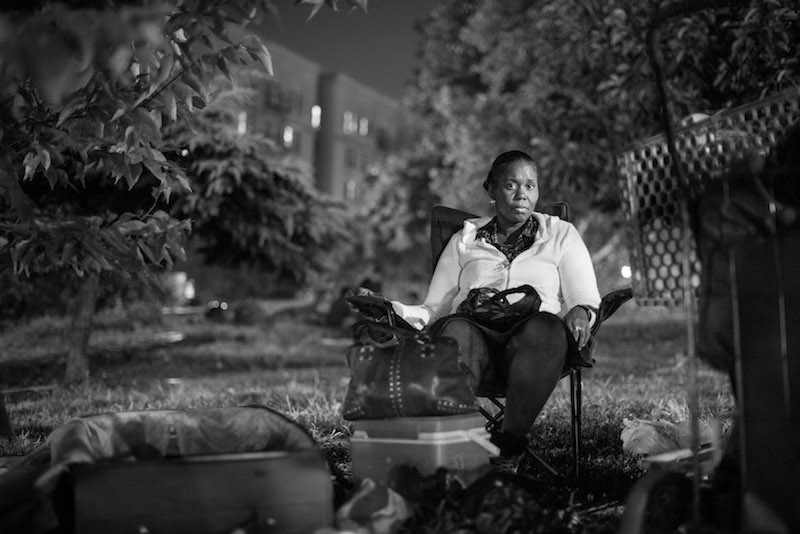
Name: Dawn Johnson, 43
Originally From: South Bronx
Homeless Since: 2013
Location: Joyce Kilmer Park in the Bronx
Dawn Johnson and her domestic partner, Mohamed Diallo, used to live in a shabby Bronx apartment, supported by his job as a mechanic. The building owner allowed the apartment to go weeks without running water and more than a year without heat.
They took the landlord to Housing Court, but Johnson said the constant crises over basic utilities and the stress of navigating the legal process were too much to juggle for Diallo, 32, who worked at a mechanic’s shop. In 2013 he lost his job, and then they lost their home.
“We had no place to go and we had no funds backed up,” she said.
They tried the shelter system, but they said it lacked resources for couples without children. Johnson said she had been treated in the past for depression, anxiety and bipolar disorder — conditions that make it hard her for her to hold a job. She is not being treated currently.
She and Diallo sat on folding chairs Wednesday night, next to a tattered suitcase, a shopping cart and two coolers with bottles of water that he hawks for money. They shared hand-rolled cigarettes, and Diallo swilled a 24-ounce can of malt liquor. Terrified of being separated from Diallo, Johnson said she chooses to live in city parks and train stations, rather than risk checking into a shelter.
“I don’t want to leave Mohamed,” she said, weeping.
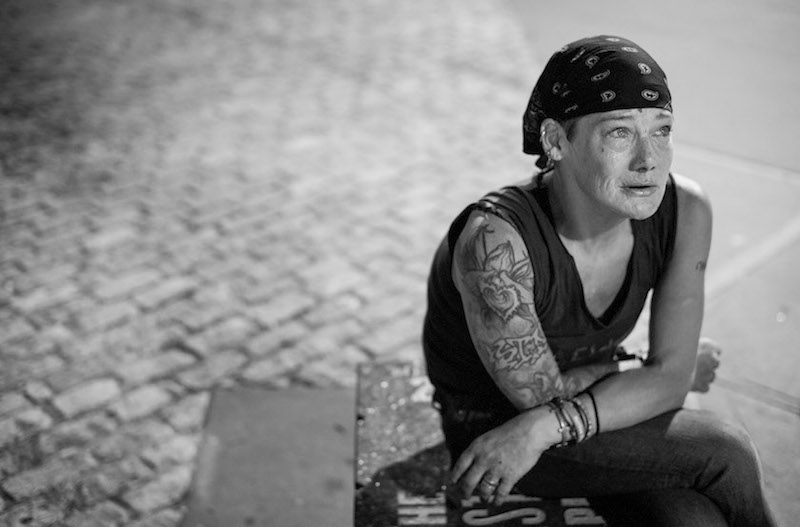
Name: Heather Pittenger, 41
Originally From: Staten Island
Homeless Since: 1999
Location: Outside Heritage Field in the Bronx
Underneath the No. 4 train platform, Heather Pittenger raised up her tank top to reveal a huge scar down her belly, where she said her abusive ex-husband shot her in the late 1990s during a fight.
She had been living in Allentown, Pennsylvania, and they ran a shop called Hellbound Tattoo. Her father, a former New York police officer, rescued her and brought her back home to Staten Island.
Pittenger grew up in what she described as a good Jewish home. Her mother worked as a nurse.
“I’m middle-class America,” she said. “I was raised very well.”
In 1999, she found her father dead — she believes of natural causes — in their home.
“I just walked away,” she said. “It was the first time in my life I walked away from everything.”
Living on the streets, she was mugged and bashed in the head with a brick — the hairless scar still visible beneath her short, sandy hair. It took her two years to relearn to walk, but the fatigue and vertigo made working impossible. She collects cans to recycle for food money and begs for cigarettes. She has avoided shelters, calling them “unsafe.”
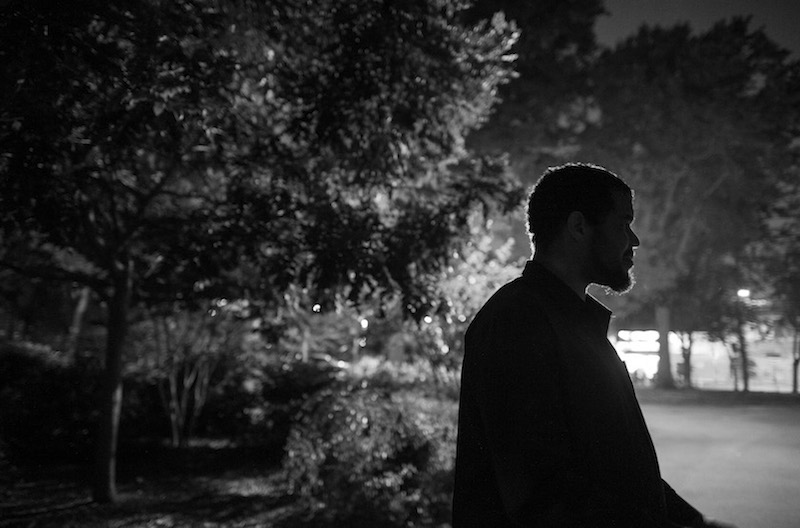
Name: Jason Jones, 36
Originally From: Queens
Homeless Since: 2006 (sporadically)
Location: McCarren Park in Brooklyn
“Being sober — it just didn’t work for me,” said Jason Jones, who is married and has a daughter on Long Island.
Jones said he served in the Army and once did a stint as a fundraiser for a congressional candidate. It was around 2006 that alcohol began to take control of his life, he said, along with what he described as a desire to be more aware of “what’s really going on in the world, like in Rwanda,” rather than the mundane daily duties of working a job and tending to his family.
He bounced around the homes of family members and girlfriends before finally winding up in the city shelter system, but he hated it. He spent time in the Wards Island shelter, and went on to share a house with other men from the shelter.
One of the roommates took him on a walk through McCarren Park, where he met a group of people who hang out around the northwest corner. He fell in with them quickly and has spent his summer with them. But he is already thinking about the winter, and said he intended to enroll in a back-to-work program and either make amends with family or re-enter the shelter system.
“If you’re willing to work with the people inside it’s not that bad,” he said. “It is just perseverance, with the winos.”
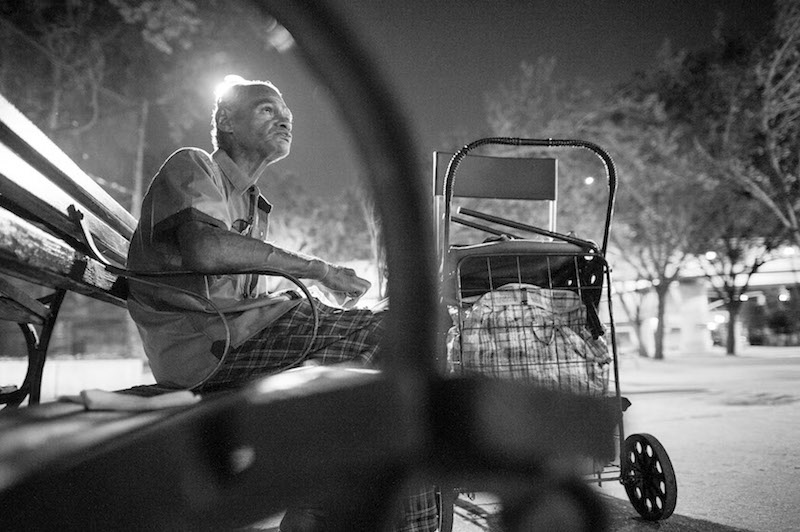
Name: John Ruiz, 73
Originally From: Yonkers
Homeless Since: 2013
Location: La Guardia Playground in Brooklyn
John Ruiz’s parents moved from Puerto Rico to New York when he was 3 and lived in the same apartment in Yonkers their entire lives. When they died in 1998, he continued living there but got into an altercation with a neighbour and was arrested. The neighbour got a restraining order, and when Ruiz was released from jail he was told he could not return.
“The manager of the building said I couldn’t come back,” he said.
Ruiz, wearing an unbuttoned shirt and blue plaid pyjama pants, ate beef and rice out of a foam container as he sat on a bench beside a push-cart with garbage bags of clothes early on Thursday morning.
He said he had never worked.
“I suffer from depression,” he said. “I was taking medication for that, and high blood pressure. And I have problems with my legs. It makes it hard to walk.”
People in the neighbourhood now know him well enough that he can survive on charity.
“I got a lot of people here, they know me, when they see me around they give me a couple of dollars, they buy me food,” he said. He tried the shelter system but contracted tuberculosis during a stay, he said. “I’ll sleep on a train,” he said, “when the winter comes.”
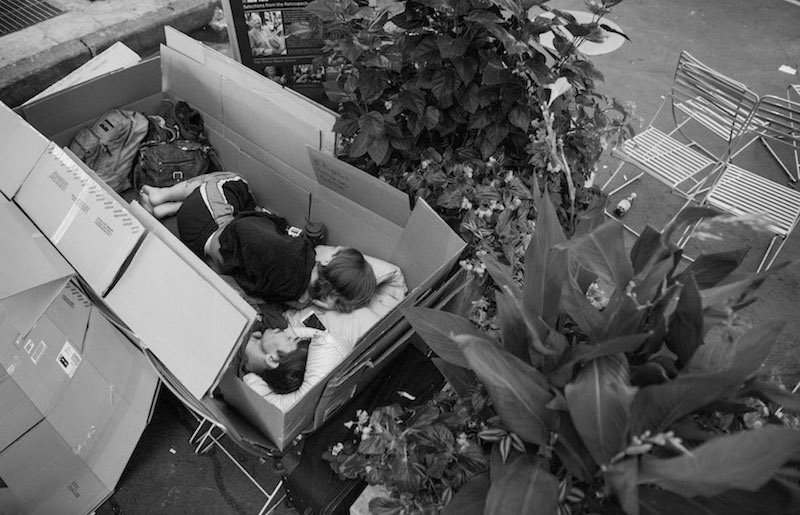
Names: CJ and Tiffany Dillinger, 38 and 35
Originally From: Old Bridge, New Jersey
Homeless Since: 2014
Location: Broadway near 37th Street in Manhattan
CJ and Tiffany Dillinger cut a tender image in the midst of hard circumstance early on Thursday as they spooned together on Broadway on a bed made from pedestrian plaza chairs that they had dressed with a foam mat, sheets and pillows, cocooned in corrugated cardboard.
They were shaken awake just before 7am by a security guard for the Gramercy District Alliance. As they stuffed their pillows and blankets into a ratty rolling suitcase, they said they had been homeless since their house in Old Bridge, New Jersey, was foreclosed on a year ago.
They had fallen behind on their mortgage. Then they were both laid off. She had a shipping and receiving position. He was a construction worker.
“We’re trying to get some housing,” Tiffany Dillinger said. “I don’t want to be separated from him.”
They married 16 years ago, and homelessness is the hardest challenge they have faced, she said. They started taking public transportation into New York City in July because they heard it was a more manageable place to be homeless.
“Believe it or not, there’s more resources here,” Dillinger said. “Soup kitchens, places to eat. We came because we heard about a couples’ shelter.”
When they tried to get into the couples’ shelter, however, they were denied. But she said, “I’d rather be out here than in shelters.”
As CJ Dillinger turned the walls from their previous night’s room back into flattened cardboard and dropped it beside a curbside trashcan, Tiffany Dillinger’s eyes misted.
“There’s more resources for survival here,” she said. “But I wouldn’t call it living.”
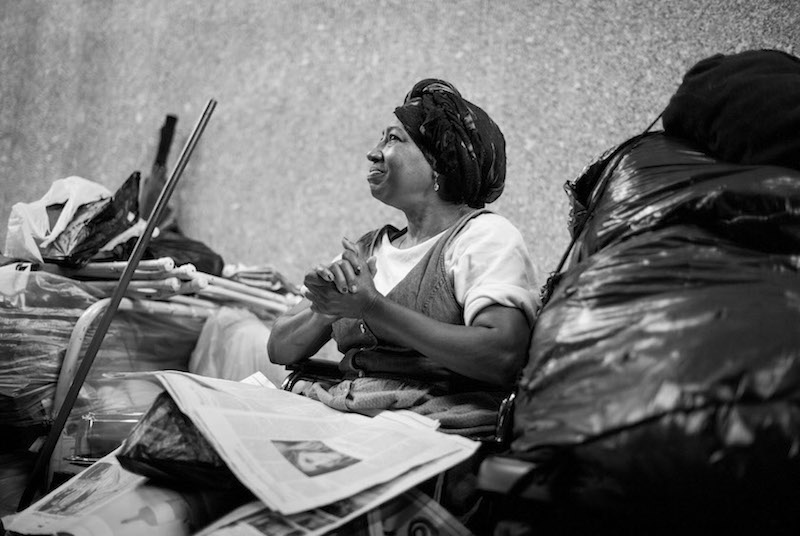
Name: Jerelyn Fisher, 63
Originally From: East Village, Manhattan
Homeless Since: 2003
Location: Near Tompkins Square Park in Manhattan
Jerelyn Fisher sat in a wheelchair early on Thursday under a building scaffolding, bathed in bright light, with newspapers spread across her lap. She rested her bare, badly swollen feet on a black suitcase. Trash bags were piled high around her, nearly bursting with her belongings.
Fisher lived for years in an apartment on Avenue D and Third Street. She taught sewing classes in New York City public housing and also in a fabric store until 2003.
“I just couldn’t find another job,” she said. “I became homeless and discovered a whole new way of living.”
She has avoided the shelter system because she says she finds the other residents challenging.
“There are a lot of people who are upset and angry because they are homeless,” she said.
She turned to religion to deal with the stresses of being homeless and now preaches to others.
“The biggest thing I’ve learned is how Satan has mistreated humans,” she said. “I’ve learned that God Jehovah lives above us and you have to know how to pray if you’re going to survive in this world.”
Her plan for the winter is to wrap herself in double plastic bags, as she has done for years.
“It insulates you from the cold,” she said. “Sometimes you get so hot inside you have to take off one of the bags.”
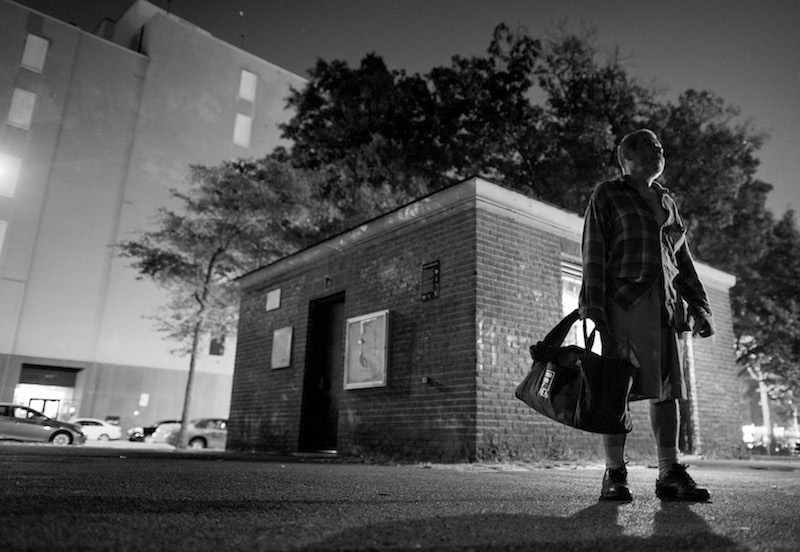
Name: Manuel Reyes, 55
Originally From: El Salvador
Homeless Since: August 31
Location: Moore Homestead Playground in Queens
Manuel Reyes was upfront about the reason he was thrown out of the apartment he shared with his wife and three children and had to stay overnight in a playground: alcoholism.
“I don’t have another problem,” he said. “Only drinking.”
After he immigrated to the United States, he worked for 20 years as a superintendent of a building, not far from the playground, he said.
People warned him that his addiction would cost him his job, Reyes said, but he did not listen.
“Drinking, drinking, drinking,” he said. “I lost my job.”
By attending regular Alcoholics Anonymous meetings, he managed to stay sober for two years, but that ended last month.
“It’s not easy, not drinking,” he said.
Reyes, who has a short grey beard and was wearing a raggedy flannel shirt, carried a blue duffel bag that he said contained everything he owned. Come daylight, he planned to visit a friend who owns a nearby bodega. They had worked out a deal. If Reyes bought beer from the bodega, he could sleep for a few hours in the dank downstairs storage room.
“I’m going to drink a couple of beers and stay in the basement of the bodega,” he said. “What can I tell you? It’s the life. I have to live the life.” — The New York Times