


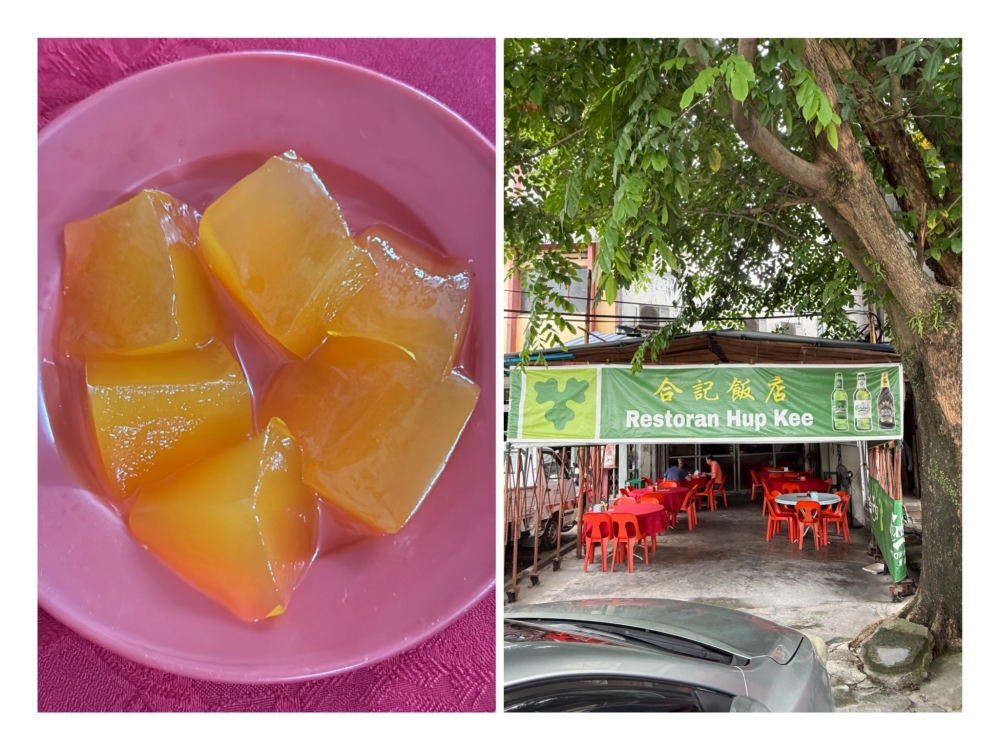
KUALA LUMPUR, Sept 28 — Blink and you probably would have driven past Restoran Hup Kee, as the restaurant sits slightly away from the road framed under a huge tree.
There’s no flashy signboard. Just a banner proclaiming its presence.
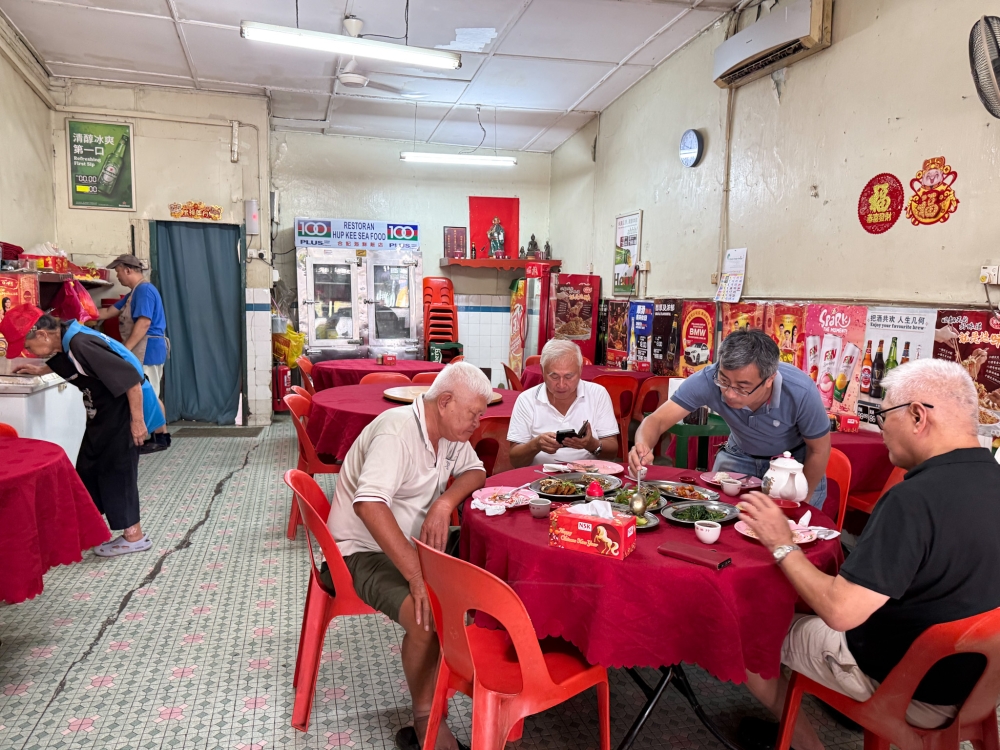
Tables and chairs in striking fire engine red line the front. Walk ahead and push the sliding glass doors to find a small dining area plastered with festive Chinese New Year posters.
The place has aged but remains clean and welcoming.
Now the third generation runs the restaurant, carrying on their grandparents’ legacy with signature dishes like the Sweet and Sour Pork (RM13).
The simple everyman dish looks very different here: instead of flat, diamond-shaped battered meat pieces, this place serves them in round shapes, making them resemble batter-covered meatballs.
The friendly proprietress told me the dish evolved from being made with pork belly to lean pork as diners made healthier choices.
With its round shape, it resembles lychee pork or lizhi rou, a Fuzhou dish served with a sauce and water chestnuts.
Famed Taiwanese television chef Fu Pei Mei featured the dish in her cookbook from the 1950s and 1960s, where the pork loin is cut into thick slices, scored and marinated with soy sauce and red colouring.
She prefers to roll it into a cylinder shape before deep frying the pork and combining it with a sauce that uses sugar and vinegar thickened with cornstarch. There’s no tomato ketchup like her recipe for sweet and sour pork.
The recipe has evolved; now many marinate the meat with red glutinous rice for the colour and pair it with the same sweetish, tangy sauce used in sweet and sour pork.
This version served at Hup Kee feels like a blend of both styles: it has the circular shape of lychee pork but is married to the same sauce used in classic sweet and sour pork.
Typically, ketchup and vinegar weren’t used in China; haw flakes provided that refreshing acidity in the sauce. As far as I know, only one other restaurant in Kuala Lumpur upholds that tradition with haw flakes.
Hup Kee’s sauce isn’t as sharp or sweet compared to other places and its viscosity is thinner because the sauce needs to cling to the pork; otherwise, it will soften the crispy pork.
It is that lack of acidity and cloying sweetness along with the stir fried capsicum, onions and pineapple which makes it one of my favourite renditions of this classic dish.
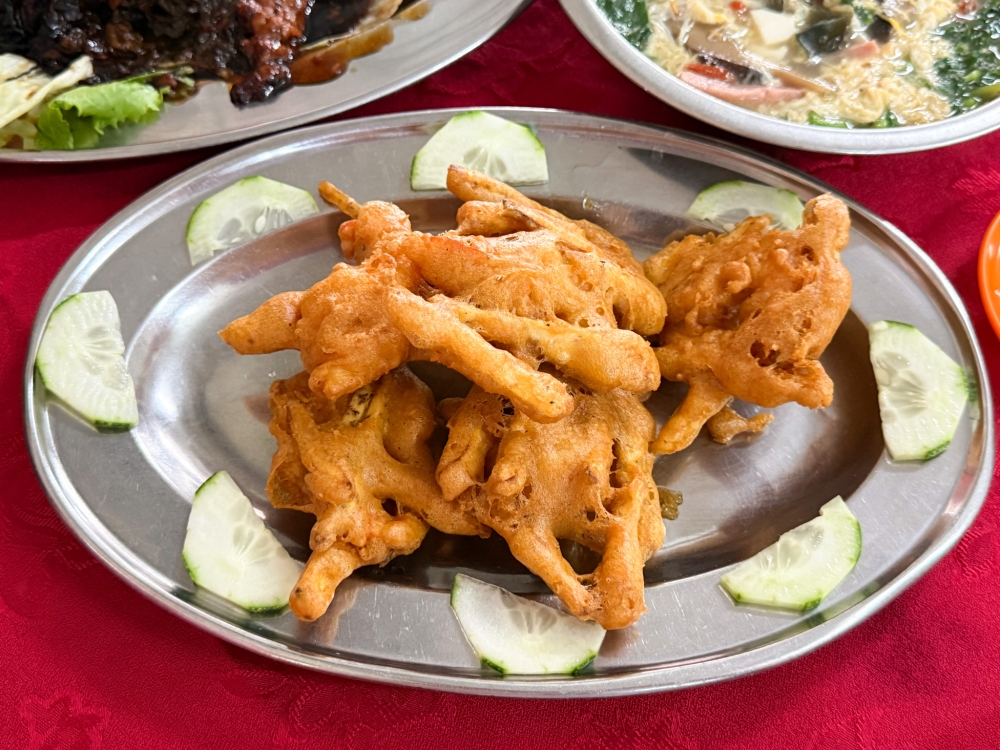
I probably missed some other old-school items, as I only managed two dishes: Sweet and Sour Pork and Fried Prawns and Taro (RM24).
The fried prawns are covered with a golden batter coating that is shatteringly crispy, contrasting with the chewy bouncy prawn meat and the fluffy sticks of taro.
It would have been better with more taro but again with rising costs, taro is now a premium item.
On its own, it lacks much flavour so dip it in the bottled chilli sauce served on the side.
I prefer eating it plain to taste the mild sweetness from the prawn found under its crunchy layer.
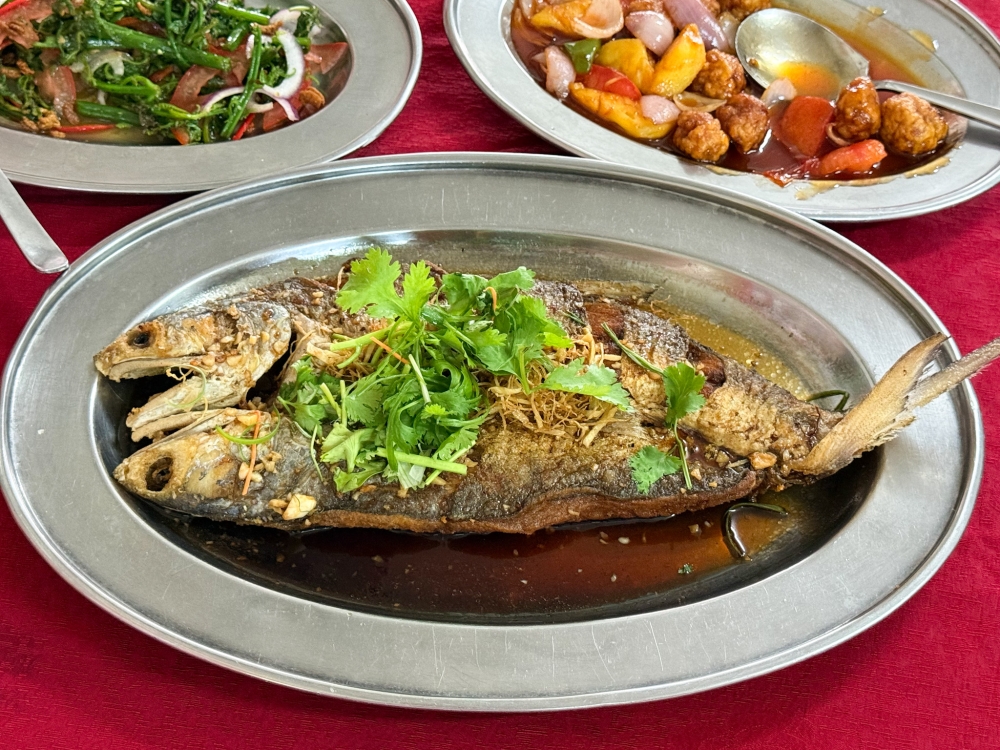
Fish is of course a must for any meal and this place offers steamed fish, a much lauded assam fish served cut into pieces instead of whole, and one of my favourites, Deep Fried Ma Yau Fish (RM68).
When deep-fried, the elongated threadfin fish offers a glorious contrast of crunch and tenderness, making you want to relish every fin and the head till everything is clean.
Hup Kee’s version is even more addictive as it pairs the fish with a syrup-like soy sauce and fine crispy shreds of ginger.
As I am rather salt-averse, I anointed the fish sparingly to just lightly season it rather than letting it soak up the sauce.
It takes some time but there’s a sense of satisfaction when every bone is clean of the glorious flesh.
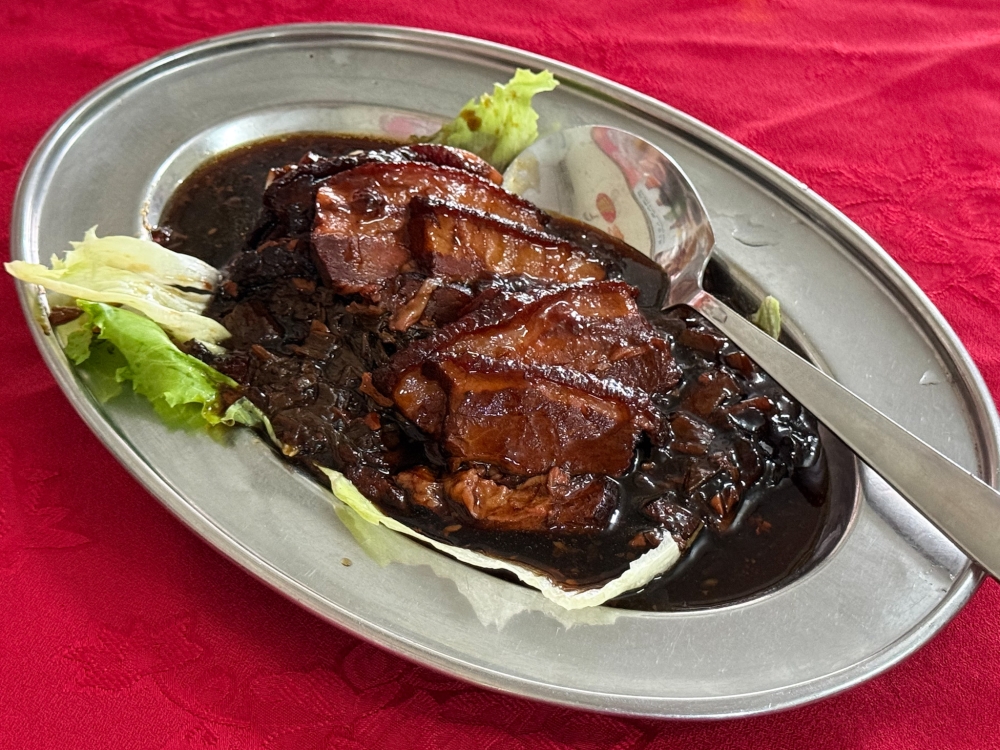
Mui Choy Kaw Yoke (RM30) comes in a super dark mahogany brown hue that scared me into thinking it must be very salty but it wasn’t.
Distinct layers of creamy fat and lean pork melt in the mouth along with the preserved mustard greens (mui choy), which isn’t salty, ensuring every bit of the sauce was wiped clean.
You can taste that the pork belly was properly pan-fried until it formed a crust before being steamed with the mui choy and sauce until it softened.
Most diners order greens as if it’s a chore but I like how each restaurant goes beyond just stir-fried vegetables with garlic.
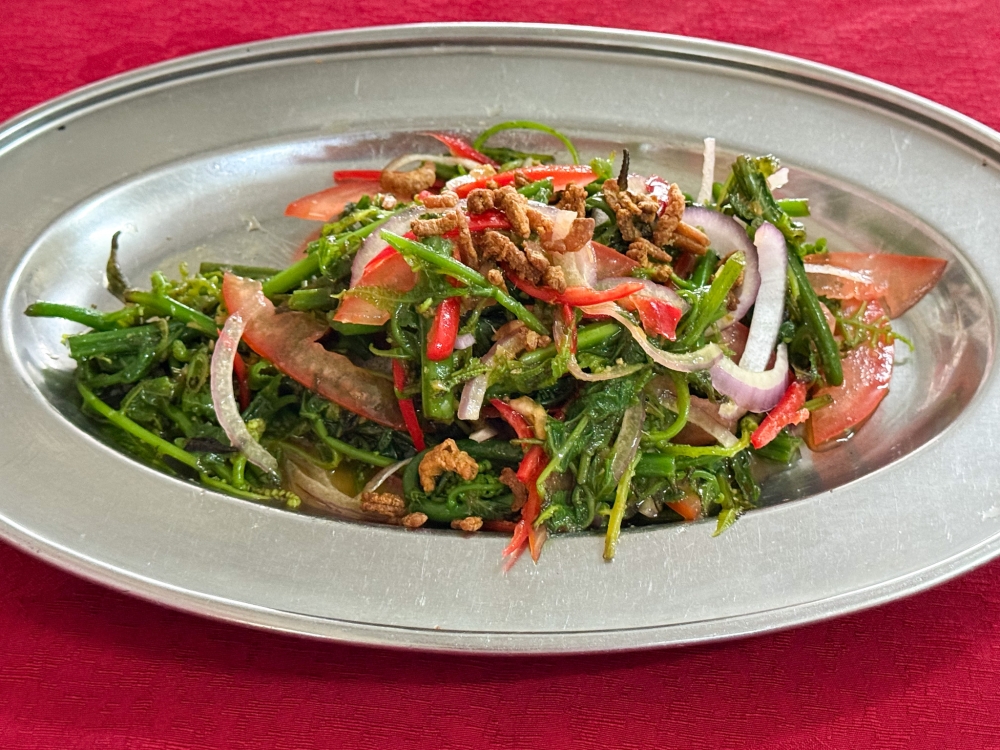
Refresh the palate with Stir Fried Paku Pakis (RM13), brightened up with thin slices of red capsicum, tomatoes and onions to make it look appetising with its red-green colour contrast.
The surprise addition was tiny dried shrimps that gave a short burst of briny flavour when caught amidst the greens.
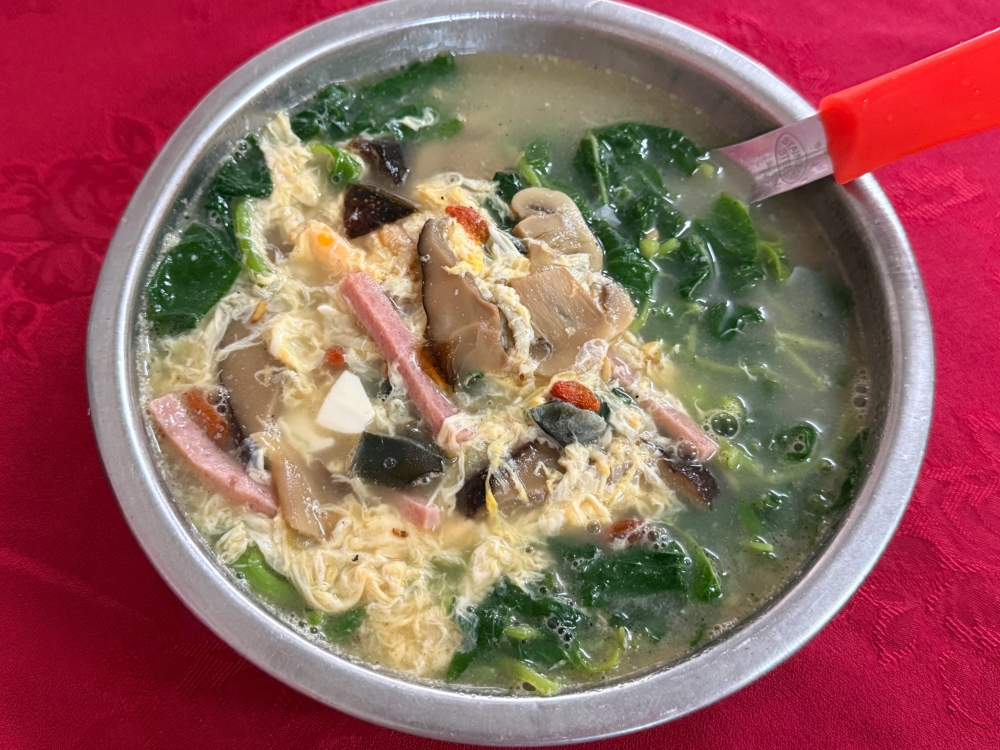
Siong Tong Spinach (RM18) is on every Chinese restaurant’s menu but this place puts its own spin on the dish.
Under a mound of spinach swimming in broth dotted with red goji berries, it is partially blanketed with a layer of wispy beaten fried egg peppered with cubes of salted egg white, century eggs and strips of Spam!
It’s the home-style broth that entices you to happily finish your greens without any nagging from the parents.
Last but not least, their homemade jelly for dessert is the perfect end to the heart warming meal here with its wobbly tanginess that leaves a sweet aftertaste in my mouth and a vow to return for more old school dishes.
Restoran Hup Kee
4A, Jalan Sultan Azlan Shah,
Kuala Lumpur.
Open daily: 11:30am to 3pm, 5pm to 10pm
Tel: 012-3062628
*This is an independent review where the writer paid for the meal.
**Follow us on Instagram @eatdrinkmm for more food gems.


